

BERLIN – Despite competition from other Asean countries, Malaysia continues to stand out as a prime destination for global investors, boasting a robust ecosystem forged over the past five decades, particularly within the electrical and electronics industry.
Investment, Trade and Industry Minister Tengku Datuk Seri Zafrul Tengku Abdul Aziz said Malaysia also stands to benefit from spillovers from investments into its neighbours.
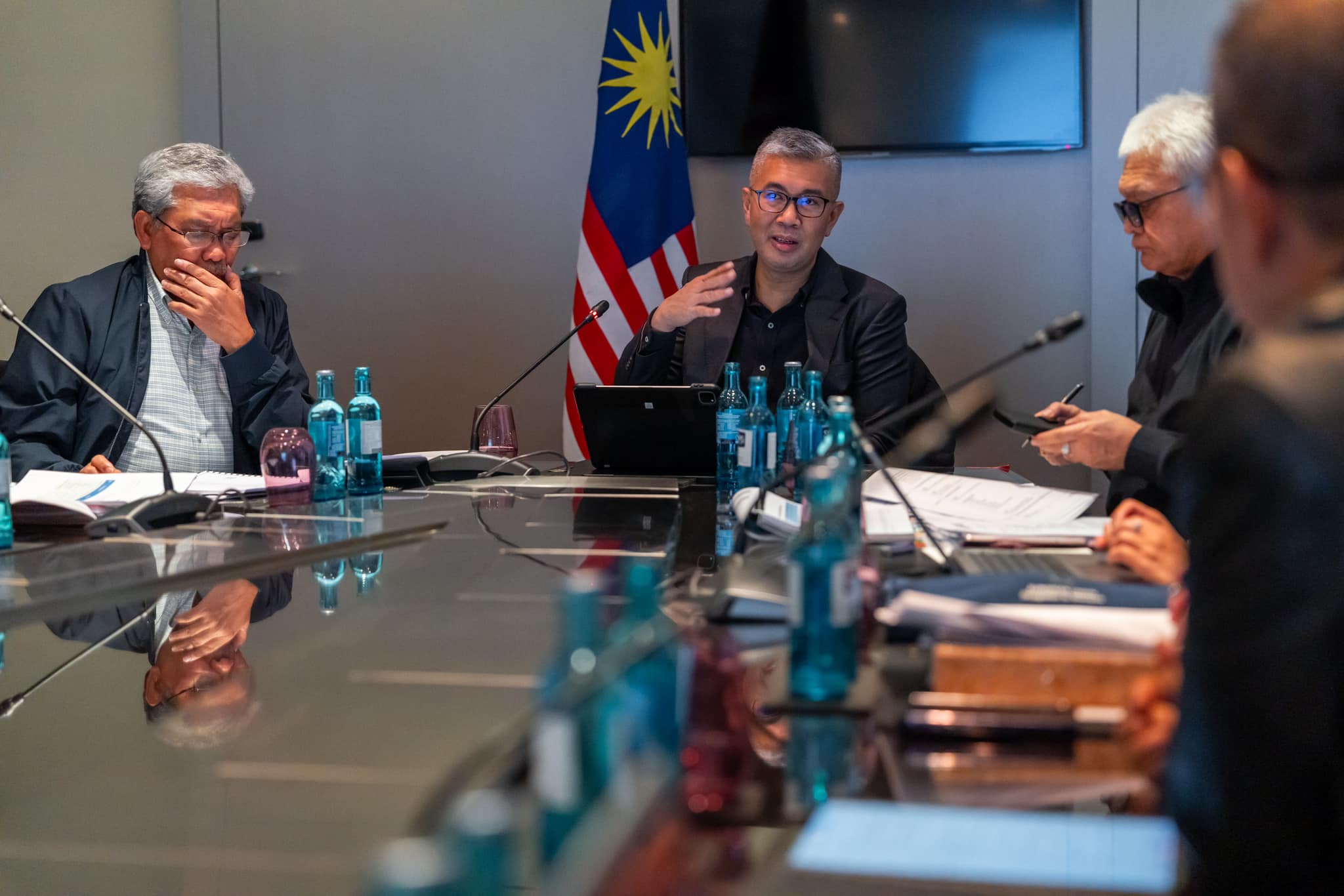
Speaking to members of the Malaysian media covering Prime Minister Datuk Seri Anwar Ibrahim’s visit to Germany, he highlighted Malaysia’s enduring appeal, emphasising its potential for sustained growth in green and digital economies, buoyed by its abundant natural resources and a stable investment environment.
He noted that during the working trip, Anwar will visit Siemens Energy, a key player in renewable energy.
Meanwhile, the minister also highlighted that Asean has benefited from the redirection of investment flows and the realignment of the supply chain, even amidst a global backdrop of slowed global GDP growth and declining global foreign direct investment (FDI) flows.
“In the wake of the slow down in the global GDP, global FDIs have gone down 12% but FDIs into Asean have increased by 5.0%,” he said.
Global FDI flows declined by 12% to US$1.3 trillion (US$1 = RM4.68) in 2022, after nose diving in 2020 due to the Covid-19 pandemic and rebounding in 2021.
Spillover benefits
Despite the competition to lure trade and investments among Asean member countries, Tengku Zafrul said Malaysia stands to benefit in terms of spillovers.
“We are competing within Asean but to me, it’s not a zero-sum game.
“Even if Vietnam or our neighbour Singapore gets one investment, it will spill over to Malaysia,” he said, citing instances where investments in neighbouring Asean countries ripple through to bolster Malaysia’s own economic ecosystem.
He pointed to the establishment of data centres supporting artificial intelligence (AI) in Singapore where the spillover can be felt in Malaysia, as well as Vietnam’s procurement of parts from Malaysia as prime examples of this beneficial interplay.
On Anwar’s visit to Germany, Tengku Zafrul said it was important for Malaysia to continue engaging with the world’s third-largest economy, adding that during his six-day visit, Anwar will meet captains of industry and potential investors such as Schott AG, Infineon Technologies AG, Melexis and Airbus.
The prime minister will also visit automaker BMW in Munich to encourage them to invest further in Malaysia, especially in the electric vehicle sector.
There are currently over 700 German companies operating in Malaysia, creating 65,000 jobs.
Germany has been Malaysia’s largest trading partner among the European Union member countries since 2000, while Malaysia is the largest trading partner for Germany among Asean member states.
In 2023, Malaysia’s total trade with Germany increased by 5.9% to RM63.45 billion (US$13.90 billion) from RM59.87 billion (US$13.62 billion) in 2022. – March 11, 2024