

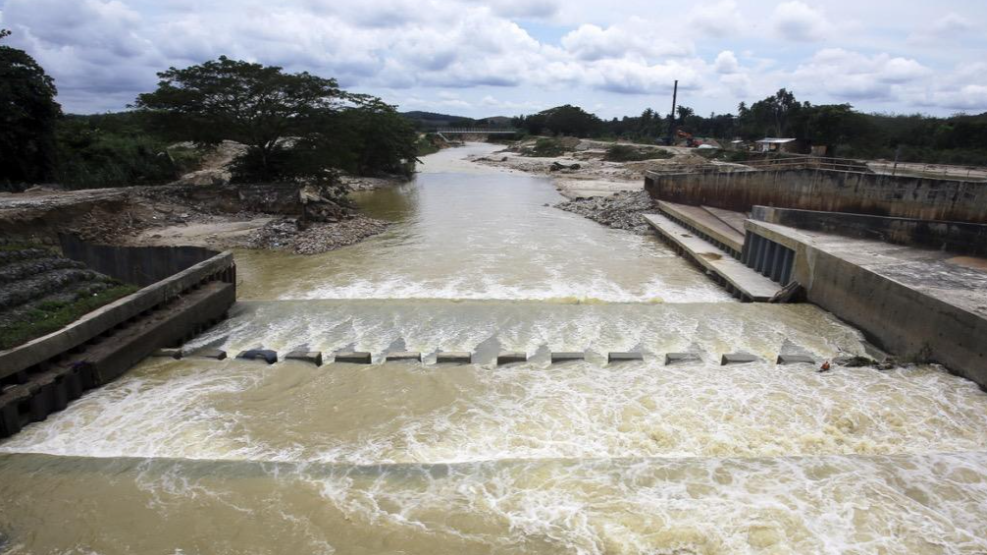
KUALA LUMPUR – Johor is allocating RM5 billion to achieve self-sufficiency in treated water within five years, addressing the state’s rising population and industrial demands.
The RM5 billion allocation includes RM1.5 billion for the construction of three reservoirs and RM3.5 billion for three water treatment plants paired with these reservoirs, The Straits Times reported, with the project aiming to reduce Johor’s reliance on treated water imports from Singapore, a dependency rooted in longstanding agreements between the two nations.
According to Johor’s state executive councillor for works, transportation, and infrastructure Mohamad Fazli Mohamad Salleh, the reservoirs will be constructed around the basins of three rivers – Sungai Johor, Sungai Pontian, and Sungai Sedili.
The new treatment plants will have a total capacity of 890 million litres per day (MLD), increasing Johor’s overall treated water capacity by 41% to 3,061 MLD from the current 2,171 MLD.
“We are targeting zero dependency on buying treated water from Singapore after 2030. But the main objective is that the new reservoirs will cater to the growth of industries in the JS-SEZ, as well as the rise in data centres,” Fazli said.
The Johor-Singapore Special Economic Zone (JS-SEZ) was officially launched on January 6, following the signing of an agreement between Malaysia and Singapore. This collaboration aims to attract high-value investments across various sectors and create 20,000 skilled jobs, with 50 projects planned in the first five years.
Johor has become a key data centre hub in Malaysia, with 17 new data centres approved by 2024, requiring a total water supply of 59.06 MLD. This additional demand accounts for 2.7% of Johor’s total treated water capacity.
By 2030, the state is expected to host an additional 20 to 30 data centres, Johor investment and consumer affairs committee chairman Lee Ting Han told The Straits Times.
Historically, under the 1962 Johor River Water Agreement, Johor sells raw water to Singapore at three sen per thousand gallons while purchasing treated water from the Republic at 50 sen per thousand gallons – significantly below the cost of water treatment. On average, Johor imports 16 million gallons of treated water daily from Singapore, well above the contractual obligation of five million gallons.
In a parliamentary response last December, Deputy Energy Transition and Water Transformation Minister Akmal Nasrullah Mohd Nasir highlighted that importing treated water from Singapore remains more cost-effective than treating it locally.
“For comparison, treating the same amount of water locally would cost around RM1.80 per cubic metre, while the treated water we buy from Singapore costs about 11 sen per cubic metre,” he said.
Nevertheless, he emphasised the importance of reducing reliance on Singapore before considering any new directions.
When contacted by The Straits Times on the matter, the ministry said boosting Johor’s water supply “would cater for increasing demand for domestic use and data centres”.
On funding, Fazli the reservoir projects will be funded by the federal government, while the Johor state government, through water operator Ranhill SAJ, will finance the three new treatment plants,
Additionally, Ranhill SAJ will construct two more water treatment plants with a combined capacity of 210 MLD to address existing demand. The company currently manages 46 water treatment plants in Johor, along with an extensive infrastructure network comprising 724 reservoirs and 24,150km of pipelines.
It supplies treated water to four million residents in Johor, the second-most populous state in Malaysia after Selangor, which has 7.4 million people.
The plan to expand Johor’s treated water capacity is expected to support the state’s economic growth. Key townships such as Iskandar Puteri and Kulai, along with the industrial hub and port of Tanjung Langsat in Pasir Gudang, are undergoing significant developments that require increased water supply, said Lee.
“Johor plans to maintain a healthy water reserve margin of 15% from 10% currently, as developments in these areas are growing at a rapid pace,” Lee said, referring to extra treated water kept on standby for peak demand periods or emergencies. – March 9, 2025