

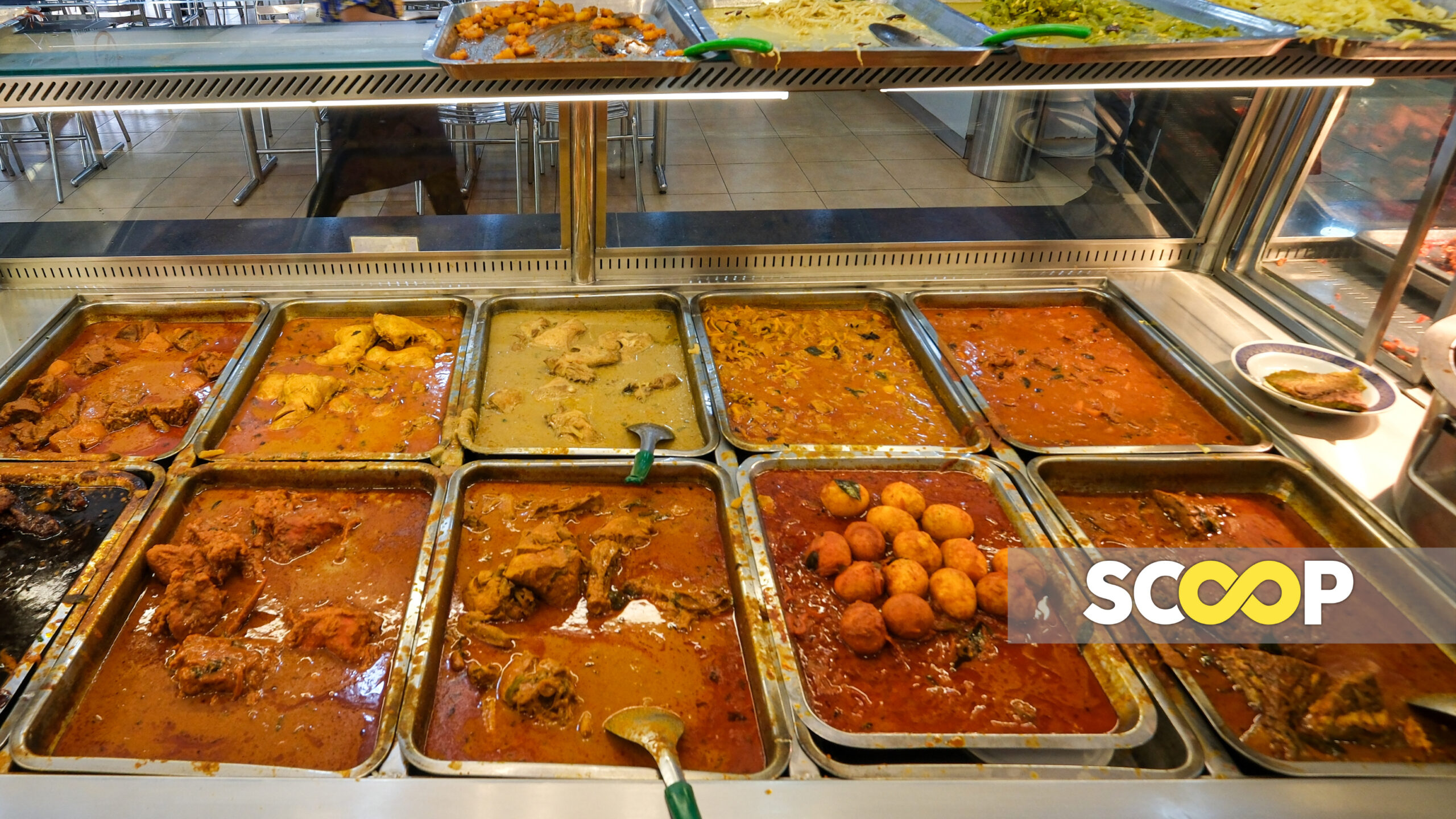

GEORGE TOWN – The removal of the government’s egg subsidy should not be used as a reason for popular eateries such as Nasi Kandar outlets to raise food prices, said Malaysian Muslim Restaurant Owners Association (Presma) president Datuk Jawahar Ali Taib Khan.
From today, the current subsidy of 10 sen per egg will be halved to five sen, with a full removal set for August 1. At the same time, price controls on eggs will also be lifted.
The Agriculture and Food Security Ministry said the decision was made after taking into account the industry’s commitment to ensure sufficient supply, improved stability in production costs, and the need for long-term sustainability of the local egg industry while managing government expenditure.
Jawahar said that although egg prices are expected to increase by five sen following the rollback, it should not trigger immediate or significant price hikes for dishes at nasi kandar outlets.
“I think it is up to our members (to decide how to respond). But if you ask my opinion, we won’t use this as an excuse to increase food prices,” he told Scoop when contacted.
“Just because eggs prices would go up by 5 cents, you cannot mark up ‘roti canai telur’ prices by 10 cents, you know?”
He added that nasi kandar outlets are expected to maintain their current prices as a gesture of appreciation to their customers.

“We will try to observe the five cents (increase), but we won’t do anything about it,” he said.
Earlier, Mydin Hypermarket managing director Datuk Ameer Ali Mydin also told Scoop that egg prices are likely to increase temporarily by between five and 10 sen as a result of the subsidy rollback. However, he welcomed the move, saying it could help address egg supply shortages.
Meanwhile, Malaysian Indian Restaurant Owners Association (Primas) president J. Suresh said the association had yet to meet to discuss the impact of the subsidy removal, citing the abrupt nature of the government’s announcement.
Speaking to Scoop, Suresh said the association would need time to formulate a proper response, especially as many consumers were already “facing economic issues”.
“We have never raised food prices as the government has been subsidising eggs all these time. If the food prices were to be increased, it might be done gradually, not immediately,” he said.
He also noted that any future price changes—particularly for egg-heavy dishes like breakfast meals—would depend on how much suppliers charge restaurants for eggs moving forward.
“If they are not able to sustain (themselves), then they have no choice (but to increase prices),” he added.
While acknowledging that the government had spent RM2.5 billion on egg subsidies between February 2022 and December 2024, Suresh expressed hope that the subsidies would be extended for another year to ease the burden on restaurant operators.
The Agriculture Ministry has maintained that the current subsidy structure is not equitable, as it also benefits high-income groups and foreign nationals. A restructured, more targeted mechanism is being considered.
Food prices already soaring, says DOSM
The debate comes as everyday Malaysian dishes have already seen steep price hikes over the last 13 years, according to the Department of Statistics Malaysia (DOSM) recently.
In its Consumer Price Index (CPI) Annual Analysis 2024, DOSM revealed that:
Roti canai prices rose by 71.1% — from 90 sen in 2011 to RM1.54 in 2024
Nasi lemak surged 81.3% — from RM2.03 to RM3.68
Chicken satay more than doubled, rising 113.7% — from 51 sen to RM1.09 per stick
Imported red onions from India spiked 139.4% — from RM2.89 to RM6.92 per kg
Fresh coconut milk rose 56.2% — from RM7.39 to RM11.54 per kg
Grated coconut increased 60.8% — from RM5.18 to RM8.33 per kg
Local beef nearly doubled — from RM19.05 to RM37.84 per kg
The most drastic jump was seen in cockles, which soared 400.3% — from RM3.04 to RM15.21 per kg
Despite these increases, Malaysia’s overall inflation rate slowed to 1.8% in 2024 from 2.5% in 2023, in line with the global average of 5.7% last year, according to the International Monetary Fund’s World Economic Outlook report released in April 2025. – May 1, 2025