

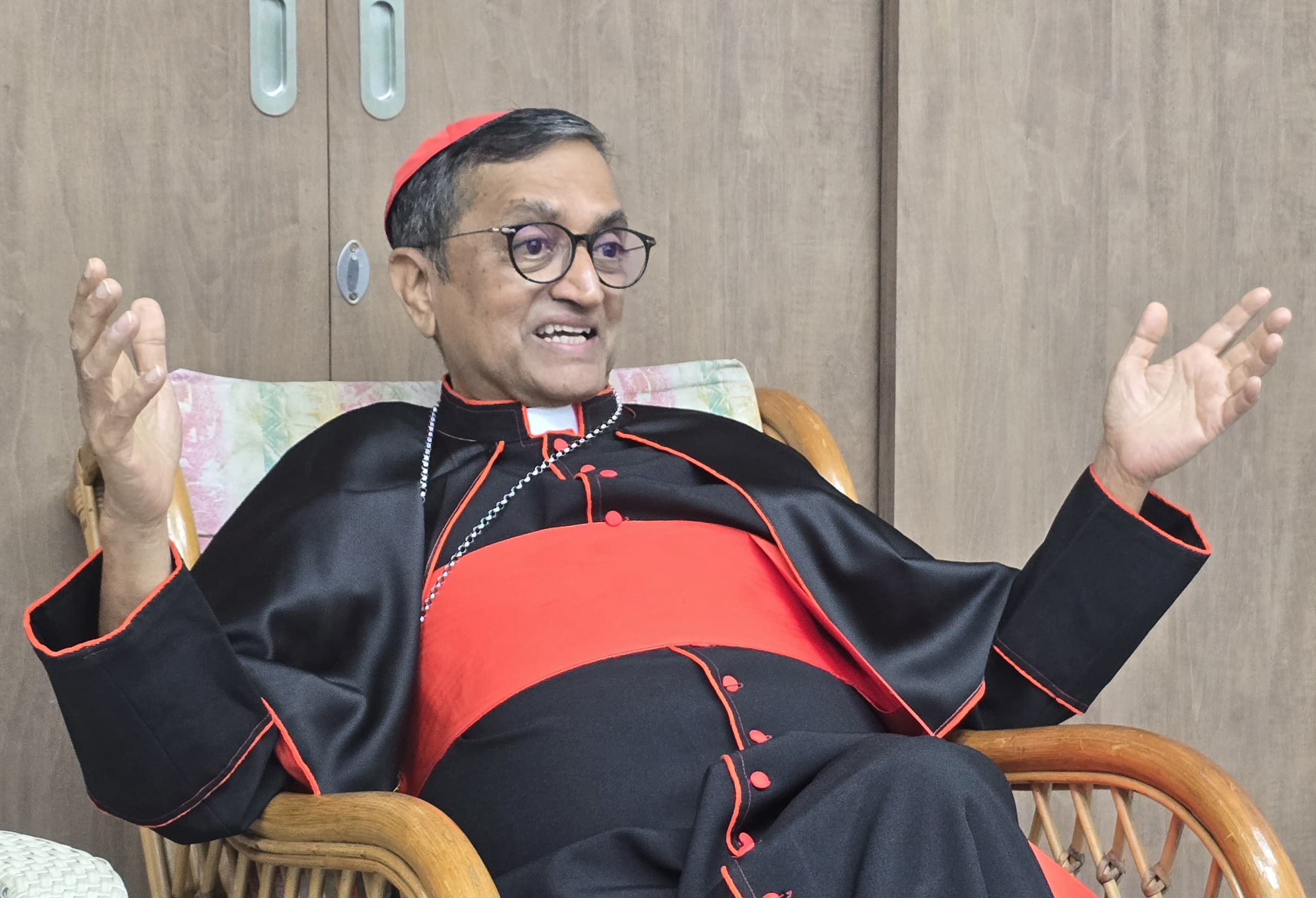


GEORGE TOWN — For Cardinal Bishop Datuk Seri Sebastian Francis, being the first Malaysian cardinal to participate in a conclave which elected a pope was not a “Malaysia Boleh” moment.
Proud of his nationality, the Bishop of Penang however emphasised that humility and universality were important considerations in participating in the May 7 conclave which saw Chicago-born Robert Francis Prevost elected as the 267th pope, Pope Leo XIV.
Bishop Sebastian, 73, was elevated to the rank of Cardinal in September 2023 by Pope Francis.
He was the second cardinal from Malaysia after the late Cardinal Archbishop (Emeritus) Anthony Soter Fernandez.
But only cardinals under 80 are allowed to vote in a conclave. Archbishop Soter was already 84 years old when he was made cardinal.
Speaking to Scoop, Bishop Sebastian acknowledged the historical significance of being the first Malaysian cardinal to have voted in a conclave but emphasised that he did not take into account his nationality while performing his duties in electing the next head of the Catholic church following the passing of Pope Francis on April 21.
Instead, the cardinal said that he was “very sensitive” to the fact that he and the other 132 cardinals who participated in the voting process were representing the universal Catholic Church.
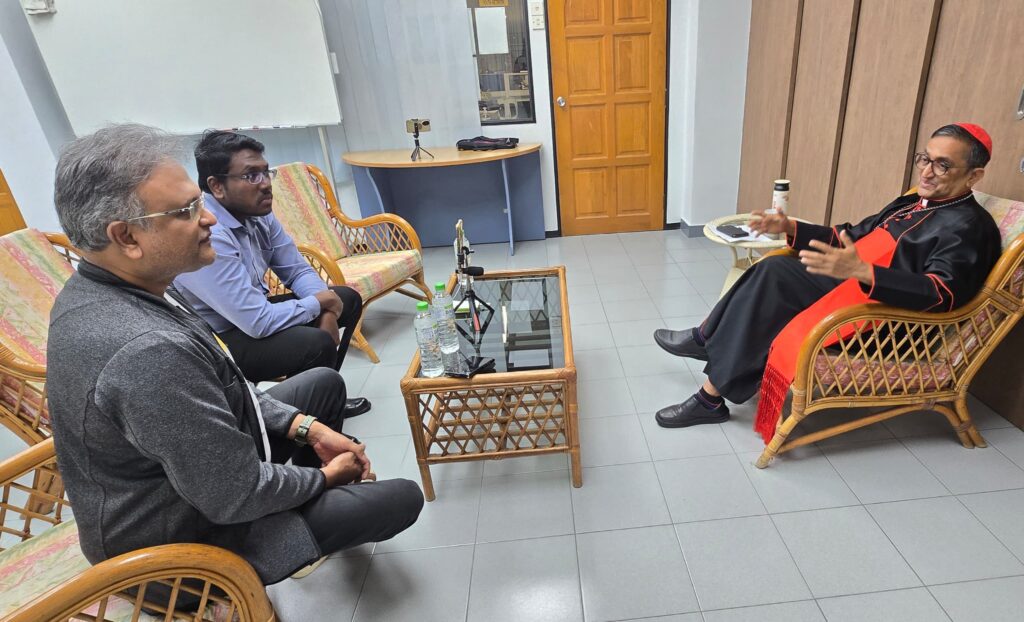
“If you go by nationality, half the nations were not there. Out of these 133 (cardinals), about half the nations who have Catholic communities, regardless of whether they are big or small, were not there in the conclave,” he said during the interview held at the Catholic Diocesan Centre at Macalister Road here on May 29.
“I can name the countries that are not there. Nepal, Laos and Cambodia were not there. (Even) Vietnam, which has a very big Catholic community, was not there because while they have a cardinal, but he is 80 and above and therefore not eligible to participate.
“Brunei was not there (as well). So I think that we, the 133 (cardinals) were not there because we represent a particular nation. We represent the universal church full stop.”
“(It is) not just national politics, or regional politics, or Asian politics, or African politics, or American,” he said, dismissing any notion of lobbying for an American pope to take on President Donald Trump’s policies which may be in contrast with the Church’s values.
How was the conclave conducted?
There were 135 cardinals eligible to vote in the May 7 conclave. However, according to Bishop Sebastian, two were unable to participate due to health issues.
The election process, said Bishop Sebastian, consisted of three parts — the pre-conclave, the conclave itself and the post-conclave.
The processes were activated with the announcement of sede vacante — which means that The Chair of St Peter is vacant due to Pope Francis’ death.
Within three days, the majority of the cardinals were physically present in Rome, where they took on the collective responsibility of governing the Catholic Church during this period. At this stage, their topmost priority was giving Pope Francis a dignified, respectful send-off.
The first part of the process was led by the Dean of the College of Cardinals, Cardinal Giovanni Battista — who is an appointee of Pope Francis.
“He is a chirpy, lively, and pleasant individual who was able to keep all the active and retired cardinals together,” said Bishop Sebastian.
“He gave us a high degree of freedom to speak our minds on the church, the legacy of Pope Francis, and our hopes on what the church needs at this point in time,” he added.
The funeral process then followed through, after which the cardinals became more focused on the direction ahead of them.
“During this crucial period of two to three weeks, the church is without a pope. But that doesn’t mean everyone is free to do what they like.
“The College of Cardinals, by tradition and by law, takes over the governance of the church. Under the Camerlengo, these few (cardinals) keep the thing together with us.
“So if there is any need to make any statement about anything happening within or without, or in the world, we do it together, collectively,” added Bishop Sebastian.
Asked whether there is a specific period of time set to elect a new pope, Bishop Sebastian said no such period is fixed as it all depends on the “inspiration, maturity, and the sense of urgency of the 133 cardinals.”
According to Bishop Sebastian, the conclave process was actually carried out in a less rigid, calm and non-divisive manner, despite the hype created by the international media which portrayed the process as a rigid one, as they came up with their own lists of “frontrunners” for the position who represented various ideological leanings, and the clashes between cardinals who subscribed to different schools of thoughts.
In fact, the 133 voting cardinals surprised the world with the speedy process undertaken in two days.
“So we are not as divided as the press wants to make us out to be. If we are divided, it would have taken a longer time because we are not in agreement. But within 48 hours and less, with four balloting (processes), the 133 of us came to a consensus.
“So if you use logic and are not prejudiced — well, these guys are not as fragmented or divided as we were made out to be by whoever wants to give that kind of agenda to the world.
“Otherwise, how do you get it so fast? And no discussions once the conclave begins!”
Bishop Sebastian said the process was shrouded in a strict form of confidentiality as voting cardinals are “totally cut off” from the press, their gadgets and the rest of the world.
He also shared that voting cardinals have to take the oath of secrecy, and breaking it would result in excommunication.
“If you are a believer, then we believe this decision (and) this appointment comes from God, the Holy Spirit, and from Christ (himself). Of course, Christ is not around to appoint the next Pope. So somebody has to do it, and the tradition has narrowed it down to these 133 (cardinals) for this particular conclave,” he added.
Cardinals were not looking for a clone of Pope Francis
Prior to the conclave, there was a fervent discourse which took place within the Western media on whether the new pope should inherit or continue the legacy of the late Pope Francis — who was seen as passionate about the poor, migrants, human rights and climate change.
However, Bishop Sebastian said the cardinals were clear that they did not want a clone of Pope Francis — even if the world wanted that.
“We don’t want a clone (of Pope Francis) but the spirit of Vatican II (the second Vatican Council 1962-1965), which initiated a certain development in the Church to reach out to the (modern) world and not just to Catholics.
“We must allow the new pope to be the man God has made him to be. Not what Pope Francis has made him or me or whoever to be. So our personal likes and dislikes don’t really matter so much.”
Asked whether Pope Leo can be considered a “compromise pope” between conservatives in the Church and those aligned to Pope Francis’ more inclusive policies, the cardinal responded: “It’s one thing to talk about speculation (and) it is another thing to talk about the reality on the ground.
“I can speak because I am part of the reality on the ground, not part of the speculation or part of the hype.
“I think the reality on the ground was much more sober, balanced, human, sacred, solemn, quiet, and contemplative than what is made out to be in the outside world.” — May 31, 2025