

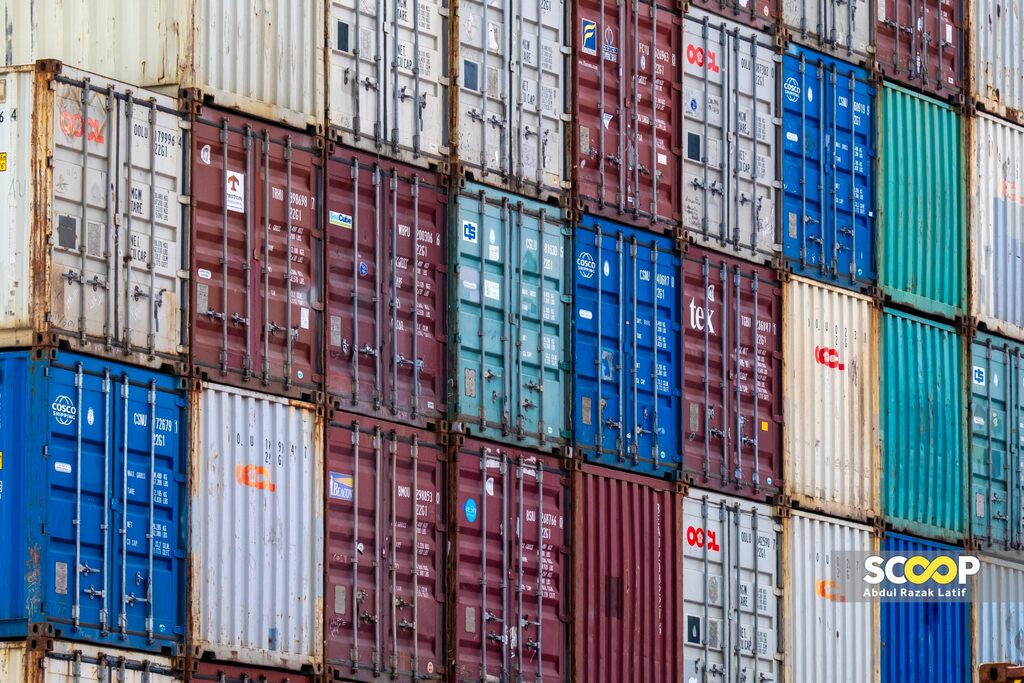
ECONOMICS students are being told that both subsidies and tariffs are government interventions in trade. A subsidy is a government payment to a domestic industry, while a tariff is a tax on imported goods. Both make imported goods more expensive and potentially less competitive.
Subsidy programmes have been rising since the 2008 global financial crisis and supposedly create distortions to trade. Not surprisingly, subsidies are concentrated among the world’s biggest trading economies, including the United States, the European Union and China.
The World Bank says it creates trade-distortive effects and confers an advantage on domestic producers over foreign competitors.
According to the International Monetary Fund (IMF), fossil fuel subsidies reached US$7 trillion in 2022, accounting for about 7% of global GDP, and the US ranks second in the world in its support of the oil and gas industry through the tax code, royalty rates and direct funding.
It spurred economic growth (8% of GDP) and created 10.3 million jobs that pay extremely high wages.
These subsidies have adverse effects on economic efficiency, growth and inequality. Other damages come from carbon emissions, global warming, air pollution, traffic congestion, traffic accidents and road damage.
The IMF argued that getting energy prices right can help governments achieve their environmental and economic growth goals. Increasing it gradually would generate fiscal gains of about 3.5% of GDP and could be a game changer for fiscal policies.
It gives room for governments to reduce taxes, raise growth-enhancing public expenditure, and finance targeted cash transfers for the poor.
In agriculture, direct subsidies of more than $635 billion a year drove the excessive use of fertilisers that degrade soil and water and harm human health. Subsidies for products such as soybeans, palm oil, and beef cause farmers to push into the forest frontier and are responsible for 14% of forest loss every year.
On paper, the concerns of the IMF look good, but how about local issues like inflation, economic fundamentals, per capita income and economic resources or factors of production…the playing field is not at all level. Not forgetting producers of gas-guzzler automobiles.
Further, where is the distortion? As of 2024, world trade volume and value have expanded 4% and 5% respectively on average since 1995, when the WTO was first established.
Today, uncertainty is the defining theme of the global economic environment according to the World Economic Forum’s (WEF) latest Chief Economists Outlook.
The growth outlook is divided, with weak prospects in North America, cautious optimism in Europe and resilience in Asia-Pacific. Nearly all the chief economists (97%) place trade policy among the areas of highest uncertainty, followed by monetary policy (49%) and fiscal policy (35%).
Making the right decisions in an environment of exceptional uncertainty has become increasingly difficult.
And I guess we all know the source of this uncertainty. They consume more than they can produce and put the blame on everyone else.
Tensions amped up after the president doubled tariffs on steel and aluminium and pushed countries for deals ahead of the deadline. China responded, accusing the US of breaching the agreement and vowing to protect its interests.
The US, on its own volition, can unilaterally introduce discriminatory restrictions, which include new guidelines on artificial intelligence (AI) chip export controls and the withdrawal of Chinese student visas. And now, without shame, trying to push countries to lay their “best offers” on the table.
For the record, the president had exceeded his authority in imposing the “Liberation Day” trade levies. The appellate process will likely continue for months, so a pause that long would be a small win for the White House.
Businesses will delay strategic decisions, potentially increasing recession risks, and those that are suffering will continue to suffer.
At the other end, global military spending spiked due to perceived threats, drawing comparisons to the Cold War era amid warnings that public debt is already hitting troubling levels. Europe contributed a big part of the global military spending increase in 2024. These outlays call for increasing taxes or cutting back on other priorities.
To meet a defence-spending target of 2.5% of GDP, the euro area needs to increase expenditures by an additional 0.6% of GDP annually. Goldman Sachs Research estimated that additional spending on defence will have a fiscal multiplier of 0.5 over two years. One analysis suggested that every €100 it spends on defence could boost GDP by about €50.
Needless to say, most of the top beneficiaries of government subsidies over the last quarter of a century in the US are companies supplying defence equipment, including chips and semiconductor technologies. Over the same period, top of the list is Boeing, which received nearly US$16 billion.
At the same time, policymakers and business leaders are told to respond with greater coordination, strategic agility and investment in the growth potential of transformative technologies like AI. All in the name of securing long-term resilience and growth.
Can’t we have peace? Who is the world’s number one war-monger, according to former president Jimmy Carter?
It has built a system of permanent war with a burning ambition for perpetuating its global hegemony and has frequently provoked nations. It has committed mass atrocities against innocent civilians time and again and created numerous human rights catastrophes, and justice has yet to be done.
With peace, there will be more growth, less uncertainty, and resilience will not be in the vocabulary. And the cheaper alternative on the worry about global warming is to reduce beef, bread and cheese consumption.
It is too convenient for the West to criticise others for crimes against humanity and handing out subsidies while they refuse to look in the mirror. Don’t throw stones if you live in a glasshouse.
What say you? – June 5, 2025
Saleh Mohammed reads Scoop