

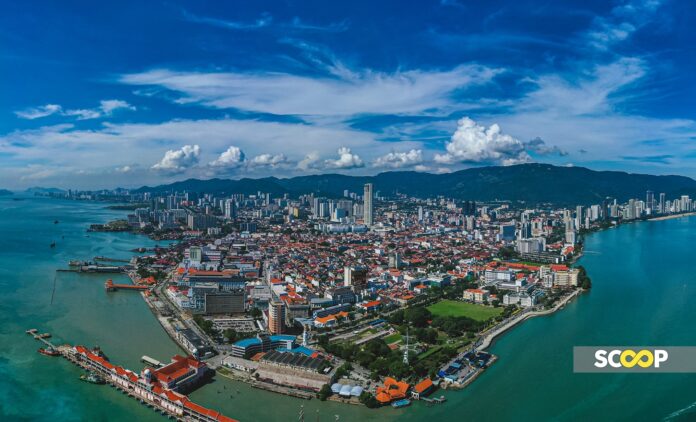
GEORGE TOWN – A tax lawyer and an academic have supported a Penang assemblyman’s proposal for the state to be fairly compensated for its outsized contributions to the national economy.
They suggest this can be done through a transparent revenue-sharing model that reflects Penang’s economic output, implemented via fiscal decentralisation or redistribution of other tax revenues.
Bukit Tengah assemblyman Gooi Hsiao Leung has called on Putrajaya to ensure a minimum share of revenue from the sales and services tax (SST) is allocated to each state based on its contribution to national gross domestic product (GDP) in the upcoming 13th Malaysia Plan (13MP).
This, he said, would help address the limited tax revenue that states are currently able to collect under the existing framework.
Associate Professor Tricia Yeoh of the University of Nottingham Malaysia and tax lawyer S. Saravana Kumar of RDS Partnership both agree with Gooi’s proposal.
Yeoh argued that such a model would strike a fair balance between equity and justice — ensuring that poorer states benefit from national wealth while wealthier states are duly recognised for their investments and contributions to growth.
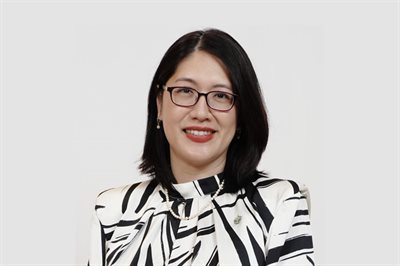
However, she acknowledged that the federal government may be reluctant to relinquish any share of SST revenue, given its importance to national coffers.
“(As an alternative), states might consider revisiting other tax-sharing mechanisms, such as the tourism tax revenue model that was introduced during the first Pakatan Harapan administration,” Yeoh told Scoop when contacted.
Saravana pointed to India’s revenue-sharing model under its goods and services tax (GST) as a potential reference.
In India, GST revenue is shared equally between the central and state governments.
Oversight is provided by the GST Council — a governing body chaired by the finance minister and comprising 33 members, including representatives from the central and state governments.
“The council functions as the apex decision-making body that proposes, reconciles or modifies laws related to GST. Its recommendations are submitted to the Indian Parliament for legislative action,” Saravana explained.
‘What is fiscal decentralisation?’
According to the Development Bank of Latin America and the Caribbean (CAF), fiscal decentralisation involves transferring budgetary authority from the central government to elected subnational governments, enabling them to make decisions regarding taxation and expenditure.
Saravana said this model should be adopted in Malaysia, arguing that it improves governance by allowing local authorities to tailor services and policies to local needs and priorities.
“It also enhances accountability, as state and local governments are answerable to their citizens for public spending. Furthermore, decentralisation can drive economic growth by encouraging innovative policies and attracting investment,” he said.
He added that fiscal decentralisation can also promote fiscal equalisation, as intergovernmental transfers help reduce disparities in income and access to public services nationwide. Saravana cited Germany and Australia as federated countries that have successfully implemented such systems.
‘Penang gives much, receives little’
During a recent state assembly sitting, Gooi highlighted that Penang — despite being one of Malaysia’s smallest states — consistently ranks among the country’s top economic contributors, yet remains underfunded.
He pointed out that Penang had to borrow RM100 million from the federal government last year due to cash flow concerns.
He argued that the current federal tax distribution framework leaves states like Penang without sufficient resources to sustain development.
Based on projected SST collections of RM51 billion in 2025, even a 1% return would yield Penang RM510 million — enough to cover its shortfall.
Yeoh noted that the current formula for federal tax distribution lacks transparency, comprehensiveness, and flexibility. This, she said, fuels dissatisfaction among states that contribute significantly to national growth.
To address the issue, she proposed establishing a non-partisan Grants Commission to handle all federal-state financial matters transparently and equitably. “This would reduce recurring disputes over state allocations,” she added.
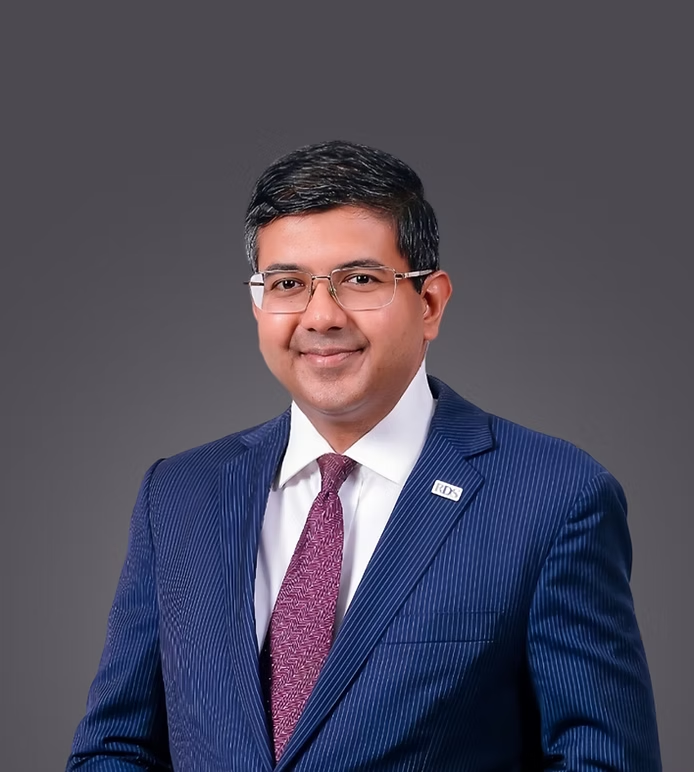
Saravana echoed similar sentiments, noting that states such as Johor, Sabah and Sarawak have long felt short-changed despite their economic contributions.
He attributed this to federal development strategies that overly prioritise the Klang Valley, citing infrastructure investments like the MRT and KL Sentral as examples not replicated elsewhere.
“This perception — whether right or wrong — persists among Malaysians living outside the Klang Valley. It’s compounded by the fact that the economy is centrally planned, instead of being guided by market forces,” he said.
Saravana urged the federal government to adopt a more transparent, inclusive and consultative approach in shaping the nation’s economic growth, starting with fiscal decentralisation.
‘New equalisation grant formula needed’
Gooi also called on Putrajaya to introduce a revised formula for the capitation grant — one that factors in not only population size but also each state’s economic contributions and fiscal needs.
Saravana agreed, arguing that the current RM14 per capita formula is woefully inadequate. “It doesn’t even cover three meals a day. That cannot be the basis for state grants,” he said.
Yeoh added that an equitable formula should balance economic contributions with fiscal needs, pointing to Pakistan and Australia as countries that have adopted broader criteria for determining equalisation grants.
‘Revenue-sharing need not wait for 14MP’
Asked whether a revenue-sharing mechanism could be introduced under the 14th Malaysia Plan, Yeoh said it did not need to be tied to any Malaysia Plan at all. “It simply requires leadership from the Finance Ministry, which is responsible for the country’s fiscal planning,” she said.
She called for the creation of a permanent State-Federal Commission or taskforce to address intergovernmental challenges, including fiscal transfers and disputes.
“This platform should involve federal and state representatives, alongside independent experts who can help define its mandate and ensure proper implementation,” she said.
Saravana, meanwhile, was less optimistic. He said it was unlikely that such a revenue-sharing model could be included in the 13MP due to time constraints. However, he believed it could be initiated immediately — if there were political will.
He cited Sabah and Sarawak, which are still negotiating with Putrajaya over financial matters despite the Malaysia Agreement 1963 (MA63) being in place.
“There must be genuine political will to make this happen,” he said. — June 14, 2025