

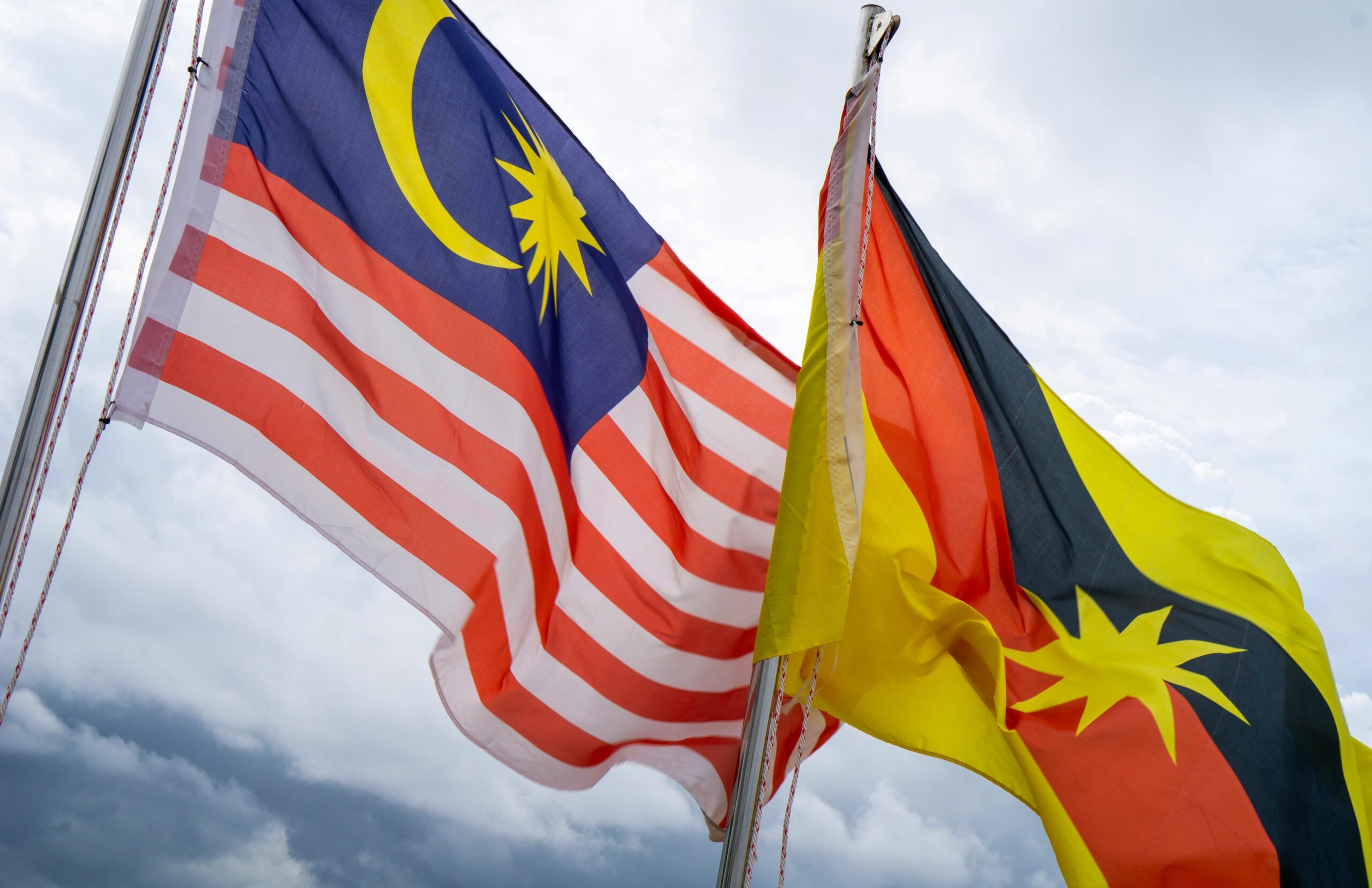
KOTA Sentosa assemblyman Wilfred Yap recently told Borneo Post, “those who feel threatened by Sarawak’s rightful autonomy to revisit the true spirit of federalism”.
A strong Malaysia, he said, must be built on mutual respect and genuine partnership among all its states — Sarawak and Sabah included.
Defending Sarawak’s increasing role in managing its own gas resources, Yap stressed that the state’s push for greater autonomy is not an act of defiance, but a matter of fairness and a rightful reclaiming of what was promised under the Malaysia Agreement 1963 (MA63) — particularly to those critics in Peninsular Malaysia.
State quietly thriving in a complex federation
There was a time — not too long ago — when Sarawak bore the burden of contradiction: the richest state in natural resources, yet home to some of Malaysia’s poorest people. For decades, it was a political footnote in federal calculations, seen as a “deposit” during general elections and then forgotten.
But today, Sarawak is reshaping that narrative with quiet confidence, steady reforms, and policies that put people above politics. The credit goes, in no small part, to the leadership of Premier Tan Sri Abang Johari Tun Openg, who has proven that governance need not be loud to be effective.
As the peninsula grapples with racial and religious tension, federal dysfunction, and policy flip-flops, Sarawak has quietly charted a progressive path of its own.
“We want Sarawak to be a developed state by 2030, powered by data and innovation, guided by integrity, and driven by a united people,” said Abang Johari in the Sarawak State Assembly in 2021.
It was not a soundbite — it was a roadmap.
Education as the great equaliser
At the heart of Sarawak’s transformation is education. The state now offers free tertiary education through its own initiatives, particularly under Yayasan Sarawak, making it one of the few places in Malaysia where university education is not a luxury, but a right.
Premier Abang Johari has been vocal about education as the cornerstone of progress:
“We want no child to be left behind because of poverty. Education must be free for Sarawakians at least up to the university level.” (TVS interview, January 2024)
In addition, the state has adopted a Cambridge-based syllabus in schools, and reintroduced the teaching of Mathematics and Science in English—not as a defiance of national policy, but as a deliberate move to empower Sarawak’s future generation.
“English is an international language, and Sarawakians must be equipped to compete globally,” he stated at the Sarawak Education Conference in 2023.
This decision was met with overwhelming public support, especially from rural communities who understand that economic mobility begins with education—and education begins with language.
The transformation is not theoretical. It is visible, measurable, and deeply felt by those who call this land home.
Sovereignty of services: From TV to airlines and banks
Sarawak has also taken bold steps in asserting its sovereignty over communication and mobility. It launched TVS (TV Sarawak) — a state-owned television station — in 2020 to provide Sarawakians with a platform that reflects their own stories, languages, and values. For far too long, East Malaysia was seen through a West Malaysian lens. TVS changed that.
It doesn’t stop there. In an unprecedented move, the state is creating its own airline, with operations expected to begin by 2025. While critics scoffed, the rationale was simple and practical.
“We are not trying to compete with MAS or AirAsia. We just want better accessibility for our people, especially in the interior,” said Abang Johari in a 2023 interview with The Borneo Post.
Additionally by holding significant ownership in Affin Bank, Sarawak is not only diversifying its investment portfolio but also positioning itself to play a more active role in shaping financial policies that directly benefit its people and regional economy.
This is what people-first policy looks like – not flashy announcements, but solutions that solve real, local problems.
Clean energy, clean politics
Sarawak has not only distanced itself from the peninsula’s race-obsessed politics—it has leapt ahead in clean energy initiatives, becoming a pioneer in hydrogen fuel technology. Under the Post-Covid Development Strategy (PCDS) 2030, the state is pushing hard into green infrastructure, carbon trading, and digital farming.
“Our future lies in clean energy. Sarawak wants to lead, not follow,” said the Premier at the Asia Economic Forum in Seoul, 2023.
This isn’t environmental lip service. Sarawak is building Asia’s first hydrogen-powered autonomous rapid transit (ART) system in Kuching. While Putrajaya’s green policies remain on paper, Sarawak’s are already in motion.
Harmony without hypocrisy
Perhaps the most refreshing aspect of Sarawak’s governance is what it chooses not to do.
In a country increasingly polarised by identity politics, Sarawak has maintained a remarkable equilibrium. Religion is not weaponised. Race is not a political strategy. Political rhetoric in Sarawak doesn’t include vilifying minorities or stirring suspicion between groups.
“In Sarawak, we don’t politicise religion. We respect each other. That is our strength,” said Abang Johari at a Christmas Open House in 2022.
Sarawak’s ethnic mosaic—comprising Dayaks, Malays, Chinese, Indians, and Orang Ulu—lives not in forced tolerance but in lived harmony. It is this cultural ethos that allows policies to be made on the basis of need, not race.
Federalism done right
Sarawak has also been proactive in reclaiming its constitutional rights under the Malaysia Agreement 1963 (MA63). The state now has greater say in education, healthcare, and tax revenue, and is demanding more.
“Sarawak is not a state that begs. We are partners in Malaysia, not subordinates,” said Abang Johari during the MA63 anniversary in 2023.
In contrast, the federal government continues to treat East Malaysia as a political afterthought. Budget allocations are uneven, infrastructure development is sluggish, and national policies rarely reflect the unique needs of Sabah and Sarawak. Sarawak’s response? Self-reliance.
Not perfect, but purposeful
To be clear, Sarawak is not without its problems. Rural poverty, indigenous land rights, and youth migration remain pressing issues. But unlike federal leadership, Sarawak does not hide behind excuses. There is political will to confront these problems—head-on.
Where many in Putrajaya are still debating what to do, Sarawak is already doing it.
Time to learn from the East
Sarawak is not just another state. It is a living critique of what the rest of Malaysia has become—and what it could still become. It is proof that development without division is possible, that politics need not be polarising, and that a federation can still work—if we let it.
If Malaysia wants to move forward, it must look East—not just geographically, but philosophically. Because in Sarawak, we see not just autonomy, but authenticity. — June 17, 2025
Joseph Masilamany is a seasoned journalist and Scoop’s contributing writer