

KUALA LUMPUR — The government’s fiscal reform initiatives, including the expansion of the sales and services tax (SST) scope and the rationalisation of electricity and diesel subsidies, are designed to ensure long-term fiscal sustainability while safeguarding lower-income groups and key sectors.
Treasury secretary-general Datuk Johan Mahmood Merican said a central component of the reform agenda is the Fiscal Responsibility Act, which targets a reduction in the federal fiscal deficit to 3.8% of GDP in 2025, and further to 3.0% by 2028.
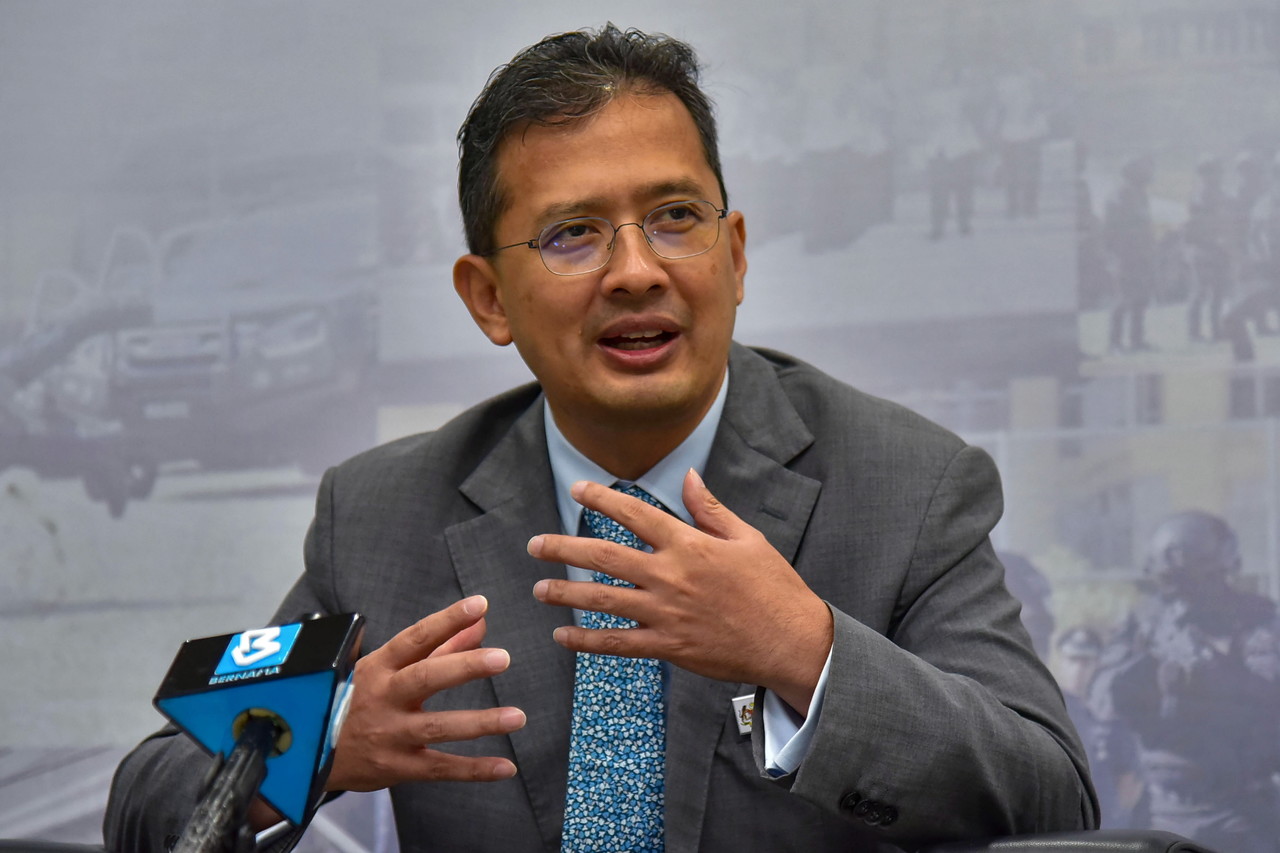
He said that recent public attention has centred on the SST, and explained that the government aims to adopt a more targeted and socially conscious approach — one that aligns with the Prime Minister Datuk Seri Anwar Ibrahim’s emphasis on social protection, Bernama reported.
“How do we then try to approach it more progressively? It is the government that needs to provide additional funding.
“We need to increase our tax base as our tax-to-GDP (ratio) is about 12.5%, which is amongst the lowest in this region,” he said during a session titled “Social Safety Nets: Securing the Future” at the Sasana Symposium 2025, hosted by Bank Negara Malaysia today.
Johan stressed that expanding the tax base is necessary not only to sustain public expenditure but also to meet growing demands for social protection and basic infrastructure.
He added that this must be done progressively, with safeguards to ensure that essential goods for daily use are not subjected to higher SST rates.
From an equity perspective, Johan said it was counterintuitive to allocate the same level of government assistance to both low-income and high-income individuals.
Hence, he said, the government typically opts for a more targeted approach as part of its broader reform strategy, to ensure that support is channelled to those most in need.
He pointed out that RM10 billion was allocated for the Sumbangan Tunai Rahmah (STR) programme in 2024, and this amount has been increased to RM13 billion in 2025, which now includes a supplementary aid initiative, Sumbangan Asas Rahmah (Sara).
On the issue of wealth taxes, Johan acknowledged that while the idea of a progressive wealth tax is intellectually appealing and aligned with Islamic principles such as zakat, it poses significant challenges in terms of administration, enforcement, and access to reliable data.
He said that income and consumption taxes are easier to manage due to their regular and traceable nature, whereas wealth is far more difficult to assess and value.
“I mean, it is very Islamic because zakat, in a sense, is based on wealth. But I think the real challenge — and it is not just a Malaysian issue but also a global issue — is that it is quite challenging to administer a wealth tax compared to an income tax,” he added. — June 18, 2025