


KUALA LUMPUR – The Malaysian government is keeping a close watch on geopolitical developments and global uncertainties that may impact the domestic economy, particularly as it prepares for the expanded sales and service tax (SST) implementation.
The Finance Ministry’s Treasury secretary-general Datuk Johan Mahmood Merican said external risks – including ongoing conflicts and global market instability – continue to pose challenges to Malaysia’s fiscal planning and inflation outlook.
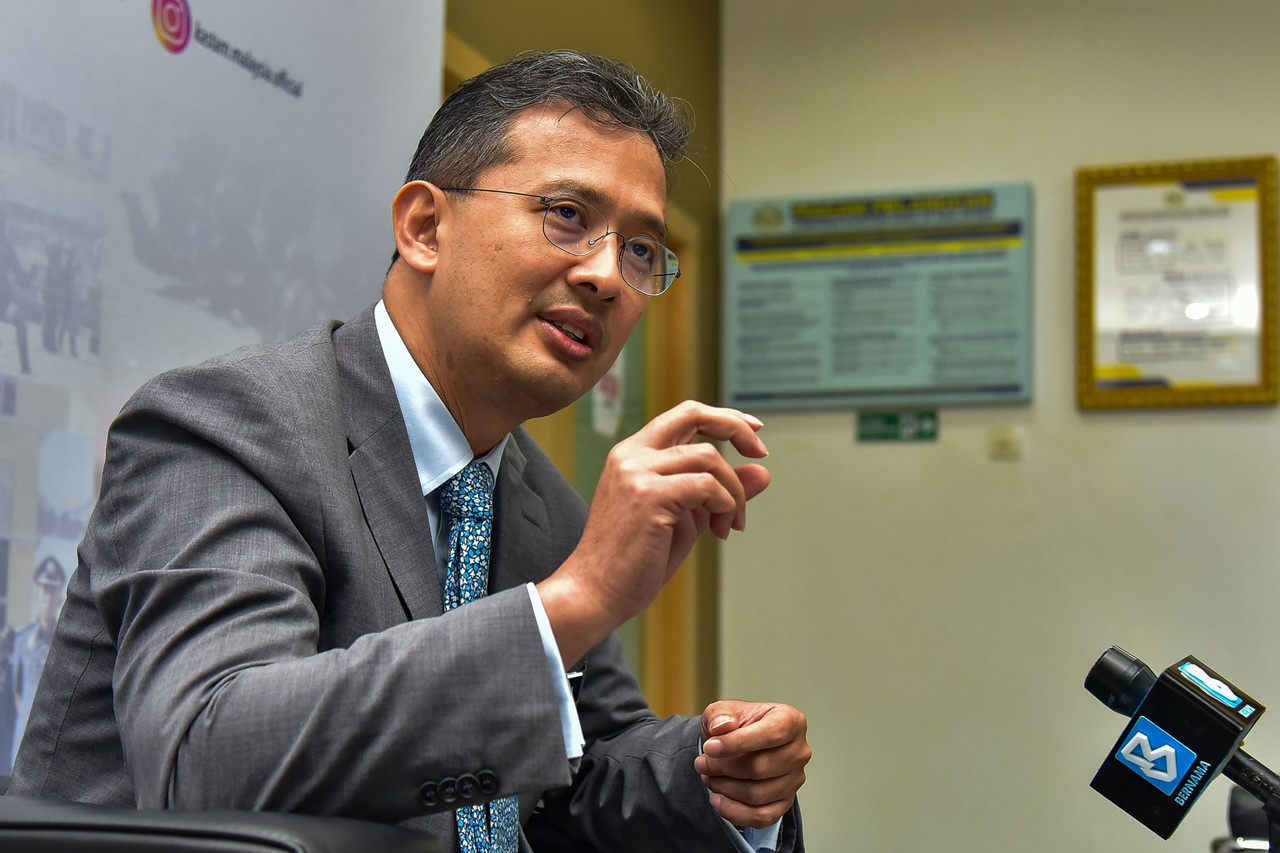
“We live in a very volatile environment globally. You’ve got geopolitical risk, you’ve got inflationary risk, you’ve got risk of trade fragmentation,” he he spoke to reporters during the Concorde Club meeting today, hosted by Bernama chairman Datuk Seri Wong Chun Wai.
He cited the economic consequences of the Ukraine war as a key lesson: “Initially, we thought Malaysia wouldn’t be affected too much – we don’t trade with Russia and Ukraine significantly. But what we didn’t realise was how much of an input Ukraine was to feed, which affected poultry prices.”
He noted that similar caution was needed with current tensions in the Middle East.
“There’s uncertainty in terms of how much this will escalate, and how much it will affect things like oil prices.”
Oil price volatility, he said, remains a critical factor: “It started off the year mid-US$70s, and last month went down to low US$60s, and has gone back up again.”
Despite this, he said inflation has remained relatively low.
“Our inflation is still below 2% for the first few months of this year,” he said, noting that the government’s internal estimate for SST’s impact on inflation aligns with external assessments such as Maybank’s projection of a 0.25 percentage point increase to the consumer price index.
On fiscal policy, Johan reiterated that the SST expansion, effective July 1, is part of the government’s strategy to reduce reliance on oil-related revenue and build long-term sustainability.
“We expect it to bring in about RM5 billion in 2025, and maybe RM10 billion in 2026,” he said.
He added that targeted subsidy reforms would continue, including for RON95 petrol. “We’ve said that we plan to implement RON95 rationalisation in the second half of the year. Of course, subject to final Cabinet decision,” Johan said.
He compared the effort to earlier reforms in electricity and diesel, which used tiered approaches to minimise impact on lower- and middle-income households.
“This is not just about being efficient,” he said.
“This is about creating fiscal space to support the people who need it the most.” – June 23, 2025