

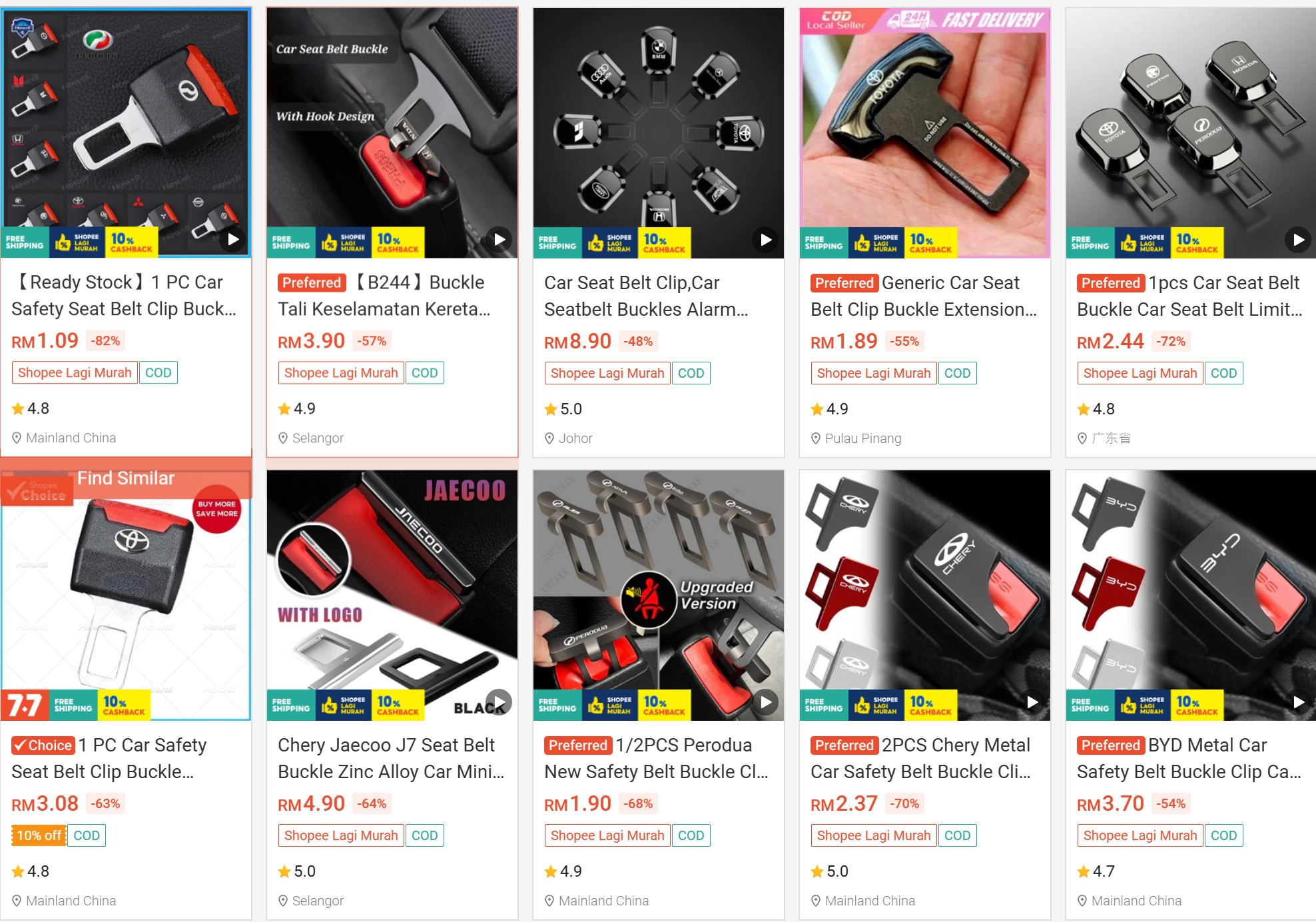
KUALA LUMPUR – The government has formally gazetted a ban on the import of dummy seatbelt buckles, with enforcement set to begin on December 31, 2025.
The prohibition, outlined under the Customs (Prohibition of Imports) (Amendment) (No. 2) Order 2025, is part of the existing Customs (Prohibition of Imports) Order 2023 and applies to all countries of origin. The ban is enforced under subsection 31(1) of the Customs Act 1967.
According to the order, the prohibited items include dummy buckles, seatbelt alarm stoppers, clip extenders or any device intended to bypass or disable the seatbelt reminder system, thereby rendering the safety mechanism ineffective.
The move follows growing concerns about the widespread use of such accessories. During the Chinese New Year period in 2025, 195 summonses were issued for seatbelt offences, with over a third linked to dummy buckle usage.
Transport Minister Anthony Loke previously acknowledged his ministry’s limited jurisdiction over such products, noting that while it could not ban imports, it would collaborate with the Ministry of Domestic Trade and Cost of Living to curb their sale locally.
Negeri Sembilan Road Transport Department (JPJ) director Hanif Yusabra Yusuf highlighted that around 30 per cent of drivers admitted to using dummy buckles, often citing discomfort or forgetfulness as reasons for bypassing the safety feature.
In tandem with regulatory efforts, the Road Transport Department (JPJ) has also intensified enforcement of seatbelt rules, particularly on express and tour buses.
Yesterday, JPJ Kedah deployed undercover officers at the Alor Setar Toll Plaza (northbound) to identify passengers and drivers failing to wear seatbelts. The operation, which began at 4.30pm, involved checks on 18 buses, resulting in 16 compound notices and two warnings issued.
JPJ Kedah director Stien Van Lutam said the covert strategy enables enforcement even outside of roadblocks or terminal checks, as long as there is visual evidence of non-compliance.
“Our enforcement is not limited to roadblocks or checks at bus terminals and rest stops. Through undercover operations, if drivers or passengers are found not wearing seatbelts – and there is visual evidence – a compound will be issued,” he said.
He stressed the importance of wearing seatbelts to reduce the risk of passengers being ejected during accidents, while also urging bus operators to ensure that seatbelt facilities are functional.
“In many cases, seatbelts are present on the seats, but they’re damaged or unusable. That’s unfair when enforcement is being carried out, but the facilities are inadequate,” he said, adding that JPJ will continue to work closely with police and other agencies to ensure compliance.
The enforcement comes under the Motor Vehicles (Seat Belts and Child Restraint Systems) Regulations 1978 Amendment (2008), which is now being fully applied to all passengers and drivers of express and tour buses. – July 2, 2025