

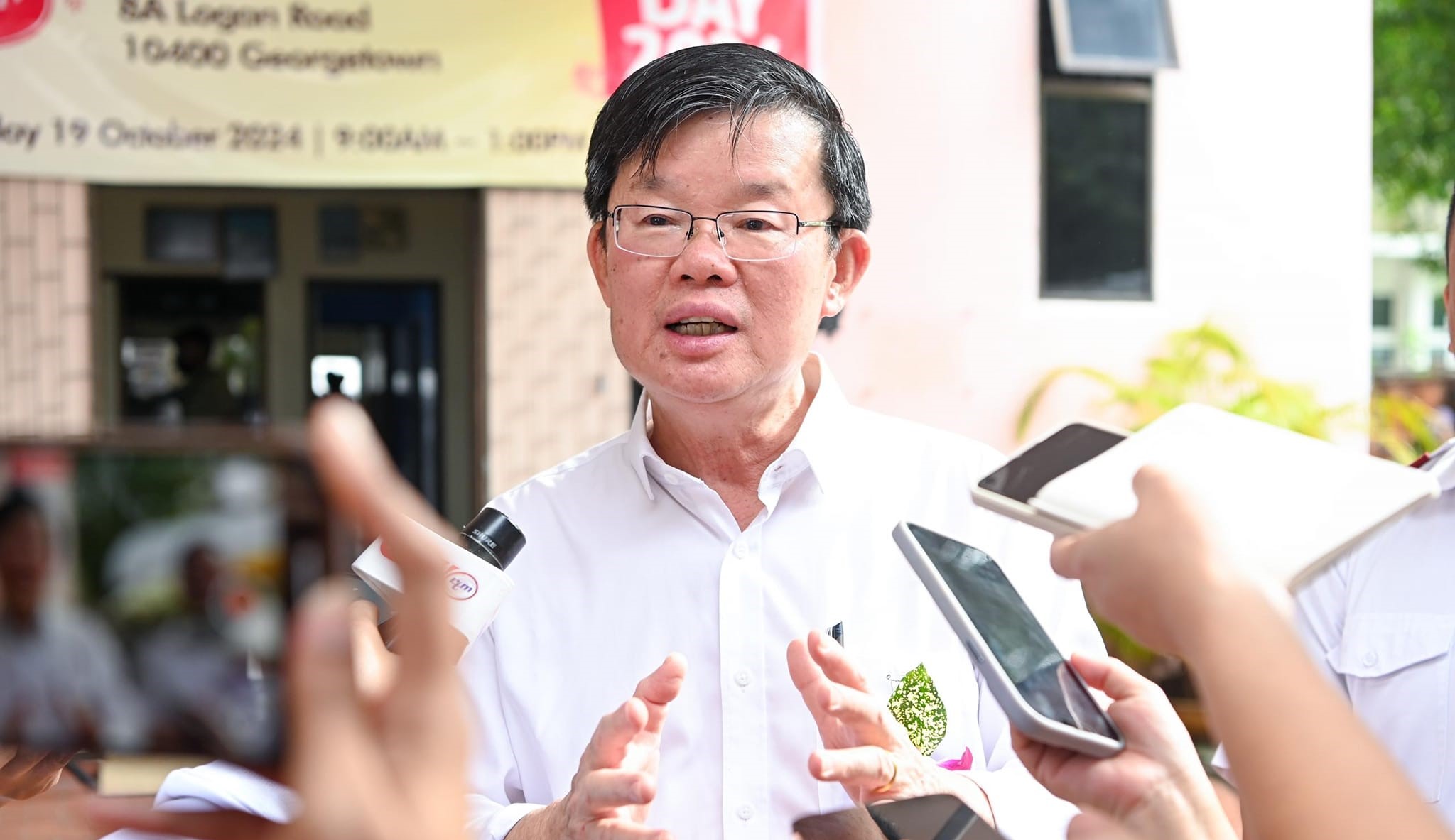

GEORGE TOWN – The United States’ move to impose 25% reciprocal import tariffs on Malaysia – up from the previously paused 24% rate – will affect Penang’s highly export-oriented economy, says Chief Minister Chow Kon Yeow, who has urged Putrajaya to negotiate with Washington for a lower rate.
In a statement, Chow noted that Penang accounted for 55% of Malaysia’s total exports to the US, valued at RM52 billion. A significant portion of these exports comes from American multinational firms based in the state, primarily shipping finished products or components back to their parent companies.
He said electrical machinery and equipment made up 77% of Penang’s exports to the US, largely driven by the semiconductor industry. While semiconductors are currently exempt from the tariff, Chow warned the broader 25% rate still poses a risk to the economy.
“The 25% tariff is expected to impact Penang’s highly export-oriented economy, which is deeply integrated into global value chains,” said Chow.
“Furthermore, variations in tariff rates across the Asean region could distort trade dynamics and influence future investment decisions throughout the region.
“In light of this, there is an urgent need for the Malaysian government to continuously engage with its US counterparts to negotiate a lower tariff rate.”
He also stressed that attention must be given to non-tariff policies and trade barriers to protect Malaysia’s trade competitiveness.
Despite the hike, Chow said Penang would continue working closely with the federal government and industry players to safeguard the country’s economic interests.
“The state will also remain committed to enhancing infrastructure, streamlining business processes, and improving the cost of doing business to sustain its role as a vital hub in the global supply chain and ensure long-term economic resilience,” he added.
Penang had earlier taken steps to prepare for the US tariff hike, first announced as a 24% rate in April, by establishing the Penang Tariff Monitoring Taskforce and a Trade Adaptation Toolkit.
The task force serves as a central platform to monitor trade developments, engage affected industries, and support policy formulation in collaboration with the Investment, Trade and Industry Ministry and the Malaysian Investment Development Authority.
Separately, Penang is working with the federal government to develop the trade toolkit aimed at helping exporters and SMEs adapt to rising tariff pressures, compliance demands, and origin restructuring, Bulletin Mutiara reported in April.
However, Chow had cautioned then that while the measures represent a strategic and proactive response, they are not overnight solutions. – July 8, 2025