

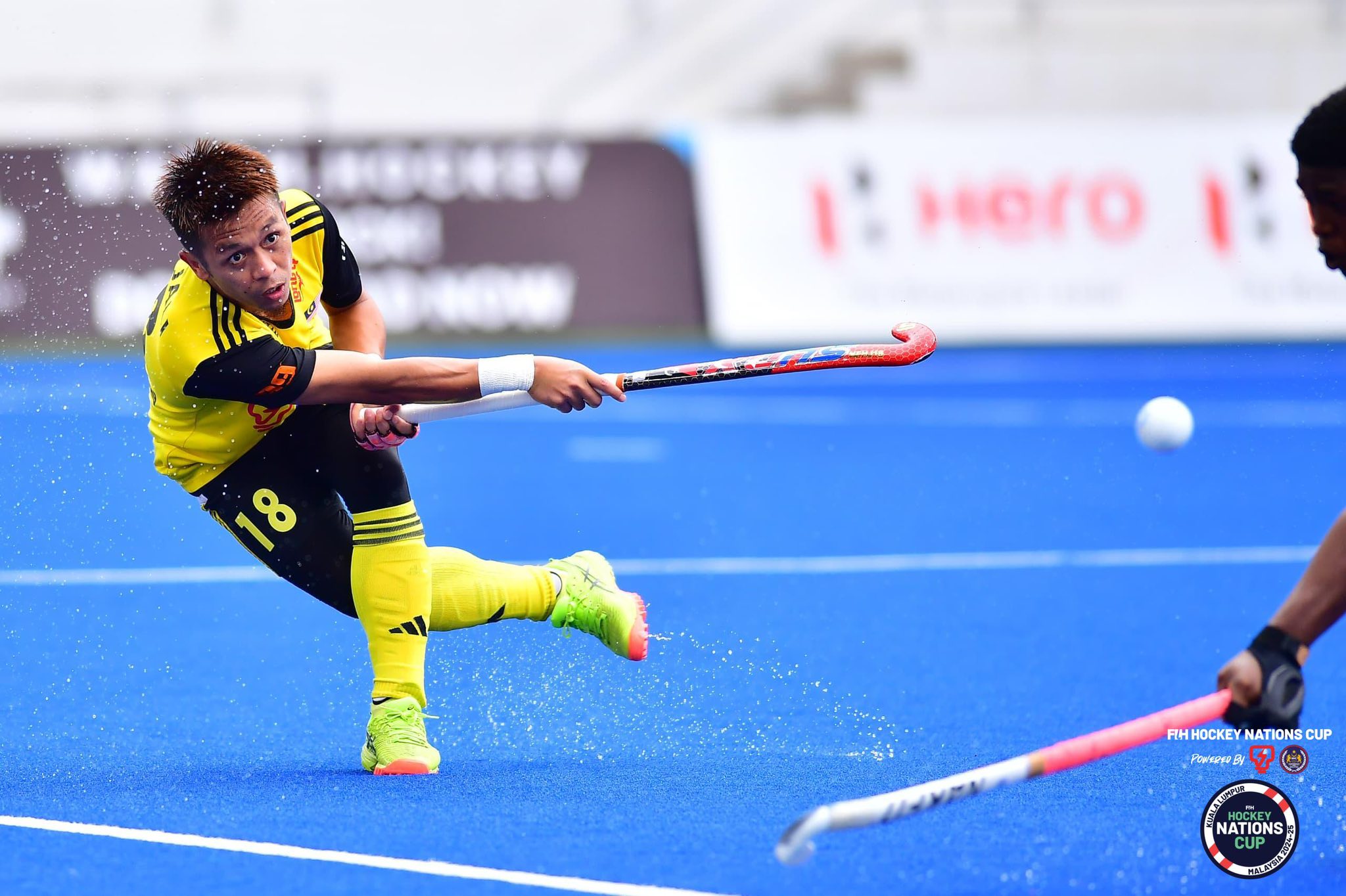

KUALA LUMPUR – With their sights firmly set on qualifying for the 2026 FIH Hockey World Cup, the Speedy Tigers have intensified preparations by undergoing rigorous chamber training at the National Sports Institute (NSI) in Bukit Jalil.
Speaking to Scoop, national men’s hockey head coach Sarjit Singh said the initiative forms part of a broader plan to elevate the team’s physical standards ahead of next month’s Asia Cup, a key qualifying tournament for the World Cup.
“Fitness has been my top priority since the day I took charge of the national team. While we’ve seen gradual improvements over the years, we must ensure our performance peaks at the Asia Cup,” said Sarjit.
“Qualifying for the World Cup remains our ultimate goal, and performing well at the Asia Cup is crucial to achieving that. To succeed, we must step out of our comfort zone and adopt a variety of training methods that push our fitness to the highest level.
“This chamber training, introduced with the support of the NSI, has proven highly beneficial. It enhances endurance, improves recovery, and simulates high-altitude conditions to boost cardiovascular performance.
“The data we gather allows us to assess athlete capabilities and monitor physical standards more effectively.
“We’re grateful to NSI for providing the technology and expertise to implement this programme. While not entirely new, this type of training has already been adopted by leading hockey nations in Asia and Europe.
“It’s important we stay on the radar and keep pace with global advancements, so we’re not left behind.”
Chamber training – also known as hypoxic training – exposes athletes to low-oxygen environments similar to those found at high altitudes. This forces the body to adapt by producing more red blood cells, thereby improving oxygen delivery to muscles and enhancing stamina and endurance.
The method is widely used by elite endurance athletes and has been incorporated into the training programmes of Olympic teams and professional sports franchises worldwide.
According to global sports scientists, the controlled environment allows for measurable improvements in performance metrics while avoiding the risks associated with actual high-altitude training, such as illness or unpredictable weather conditions.
This is not Malaysia’s first foray into such advanced training methods. In 2018, then-head coach Roelant Oltmans briefly introduced chamber training during preparations for the Asian Games and World Cup.
However, the programme was not sustained due to logistical and budgetary constraints. Oltmans, a seasoned Dutch tactician, had also pushed for a more scientific approach to athlete conditioning – an idea Sarjit is now building upon in a more structured and data-driven setting.
Malaysia will enter the 2025 Men’s Asia Cup with renewed determination, aiming to improve on their runners-up finish at the 2022 edition in Jakarta.
The Asia Cup serves as a World Cup qualifier, with the champion earning direct entry. Teams placing second to sixth in the eight-nation tournament will advance to the 2026 World Cup Qualifying Tournaments, expected to be held in Belgium.
With the 2026 World Cup set to be co-hosted by Belgium and the Netherlands, pressure is mounting on Malaysia to reclaim their place among the world’s elite, particularly after their disappointing sixth-place finish in the recent FIH Nations Cup. – July 14, 2025