

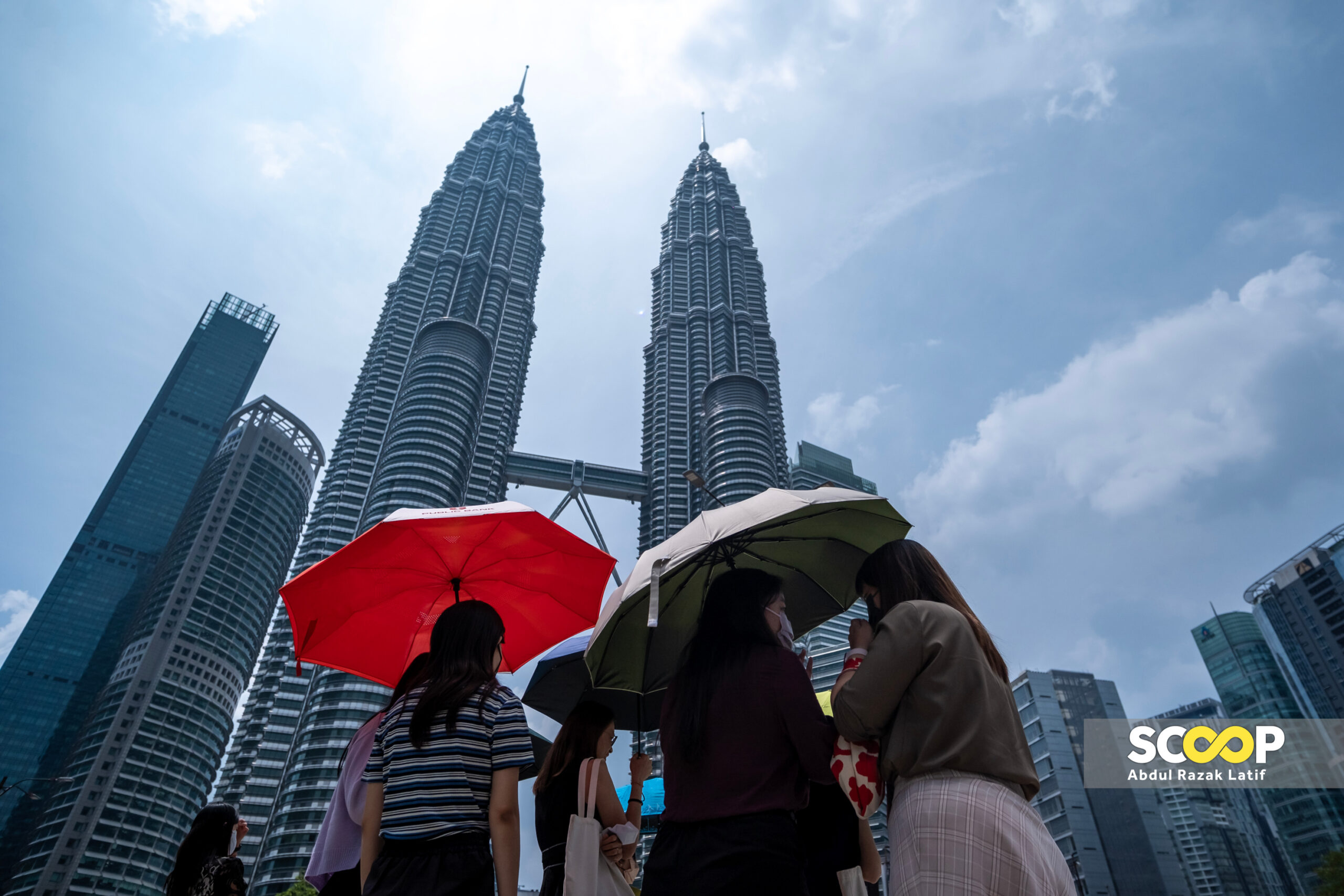
KUALA LUMPUR – Malaysians have been urged to avoid open burning as haze begins to blanket parts of the west coast of Peninsular Malaysia, with authorities warning that dry weather and winds from Sumatra are compounding the situation.
The Malaysian Meteorological Department (MetMalaysia) said satellite data from the NOAA-20 image on July 18 showed 79 hotspots in Sumatra, which are believed to be the source of the transboundary haze affecting several states.
“The haze is being carried over by south-westerly winds. No rainfall or changes in wind direction are expected in the coming days to help ease the haze,” said MetMalaysia Director-General Dr Mohd Hisham Mohd Anip in a statement.
The department has advised the public not to conduct any open burning, as such activities could worsen air quality and harm the environment.
As of 11am today, 60 locations across the country recorded moderate Air Pollutant Index (API) readings, while eight areas – including Politeknik Kota Kinabalu, Kota Kinabalu and Kimanis in Sabah, ILP Miri, Sri Aman, Kapit, Limbang in Sarawak, and Labuan – registered good air quality.
No area has reported unhealthy API readings so far. According to the Department of Environment (DOE), the API scale ranges from 0–50 for good, 51–100 for moderate, 101–200 for unhealthy, 201–300 for very unhealthy, and over 300 for hazardous. These readings are updated hourly from 68 monitoring stations nationwide.
In Negeri Sembilan, State Executive Councillor for Entrepreneurship, Human Resources, Climate Change, Cooperatives and Consumerism S. Veerapan called for vigilance, noting that the dry weather could increase the risk of fires in plantation and bushland areas.
“The public is prohibited from carrying out any form of open burning, and any such activity should be reported immediately to the DOE,” he said.
He added that while the API levels in the state remain moderate, enforcement will be stepped up to deter illegal burning. Residents have also been advised to minimise outdoor activities if the air quality deteriorates further.
Veerapan attributed the hazy conditions to a rise in hotspot activity in both Sumatra and Kalimantan, citing the Asean Specialised Meteorological Centre (ASMC) data from July 17, which identified 64 hotspots in Sumatra and five in Kalimantan.
He said the current Southwest Monsoon season, which began in June and is expected to last until September, increases the risk of haze, particularly when dry conditions prevail and fires occur in agricultural zones.
Port Dickson recorded the highest API reading at 99 as of noon today – just below the unhealthy threshold – followed closely by Johan Setia in Selangor (97) and Cheras in Kuala Lumpur (94), according to the DOE’s website. – July 19, 2025