

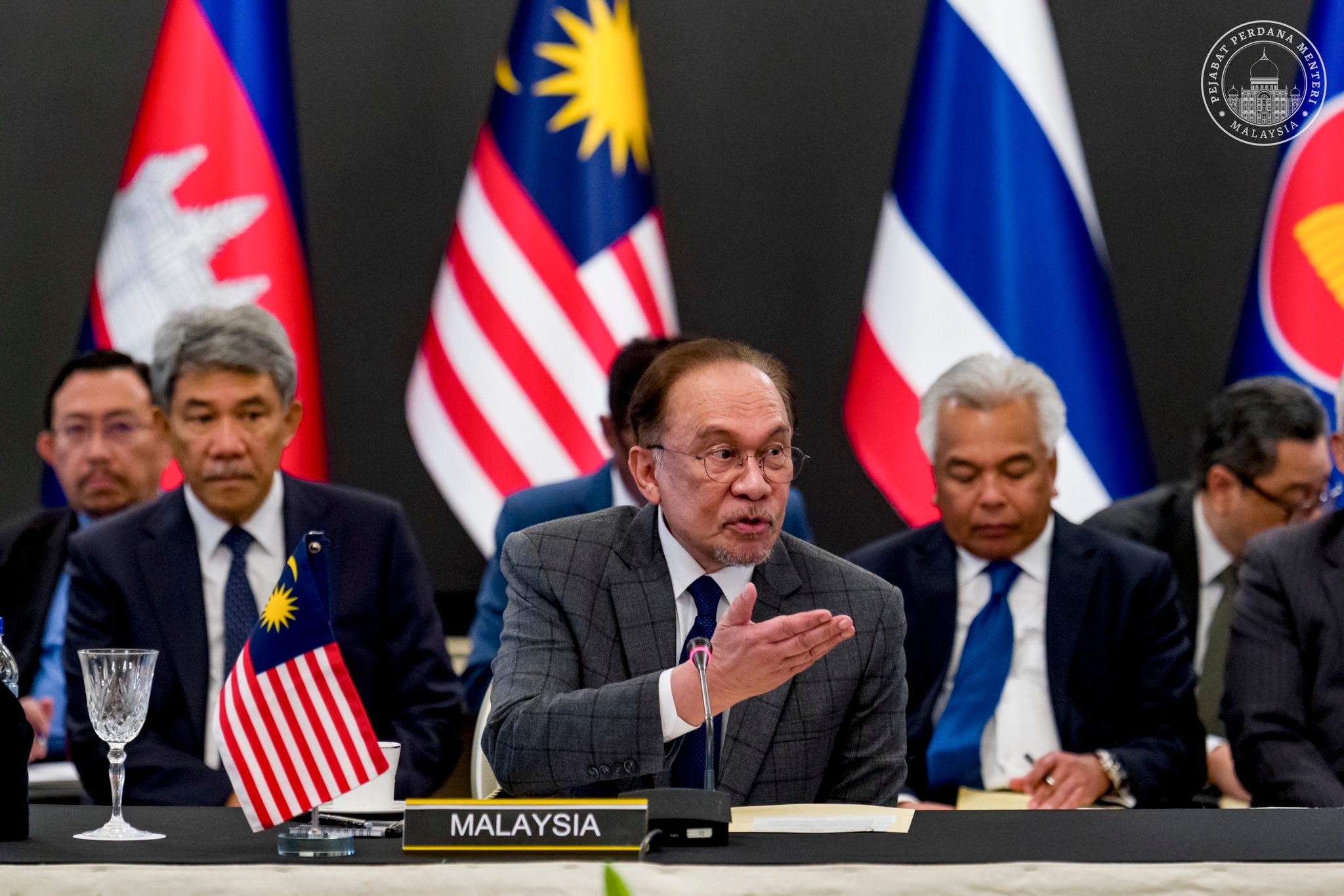

KUALA LUMPUR – The immediate, unconditional ceasefire between Thailand and Cambodia marks an early success for regional diplomacy, following Prime Minister Datuk Seri Anwar Ibrahim’s direct intervention as Asean chair.
Speaking to Scoop, geostrategist and Senior Fellow at the Nusantara Academy for Strategic Research (NASR) associate professor Azmi Hassan described Malaysia’s approach as both bold and unconventional – particularly in its strategic use of the United States and China, both of which wield considerable influence over the two Southeast Asian nations.
“What’s most notable isn’t just the 24-hour ceasefire itself, which is a good start, but how the prime minister used his position as Asean chair to actively defuse the situation.
“Previous Asean chairs were often cautious or unwilling to intervene in what they deemed internal matters. This time, the approach is far more assertive,” Azmi said.
He added that Anwar had not only exercised his role as Asean chair but also “cleverly and strategically” engaged two opposing global powers.
“These are major players in the region’s geopolitical landscape – both present at the talks – with the US acting as co-host and China as observer,” Azmi said.
The ceasefire agreement, effective from midnight July 28, 2025, was announced by Anwar following a special meeting between Thailand and Cambodia at the Seri Perdana Complex in Putrajaya.
Thailand was represented by acting Prime Minister Phumtham Wechayachai, while Cambodia’s Prime Minister Hun Manet attended the meeting, which began at 3pm.
Also in attendance were US ambassador to Malaysia Edgard Kagan and Chinese ambassador Ouyang Yujing. The US co-hosted the talks while China participated as an observer.
Azmi said the outcome was no coincidence, but the result of deliberate diplomatic orchestration.
“This didn’t happen by accident. It was carefully planned by Malaysia as the mediator.
“Malaysia understood that its strength lay not just in chairing Asean, but in using US and Chinese influence where appropriate.
“This shows Datuk Seri Anwar Ibrahim’s diplomatic direction – tackling regional issues head-on, while also managing external powers.”
Post-ceasefire challenges Azmi cautioned that the ceasefire is only a starting point and must be followed by sustained commitment.
“Without a follow-up plan, the ceasefire risks being merely symbolic. What’s needed is a peace roadmap, cross-border monitoring, and continued dialogue,” he said.
Anwar had reached out separately to both Phumtham and Manet last Friday to urge a halt in hostilities and a return to negotiations.
The border dispute peaked on July 25, leading to armed clashes near northern Cambodia. The fighting claimed over 20 lives on the Thai side.
Cambodian authorities reported the deaths of five soldiers and eight civilians, with thousands displaced along both sides of the border.
Tensions have been escalating since May 28 after a deadly confrontation between troops near the contested Preah Vihear area.
The two neighbours have long disagreed over the demarcation of their 817-kilometre border – a long-standing flashpoint for conflict and diplomatic strain. – July 29, 2025