

In 2016, I served on a committee convened by the Ministry of Health that evaluated the growing presence of electronic cigarettes in Malaysia. After careful consideration, we recommended a nationwide ban to the Cabinet.
At the time, vaping was still a niche product, viewed by some as a harm-reduction tool with potential upside for adult smokers. Yet even then, the risks — especially to youth — were clear.
Nearly a decade later, those early warnings have become reality.
Malaysia is now facing a silent but deepening public health challenge: widespread adolescent nicotine addiction via flavoured e-cigarettes, a heavily commercialised market with minimal regulation, and industry influence that increasingly shapes the policy landscape.
The Ministry of Health’s recent moves to reassess a national ban come not a moment too soon — but a coordinated, sustained response remains elusive.
A new generation, a new addiction
The scale of the problem is stark. According to Malaysia’s National Health and Morbidity Survey (NHMS) 2022, 14.9% of secondary school students now use e-cigarettes — up from 9.8% in 2017. For boys, the rate is a striking 23.5%. These rates are likely higher in 2025.
Smoking rates, by comparison, have fallen to 9.0%, suggesting that vaping is not simply a cessation aid, but a new entry point to addiction. The majority of these users began before age 14 (NHMS 2017).
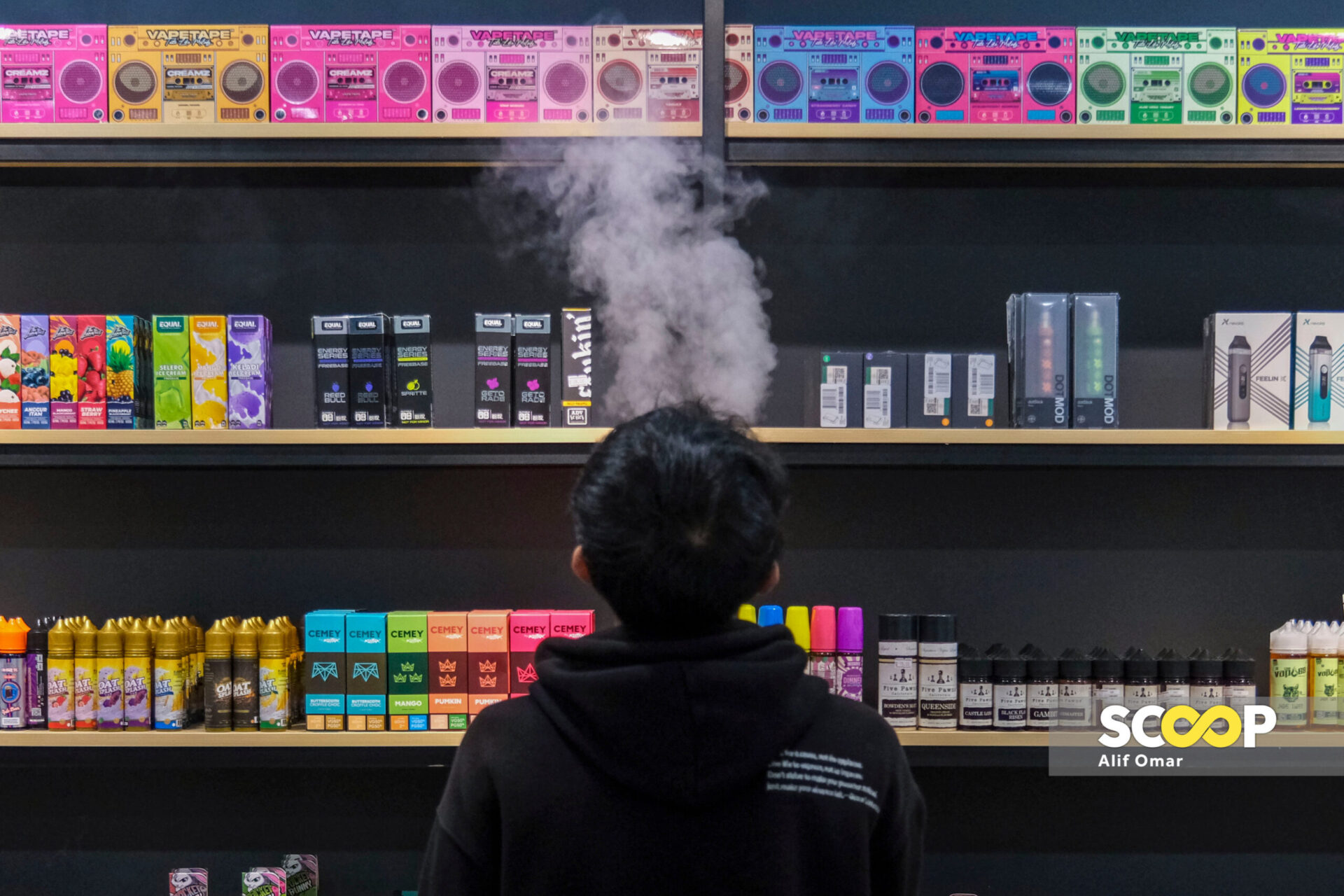
Flavours such as mango, mint and bubblegum mask the chemical harshness of nicotine while enhancing appeal. Sleek designs resembling USB drives or highlighters are marketed for discretion.
Distribution has moved largely online, evading state restrictions and age verification. The result is a near-seamless ecosystem that facilitates access, habit formation, and social normalisation among teenagers.
A health and enviromental burden that will grow
Although vaping is sometimes framed as a lesser evil compared to combustible tobacco, emerging data is increasingly unfavourable. Studies have linked e-cigarette use with airway inflammation, asthma, cardiovascular risk, and impaired cognitive development in adolescents. The long-term effects remain under-studied, but early indicators are troubling.
Globally, health systems are beginning to feel the financial strain. In Australia, public health experts estimate that managing youth vaping addiction and related complications could cost tens of millions of dollars annually.
The UK’s NHS is seeing a surge in cases of nicotine toxicity and vaping-related respiratory distress among teens. While Malaysia has not yet published national cost estimates, the burden on public hospitals — which provide subsidised care — is rising.
In addition to the health and social costs, vaping — particularly through disposable devices — is emerging as a significant environmental threat. These single-use vapes contain lithium-ion batteries, plastic casings, and nicotine-laced e-liquids, all of which contribute to hazardous waste.
In countries with rising usage, millions of discarded vapes end up in landfills each month, leaching toxic chemicals into the soil and water, while the non-recyclable components strain already overburdened waste management systems. The improper disposal of lithium batteries also poses fire risks at waste processing facilities.
As vaping becomes more widespread in Malaysia, the environmental footprint of this industry cannot be ignored — especially when aligned with national commitments to sustainability and responsible resource management.
Big Tobacco’s quiet pivot
Fueling this trend is a well-financed and increasingly sophisticated industry. Though often marketed as disruptive startups, many vape firms are backed by legacy tobacco interests. Juul Labs, for example, was partially acquired by Altria — the maker of Marlboro — for US$12.8 billion.
In emerging markets, these companies have replicated strategies long used in the cigarette business: lobbying for soft regulation, promoting “harm reduction” narratives, and resisting outright bans.
In the Philippines, vape lobbyists were documented influencing the final language of national legislation.
In New Zealand, industry actors capitalised on confusion between anti-smoking and pro-vaping messaging to delay policy decisions. In Malaysia, vocal trade associations oppose a ban and push for self-regulation — despite growing evidence of youth-targeted marketing and weak enforcement.
A generational opportunity, deferred
Malaysia once stood on the verge of global leadership in tobacco control. In 2022, the Ministry of Health proposed a “Generational Endgame” (GEG) policy — a groundbreaking initiative that aimed to prohibit the sale of tobacco and vape products to anyone born in 2007 or later.
It was a forward-thinking approach grounded in public health evidence, recognising that early exposure is the gateway to lifelong addiction.
However, the GEG provision was ultimately removed from the Control of Smoking Products for Public Health Bill in 2023 following concerns raised by the Attorney General’s Chambers (AGC) regarding its constitutionality.
Notably, this position diverged from that of the previous AGC, which had not identified such legal barriers. Given the significance of the policy and its public health implications, this shift in legal interpretation may merit further examination.
A fragmented patchwork of regulation
Several Malaysian states — including Johor, Kelantan, Penang, Kedah, and Pahang — have implemented their own bans on vape sales. Sarawak is expected to follow. But in the absence of a federal ban, enforcement remains inconsistent, and products continue to circulate via online platforms, courier services, and informal peer-to-peer trade.
In July 2025, the federal Ministry of Health announced it was reviewing the feasibility of a full national ban, citing both health data and enforcement gaps. An inter-agency crackdown — “Operation Safe Lungs” — began in August, targeting illegal vape sales.
What comes next?
Malaysia must now confront a difficult but necessary choice. Policymakers have three clear imperatives:
1.Enact a nationwide ban on vape sales and marketing, particularly flavoured and nicotine-containing products.
2.Strengthen surveillance and enforcement, with particular focus on online sales and cross-border smuggling.
3.Invest in youth cessation and education programmes, targeting schools, clinics, and digital platforms.
Crucially, policymakers must exclude industry actors from shaping regulation. Allowing companies that profit from addiction to dictate the rules risks repeating the mistakes of the cigarette era — with even younger consumers this time in their sights.
The cost of delay
Malaysia’s public health system is still absorbing the long-term impacts of smoking. It can scarcely afford to subsidise another generation of addiction, respiratory illness, and chronic care driven by vaping. The time for pilot projects and partial bans has passed.
In 2016, we recommended banning vaping as a preventive measure. In 2025, the data now demands it. As other countries move toward tighter controls or outright prohibition, Malaysia must decide whether to lead, follow — or fall further behind.
Dr Helmy Haja Mydin is a consultant respiratory physician and served as an advisor to two previous Health Ministers