

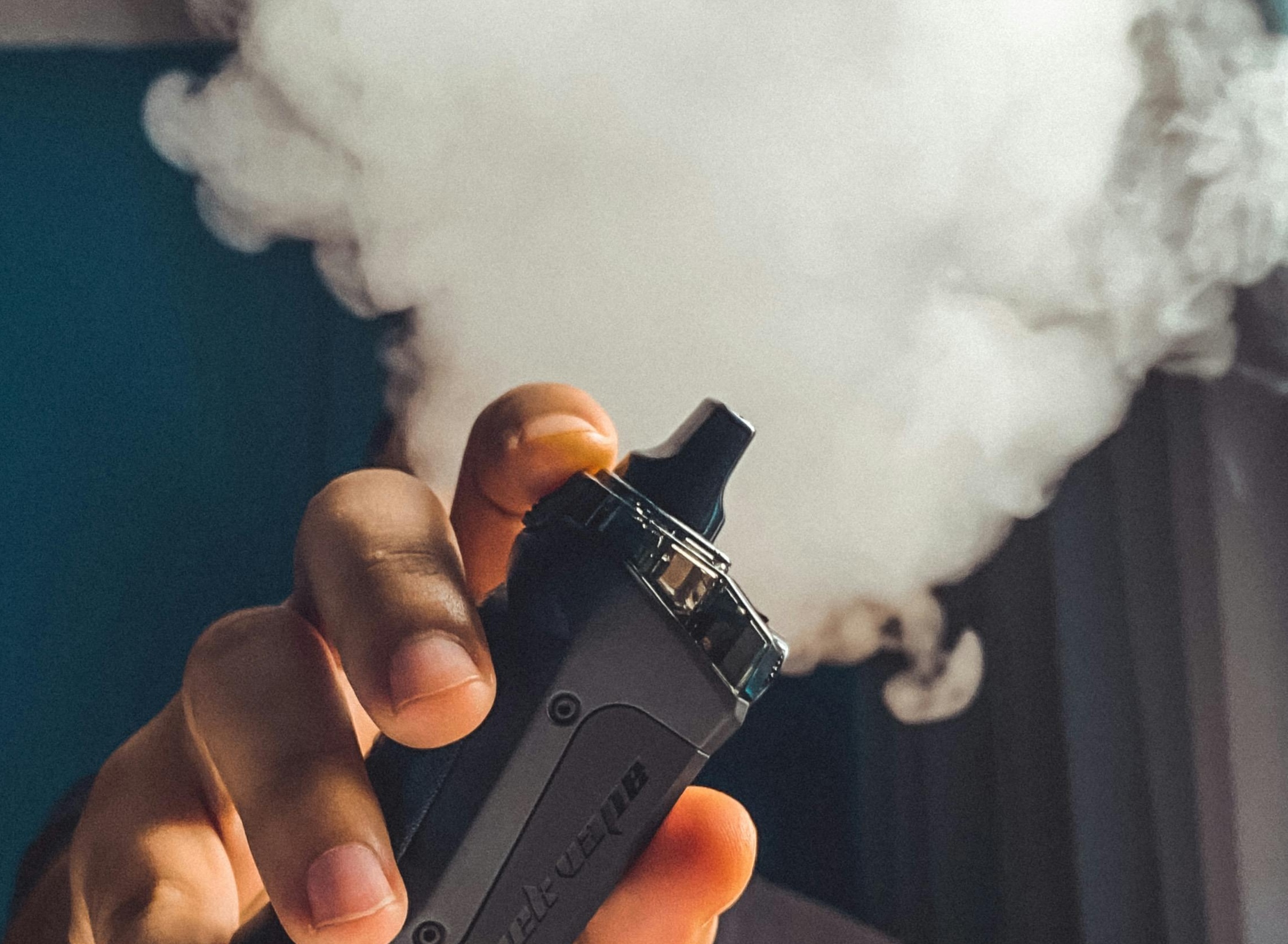

KUALA LUMPUR – The vape industry may be shrinking, but that’s not necessarily a bad thing.
Instead of calling for an outright ban, the government should recognise vaping as a legitimate harm-reduction tool and focus on enforcing proper regulations, says Malaysian Organisation of Vape Entity (MOVE) president Samsul Kamal Ariffin.
Speaking on the Scoop Insight podcast, Samsul said the reduction in the number of vape brands in the country shows that the industry is beginning to mature – not collapse – with only serious players staying in business as regulatory standards improve.
“At one point, we had more than 3,000 local vape brands. Today, we have fewer than 400. That’s not a sign of weakness, it shows that enforcement is finally working. If you can’t meet the required standards, you shouldn’t be in the industry,” he said.
Samsul stressed that the shrinking number of brands aligns with global harm-reduction strategies, which aim to provide smokers with safer alternatives while eliminating substandard and illegal products.
He warned that banning vape products altogether could backfire by driving users back to cigarettes or unregulated black-market products.
“If you ban vape, people will just go back to smoking or get their vape products from illegal sources, and we lose all control of safety. It’s going to be a disaster for public health,” he said.
Samsul added that vaping played a personal role in helping him quit smoking after 14 years and believes many others have successfully transitioned using the same method.
His remarks come amid growing concern over the Health Ministry’s proposal to impose stricter measures on vape products – with a total ban being one of the options under review.

Several states, including Penang and Johor, have already implemented partial bans on vape sales, while the federal government is still deliberating on national policy.
MOVE and other harm-reduction advocates have called for vape to be regulated similarly to tobacco and alcohol – with clear guidelines on nicotine levels, flavouring, advertising, packaging, and distribution.
Samsul believes that proper regulation, not prohibition, is the way forward.
“Make it simple. Enforce the rules. Only licensed vape shops should be allowed to sell. No more sales at convenience stores, mamak stalls or online platforms without proper verification,” he said.
According to him, this approach ensures that adult smokers who genuinely want to quit still have access to a safer alternative, while irresponsible sellers and underage users are kept in check.
Global studies have supported the claim that vaping is significantly less harmful than smoking. In the UK, Public Health England and the Royal College of Physicians have consistently maintained that vaping is up to 95% less harmful than traditional cigarettes.
A 2024 report by the Coalition of Asia-Pacific Tobacco Harm Reduction Advocates (CAPHRA) also urged Malaysia not to fall into the trap of prohibition, warning that it could lead to a surge in illicit trade and increased smoking rates.
Locally, the vape industry was estimated to be worth around RM3.4 billion in 2023 and employs tens of thousands of Malaysians, with a strong presence among small and medium-sized enterprises.
Samsul stressed that the government must find a balance between public health, consumer protection, and economic sustainability.
“Regulate it, don’t ban it. We’re not saying do whatever you want – we’re saying follow the rules, implement standards, and treat vape as a harm-reduction product. That’s the only way everyone wins,” he said. — August 9, 2025