

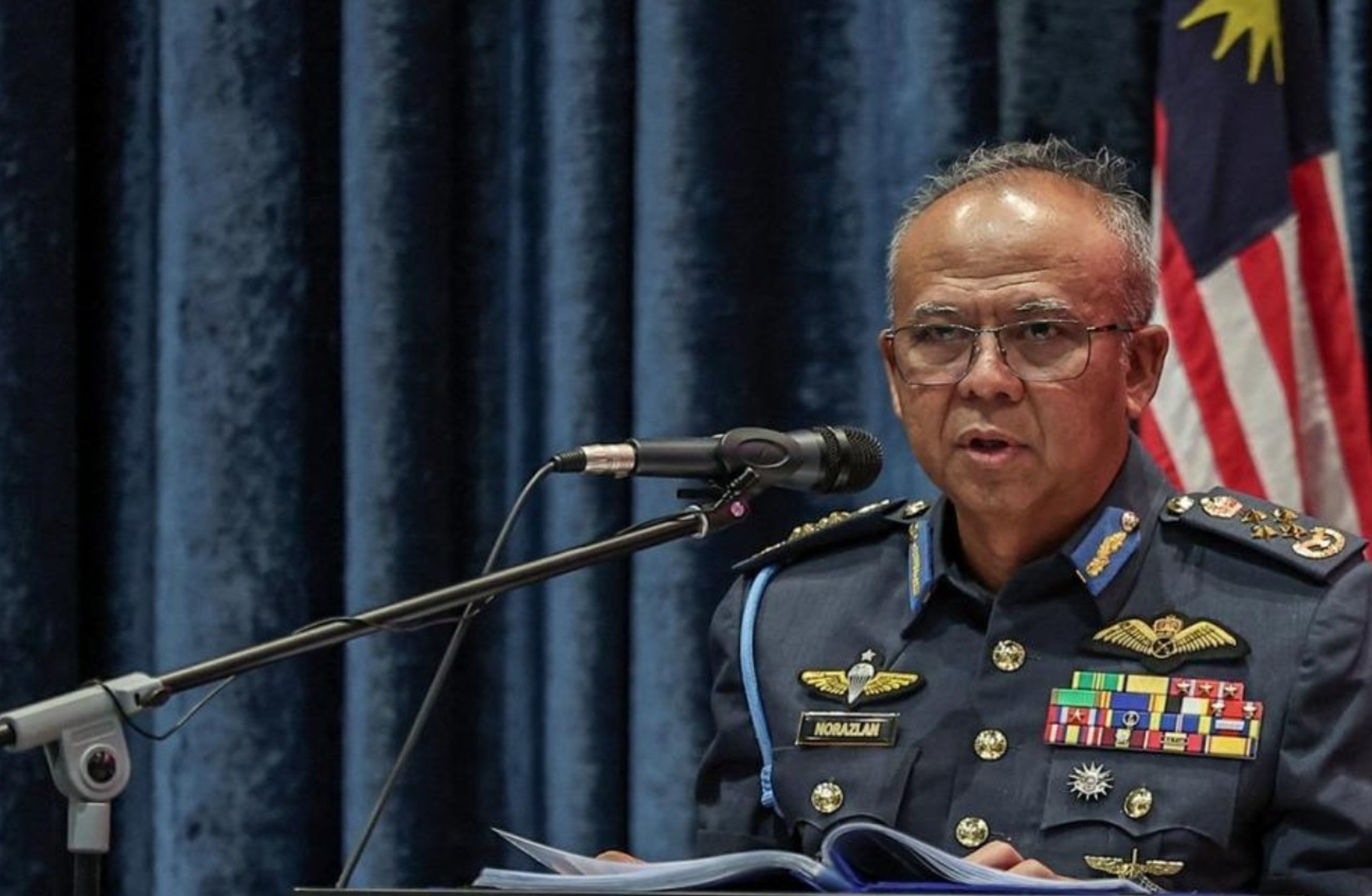
KUALA LUMPUR – The Royal Malaysian Air Force (RMAF) is continuing its assessment of the potential procurement of F/A-18 Hornet fighter jets from Kuwait, with no decision yet made.
RMAF Chief General Datuk Seri Muhammad Norazlan Aris dismissed recent reports claiming the deal had been cancelled, emphasising that all factors are still being considered before any final decision.
“We are looking into all aspects before making any decision. Delivery date, cost, maintenance, logistics – all of these have to be considered,” he said, as quoted by the New Straits Times.
Norazlan also revealed that a team from RMAF is scheduled to visit Kuwait in September to conduct further assessments of the aircraft.
The news comes amid reports from unnamed sources that suggested the deal had been scrapped due to delays in delivery schedules and expensive upgrades required for the aircraft.
Previously, the United States had granted approval for Malaysia to acquire the Kuwaiti F/A-18 Hornets, with then RMAF chief General Tan Sri Asghar Khan Goriman Khan confirming that Washington had authorised the deal.
Under US regulations, any military equipment procurement from the US requires presidential approval and must be reported to Congress, which holds the power to halt the sale.
The proposed deal involves approximately 30 Hornet jets, a combination of single-seat F/A-18Cs and twin-seat F/A-18Ds, currently serving in the Kuwaiti Air Force. Defence Minister Datuk Seri Mohamed Khaled Nordin had noted that while the aircraft were originally purchased by Kuwait in the 1990s, they remain in good condition, with flight hours ranging between 1,500 and 3,000.
Despite being over 30 years old, the Hornets are considered to have relatively low flight hours. Malaysia currently operates a fleet that includes the F/A-18D Hornet and Sukhoi Su-30MKM Flanker, alongside Hawk 108/208s, which are primarily used as advanced trainers but can serve as interceptors if needed.
Recent reports, however, have suggested that the deal may be cancelled, citing complications including delays in Kuwait’s transition to the F/A-18E/F Super Hornet.
This transition, which has now been postponed to 2026, has created uncertainty regarding the availability of the Kuwaiti Hornets, which were intended to be delivered only after the Super Hornets arrived.
The initial proposal, introduced in 2017, involved Kuwait replacing its aging fleet of Hornets with 28 Super Hornets and a similar number of Eurofighter Typhoons. However, the Covid-19 pandemic delayed the delivery of the Super Hornets, and subsequent complications with the US Navy’s own requirements have further delayed Kuwait’s procurement.
Despite plans for a technical mission to assess the Kuwaiti aircraft in September 2025, concerns have surfaced regarding the aircraft’s condition and the potential costs of upgrades.
Experts have estimated that the cost of upgrading each Hornet could reach up to US$4 million, with retrofitting delays of over a year.
The aircraft, while having low flight hours, are structurally fatigued and technologically outdated, with an older software configuration that would need extensive updates to match the capabilities of RMAF’s current fleet.
Furthermore, Malaysia’s existing fleet of F/A-18D Hornets has also faced operational challenges. On August 21, 2025, an RMAF F/A-18D crashed during a routine night training flight at Sultan Haji Ahmad Shah Airport in Kuantan.
The aircraft, which had been in service since 1997, caught fire shortly after takeoff. Fortunately, both crew members, Major Mohamad Azhar Alang Kamarudin and Captain Mohamad Izzuddin Mohamad Salleh, managed to eject safely and sustain only minor injuries.
This crash marked the first total loss of a RMAF Hornet, highlighting concerns over the ageing fleet, which has undergone several upgrades over the years, including a structural life extension in 2011, a weapons system upgrade in 2017, and heavy maintenance in 2022.
The fleet is scheduled for retirement between 2032 and 2035, raising questions about the sustainability of the aircraft.
Malaysia’s limited defence budget further complicates the decision, with critics arguing that investing in the Kuwaiti Hornets would divert resources from more urgent modernisation efforts under the CAP55 plan. – August 26, 2025