



KUALA LUMPUR – As Malaysia prepares to table Budget 2026 this Friday, a prominent economist has called for the abolition of subsidies, arguing that the system distorts prices, fuels inflation and keeps citizens dependent.
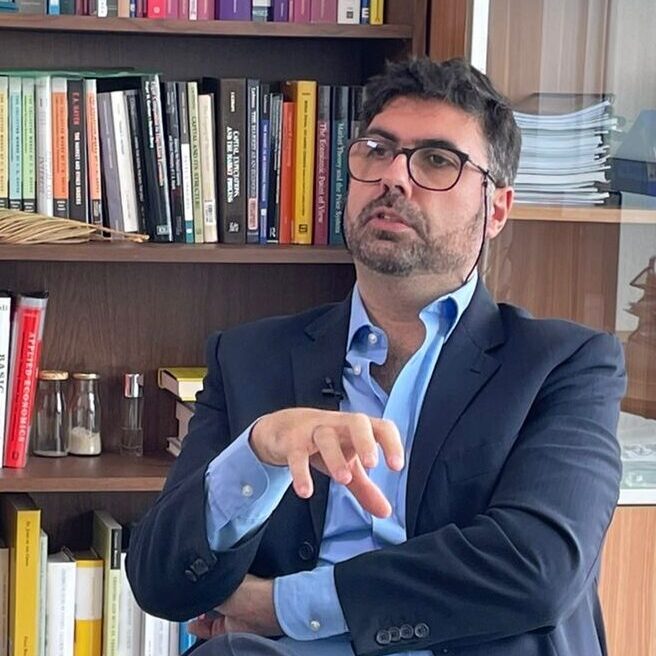
Carmelo Ferlito, chief executive of the Centre for Market Education (CME), told Scoop that subsidies were “making people poorer for longer” by discouraging efficiency and masking structural weaknesses in the economy.
“Subsidies should be abolished altogether. They do not solve structural problems. Instead, they keep the poor dependent, discourage efficiency, and distort the economy,” he said.
“The best way forward is to allow prices to reflect market realities and direct support where it is truly needed.”
The government spent RM52.6 billion on subsidies and social assistance in 2025, mostly on fuel and price support for essential goods.
While the amount is expected to decline slightly this year with the rollout of targeted subsidies for diesel and electricity, Ferlito warned that blanket subsidies remain a heavy strain on public finances and hinder reform.
He outlined a two-pronged approach: letting prices adjust naturally while channelling aid more precisely to vulnerable groups.
“The low- and middle-income groups should enjoy price reductions according to their income. Higher revenues collected from those who can afford market prices could fund discounts for low-income groups while strengthening the quality and competitiveness of public services.”
A ‘second revolution’ in social services
Beyond subsidy reform, Ferlito is pushing for what he calls a “second revolution” in social policy: replacing direct government provision with social vouchers that allow citizens to buy services from accredited private providers.
“As it is well known, government services are often inefficient and more expensive than the same services provided by private institutions,” he said. “The outcome is lower quality at a higher cost to taxpayers.”
He pointed to the United Kingdom’s direct payments system, which issues vouchers to beneficiaries who then purchase education or healthcare from private providers.
“Evidence from the UK shows that direct payments increase recipients’ choice and control over their lives. Beneficiaries are often happier, more motivated, and report better quality of life.
“Moreover, services purchased through direct payments cost 20% to 40% less than equivalent government-provided services.”
Similar models exist in Italy, where the state spends around €8,200 (RM41,820) per student annually compared with typical private school fees of under €5,000, and in Scandinavian countries.
The United States also introduced Health Savings Accounts in 2003 under former president George W. Bush, giving individuals tax-free savings for medical expenses.
Ferlito believes Malaysia could adopt a comparable model for education and healthcare to complement existing systems.
“This would rationalise government spending and, more importantly, give Malaysians greater freedom of choice. Empowering individuals, rather than subsidising inefficiency, should be the guiding principle of Budget 2026.” — October 8, 2025