

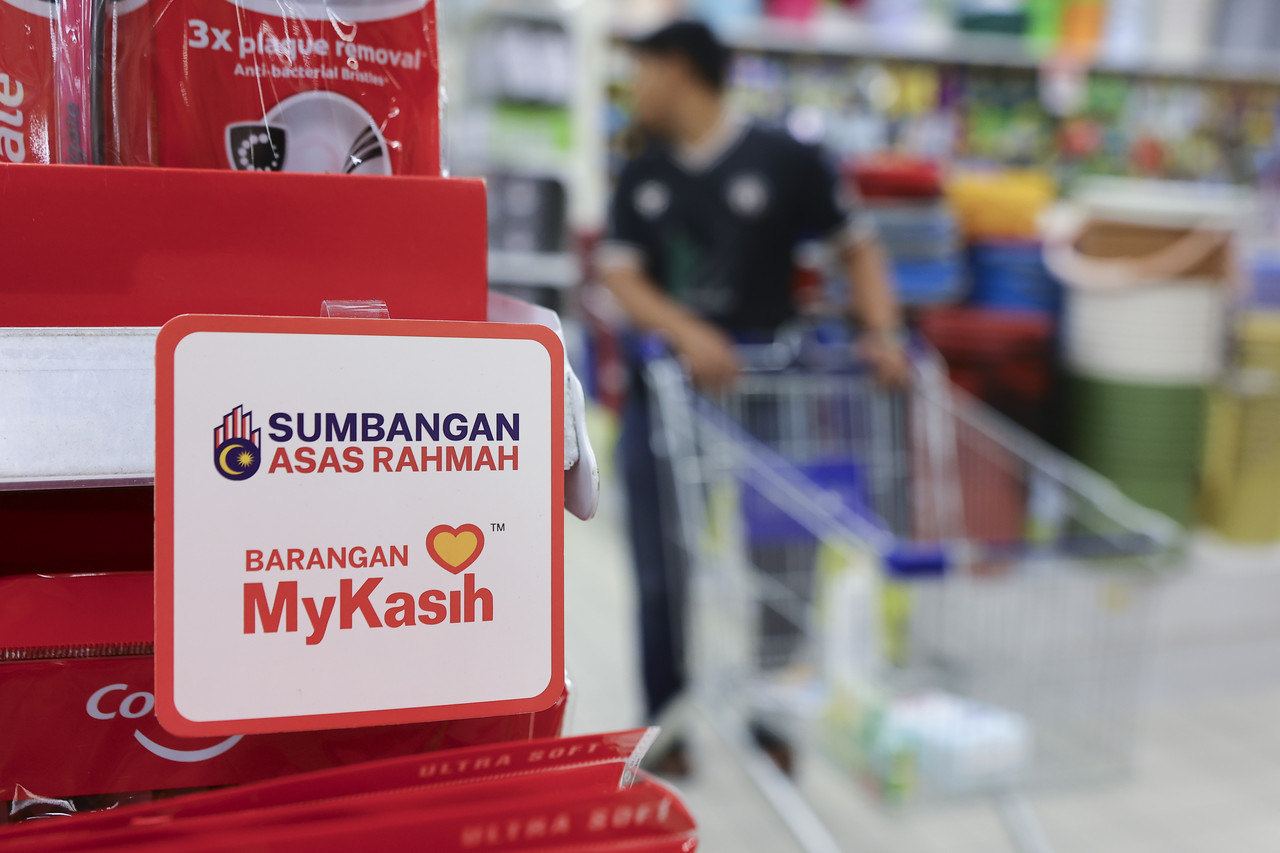
KUALA LUMPUR — Around 20% of higher-income Malaysians eligible for the RM100 Sumbangan Asas Rahmah (Sara) aid have yet to redeem it, prompting Prime Minister Datuk Seri Anwar Ibrahim to suggest that the unused funds be returned to help poorer households in 2026.
“More than 80% have used their Sara funds, while over 20% have not, especially among the well-off, including MPs and ministers,” Anwar told the Dewan Rakyat during Minister’s Question Time today.
“I hope those in this category can allow the funds to be returned to the poor in 2026. But if they wish to use it to help their poorer neighbours, that’s good too,” he said.
Anwar, who is also the Finance Minister, said the Sara initiative — one of the government’s flagship anti-poverty efforts — had proven effective in supporting low-income families while stimulating small-scale local economies.
“Through the Sara programme, we’ve expanded from about 180 to over 2,000 small shops nationwide that benefit from the system. This allows small traders in villages and rural districts to grow their businesses,” he said.
The programme, introduced to allow poor households to buy daily necessities according to their needs, will continue beyond 2026, Anwar added.
He acknowledged that poverty remained disproportionately high in states such as Sabah, Sarawak, Kelantan, Terengganu and Kedah compared with more developed states along the west coast.
“Due to the higher incidence of poverty in these states, programmes such as STR (Sumbangan Tunai Rahmah) and i-Sara are channelled more there. We also work closely with the Sarawak Premier and Sabah Chief Minister to tailor aid delivery, especially in longhouse areas and rural interiors,” he said.
Anwar said the government’s broader aim was not only to eradicate hardcore poverty but also to address rising relative poverty, which increased marginally from 16.6% in 2022 to 16.7%, according to the Statistics Department.
He noted that Malaysia’s poverty line income had also risen from RM6,338 in 2022 to RM7,017 in 2024 — reflecting higher living costs.
Under the Payung Rahmah framework, the government has allocated RM15 billion this year across various aid schemes, with RM600 million earmarked for Sara in 2026. These initiatives are expected to support around 560,000 poor households registered under the Welfare Department’s database.
“This includes STR, i-Sara and welfare aid, which together amount to nearly RM20 billion. All these measures are part of our effort to narrow the gap between the rich and poor,” he said.
Anwar also highlighted wage reforms aimed at easing the burden on low-income workers. “We have raised the minimum wage twice — from RM1,200 to RM1,700 — and increased civil servants’ salaries by up to 30% for the lowest-income category,” he said.
Responding to a question from Kuala Krai MP Abdul Latiff Abdul Rahman on preventing families from falling back into poverty, Anwar said the government was strengthening data integration through the Central Database Hub (Padu) to improve aid targeting and reduce overlaps.
“Sometimes, families who have been lifted out of poverty fall back again. That’s why, apart from monthly aid, we’re adding new approaches such as microcredit through Amanah Ikhtiar Malaysia and Tekun,” he said.
“This ensures families can generate income and sustain themselves. We must help them not just survive, but move beyond dependency.” — October 30, 2025