

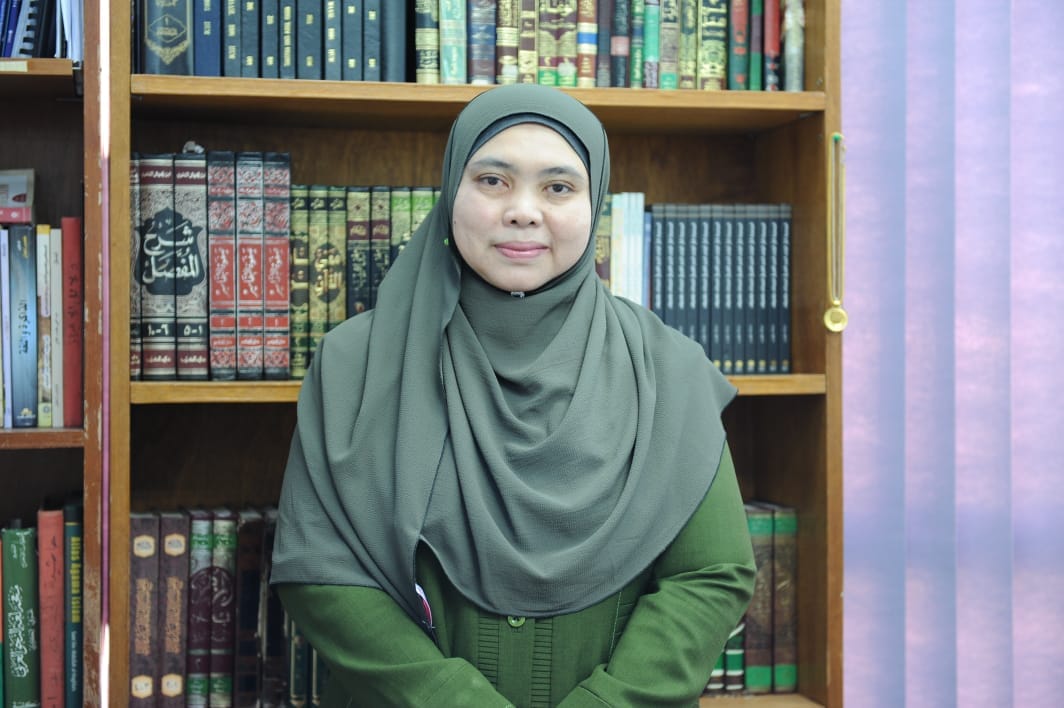
KUALA LUMPUR — Professor Dr Solehah Yaacob, an Arabic language lecturer at International Islamic University Malaysia (IIUM), has firmly defended her controversial claim that the ancient Romans may have learned shipbuilding techniques from the Malay Archipelago, following intense criticism sparked by a viral video of her lecture.
In a Facebook post, Solehah, who also teaches linguistic thought, revealed that she had been subjected to what she described as “media lynching” after delivering the lecture at Masjid Gombak Setia on December 31, 2022.
The lecture, which discussed the historical connections between the Romans and the Malay world, has drawn ridicule from social media users, tabloids, and mainstream news outlets.
“I have been ridiculed on social media, in tabloids, and by official news outlets. This all started following my public lecture, where I shared my research hypothesis, which I have developed through extensive study,” she said. “It is disheartening to see my work being misrepresented.”
Solehah explained that her hypothesis, grounded in classical Arabic sources, proposes that the Romans acquired certain aspects of shipbuilding from the Malay Archipelago, whose peoples were known for their advanced maritime civilisation.
“The Malays were among the earliest masters of the sea,” she said.
“I firmly believe that the Romans, like many other civilisations, may have learned shipbuilding from earlier seafaring peoples—specifically the maritime Malay world.”
Solehah cited various historical references, including museum archives in Australia that note the expertise of Austronesian shipbuilders, and historical reports that call the Malays “the first people to sail around the world.”
She argued that such records support her belief that Malay seafarers were instrumental in the development of shipbuilding techniques used by the Romans.
She also addressed the term “Malay,” asserting that it predates the European-coined term “Austronesian,” which was introduced in the 19th century.
She highlighted the Śrīvijaya Empire (600-1200 CE), a powerful maritime kingdom in Southeast Asia, as evidence of the long-standing maritime capabilities of the Malays.
Despite facing mounting criticism, Solehah has remained resolute in her defence of academic freedom.
She drew a parallel to the historical treatment of Italian philosopher Giordano Bruno, who was persecuted by the Church for his unconventional views. Solehah argued that, just as Bruno’s scientific ideas were ahead of his time, her research hypothesis should be protected from public condemnation.
“Scholars should not be persecuted for expressing differing views,” she said. “In both our academic and Islamic traditions, we are taught to respect and engage with differing opinions.”
In response to the controversy, IIUM issued a statement saying it would investigate the matter internally. However, the university clarified that Solehah’s claims were her personal opinions and did not reflect the university’s official stance.
Higher Education Minister Datuk Seri Dr Zambry Abd Kadir has also weighed in on the debate, advising university lecturers to limit their commentary to issues within their areas of expertise.
He stressed the importance of academic integrity and the need for scholars to maintain credibility by focusing on their specialisations.
While some have called for further scrutiny, Solehah has stood firm in her belief that scholars should be free to explore and present their research without fear of persecution or public ridicule.
“I hope that all forms of slander and disinformation will cease, and that scholars can engage in respectful academic discourse,” she said.
“Whether my hypothesis is right or wrong, the pursuit of knowledge should never be stifled.” – November 9, 2025