

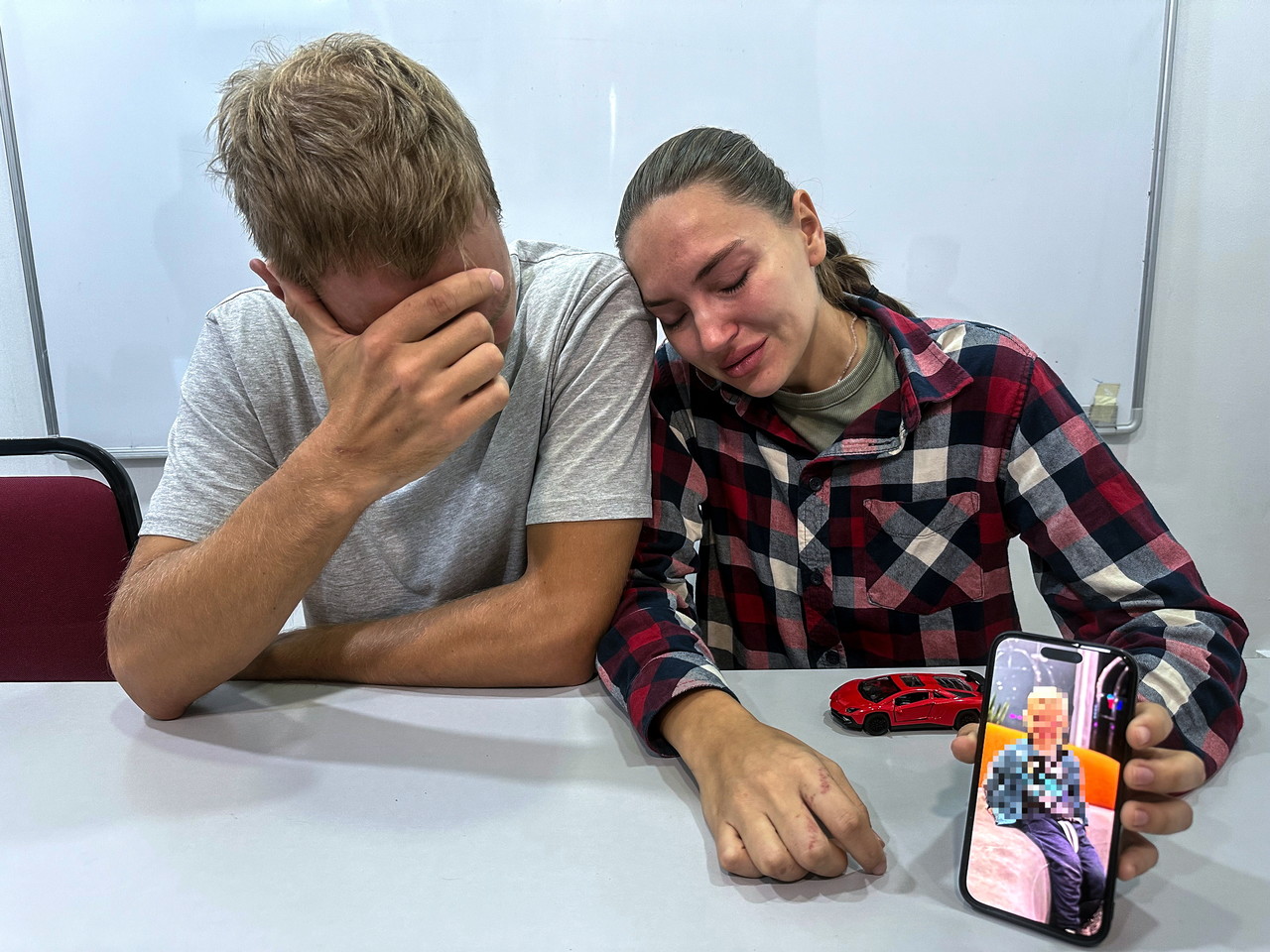

KUALA LUMPUR – A two-year-old Russian boy who was stung by a jellyfish at Langkawi’s Chenang Beach last Saturday has died at Hospital Sultanah Bahiyah (HSB) this morning after four days of intensive treatment.
The boy’s father, Nikita Iakubanets, 32, confirmed that his son, Vladimir, was pronounced dead at 9.46 am, Bernama reported.
“The doctor said that our child was poisoned by a jellyfish, then his heart stopped… the doctor also said our child had very big injuries on his legs,” Nikita told reporters. He added that the injuries were caused by a box jellyfish sting.
Nikita, accompanied by his wife Olga, 32, expressed their gratitude to the medical team at HSB for their efforts to save their son. “We are thankful for everything they did,” he said.
Describing the events of Saturday morning, Nikita recalled that the family had been swimming at Chenang Beach when their son screamed in pain.
His wife immediately took the child to the shore and attempted rescue breathing before rushing him to a nearby clinic. Vladimir was then transferred to Hospital Sultanah Maliha in Langkawi and later to HSB for further treatment.

This was the family’s first visit to Malaysia and Langkawi.
They arrived on November 14, planning to stay until November 26.
“Our son is our hero. He is our little angel. Every day we told him we loved him, and he always said he loved us too,” said Olga, who, together with her husband, now plans to cremate their son and return his ashes to their hometown of Khabarovsk, Russia.
Meanwhile, the Kedah Fisheries Department (DOF) has confirmed reports of box jellyfish in Langkawi’s waters. The department’s director, Sukri Deris, said that while the presence of jellyfish has been moderate this year, it still poses a potential danger to activities in the area, including recreational and commercial pursuits such as fishing.
Sukri explained that box jellyfish are typically found in waters from Australia to Southeast Asia, and their appearance in Langkawi could be linked to the monsoon transition, which may have carried them into local waters.
“Changing sea currents, along with large volumes of water discharged from land due to heavy rainfall, may bring more food sources to the coastal areas, attracting jellyfish closer to shore,” he said.
The DOF is closely monitoring the situation and working with the District Disaster Committee to implement any necessary measures. Public awareness campaigns about the dangers of jellyfish will also continue. – November 20, 2025