

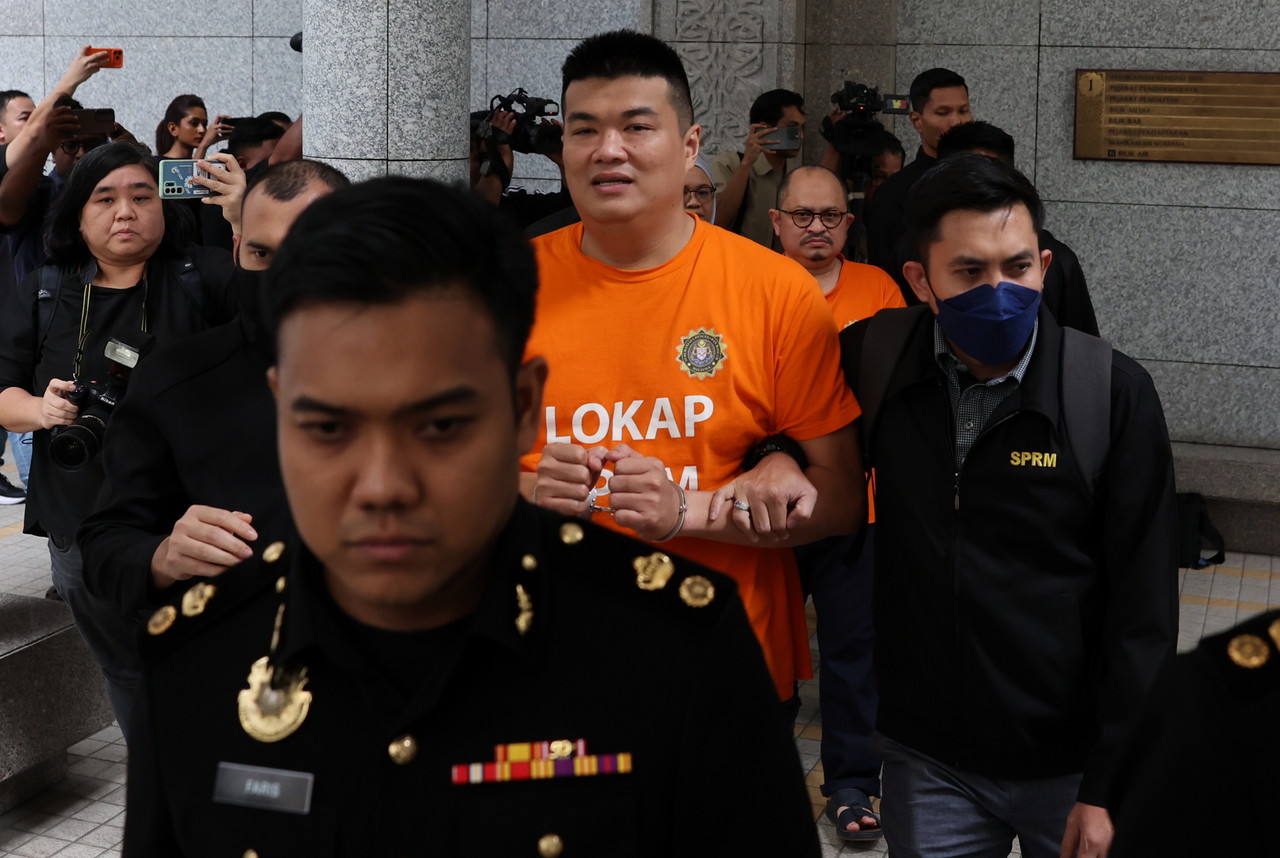

KUALA LUMPUR – The lawyer representing businessman Albert Tei, Mahajoth Singh, possesses evidence related to the investigation, and thus has a legal duty to present it when required under Section 30(3) of the MACC Act 2009, according to the Malaysian Anti-Corruption Commission (MACC).
Failure to comply with this obligation could be considered obstruction of a public officer’s investigation, which is a criminal offence.
In response to claims by Lawyers for Liberty (LFL) regarding the notice issued to Mahajoth Singh in relation to the investigation involving Tei, MACC denied any illegal actions.
“Legal professional privilege only protects confidential legal advice, but it does not exempt a lawyer from appearing before investigators, withholding material or documents unrelated to legal advice, or obstructing investigations if the lawyer is a material witness,” MACC stated in a statement today.
“The claim of intimidation is baseless. The notice issued was part of standard statutory procedures and did not affect the lawyer’s ability to represent their client.”
“Summoning individuals with relevant information is a standard investigative procedure,” the statement added.
Earlier, LFL had alleged that MACC abused its investigatory powers by calling Tei’s lawyer for questioning in relation to an ongoing corruption investigation.
LFL’s director, Zaid Malek, claimed that Mahajoth Singh received a notice around 9:50 p.m. last night, directing him to appear at MACC’s headquarters in Putrajaya this morning to provide testimony in the investigation concerning his client.
Zaid accused MACC of acting unlawfully by summoning Tei’s lawyer for questioning regarding a scandal involving the Prime Minister’s Office (PMO).
However, MACC clarified that the notice was issued under Section 30(1) of the MACC Act 2009, which grants MACC the authority to require any person to appear and produce documents or recordings necessary to assist the investigation.
It further explained that no exemptions are granted to legal practitioners, and claims to the contrary are unfounded from a legal standpoint.
MACC emphasised that any temporary restrictions on access to detainees are governed by Section 28(A)8 of the Criminal Procedure Code and necessary for protecting the integrity of the investigation. This is in line with the law and standard procedure in sensitive cases.
“Misrepresenting lawful procedures as ‘unlawful actions’ is irresponsible and may mislead the public,” MACC concluded.
MACC will continue to perform its duties impartially, professionally, and in full compliance with the law. – November 30, 2025