

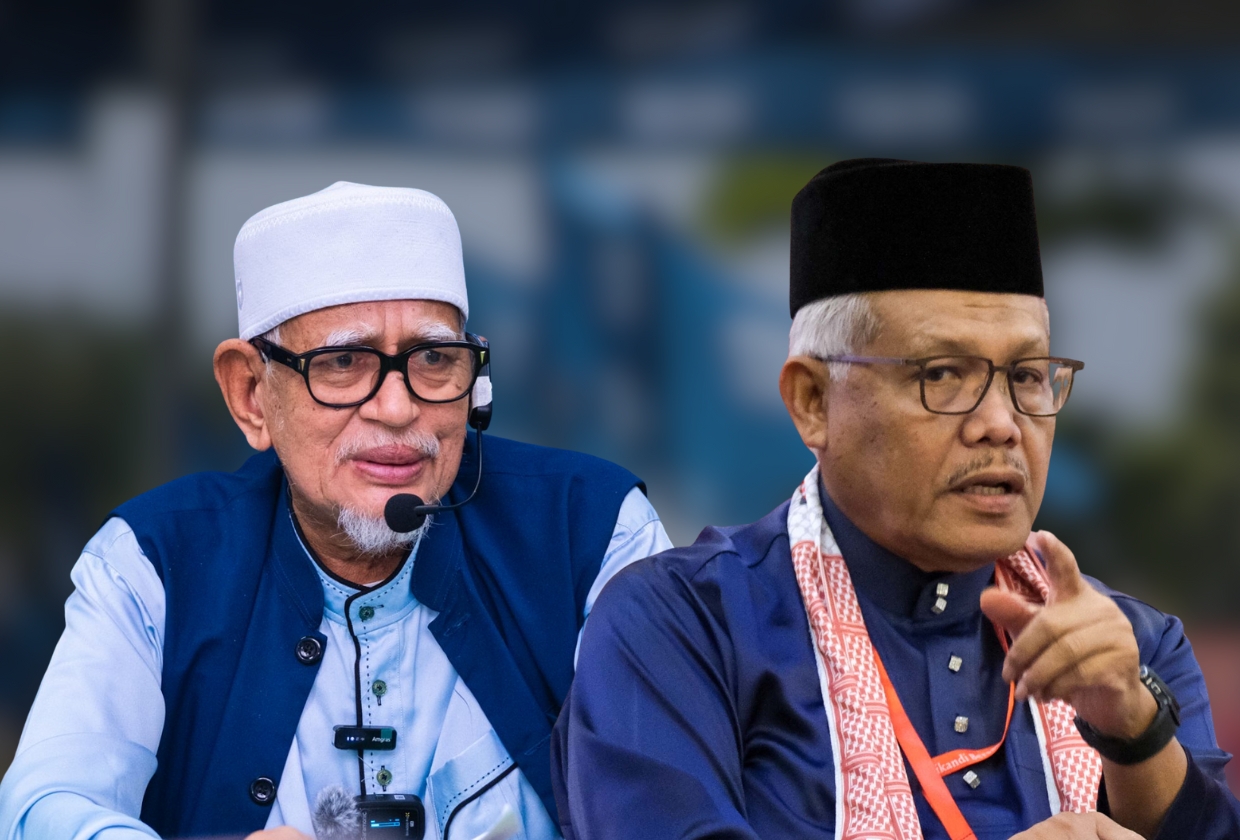

KUALA LUMPUR – Tan Sri Abdul Hadi Awang and Datuk Seri Hamzah Zainudin are emerging as frontrunners to assume the chairmanship of Perikatan Nasional (PN) following a wave of resignations by senior coalition leaders, analysts say.
The leadership vacuum comes after Tan Sri Muhyiddin Yassin announced his resignation as PN chairman, effective 1 January 2026, ending more than five years at the helm.
Muhyiddin, who is also Bersatu president, was joined by several key figures in stepping down, including Datuk Seri Mohamed Azmin Ali as PN secretary-general and Selangor PN chairman; Datuk Dr Sahruddin Jamal as Johor PN chairman; Datuk Seri Ahmad Faizal Azumu as Perak PN chairman; and Mohamad Hanifah Abu Baker as Negeri Sembilan PN chairman.
The resignations, seen by analysts as a response to growing tensions between PAS and Bersatu, have heightened uncertainty over PN’s leadership and future strategy.
Speaking to Scoop, Senior political analyst Lau Zhe Wei from the International Islamic University of Malaysia said that Hadi’s experience and standing within the coalition make him the most suitable candidate to steer PN through its current turbulence, particularly after recent political tensions in Perlis.
“Hadi’s leadership is also seen as a strategic move to maintain stability and unity among coalition members,” Lau said.

He noted that, despite the departures, the chairmanship is likely to remain with PAS, given its substantial parliamentary representation and status as the coalition’s “senior partner.”
He added that Muhyiddin’s resignation alone is unlikely to restore PAS–Bersatu relations, citing longstanding policy differences and political disagreements.
Meanwhile, Professor Syaza Shukri from the International Islamic University of Malaysia said that while PAS would prefer a PAS leader, a Bersatu figure could help balance the coalition.
“Among Bersatu members, Hamzah Zainudin could rise because he is the deputy, and we know Hamzah is more pro-PAS,” she said.

However, Syaza warned that trust deficits following the Perlis crisis may favour PAS’s own candidates. She added that Datuk Seri Tuan Ibrahim could be considered, though she was unsure if he could lead PN effectively.
Commenting on the manner of Muhyiddin and his colleagues’ resignations, Syaza described them as “somewhat passive-aggressive,” suggesting it could lead to a temporary split until a mutually acceptable leader is selected.
Syaza also discussed the prospects of Muafakat Nasional (MN), noting that if PAS secures the PN chairmanship, the party would prioritise consolidating its own coalition rather than seeking immediate cooperation with other parties.
“If PAS leads, they will try to strengthen PN so that cooperation with Umno becomes unnecessary.”
Meanwhile, Awang Azman Pawi from Universiti Malaya highlighted PAS’s organisational strength, disciplined machinery, loyal grassroots support, and control of key state governments.
“The issue of PN chairmanship is not merely about a position; it reflects a shift in the balance of power within Malay-Islamic opposition politics,” he said.
He added that PAS no longer sees dependence on Bersatu as necessary, while Bersatu faces legitimacy challenges at the state level.
Awang Azman also offered insights into MN and PAS’s long-term strategy, explaining that the coalition would only pursue alliances that enhance its electoral advantage without undermining PAS’s dominance.
“MN is only relevant if it provides electoral advantage and does not undermine PAS’s dominance. PAS is increasingly emerging as the key player setting the coalition’s direction, while Bersatu is reassessing its role. Moving forward, PN must accept a new reality with PAS at the centre of power.” – December 31, 2025