

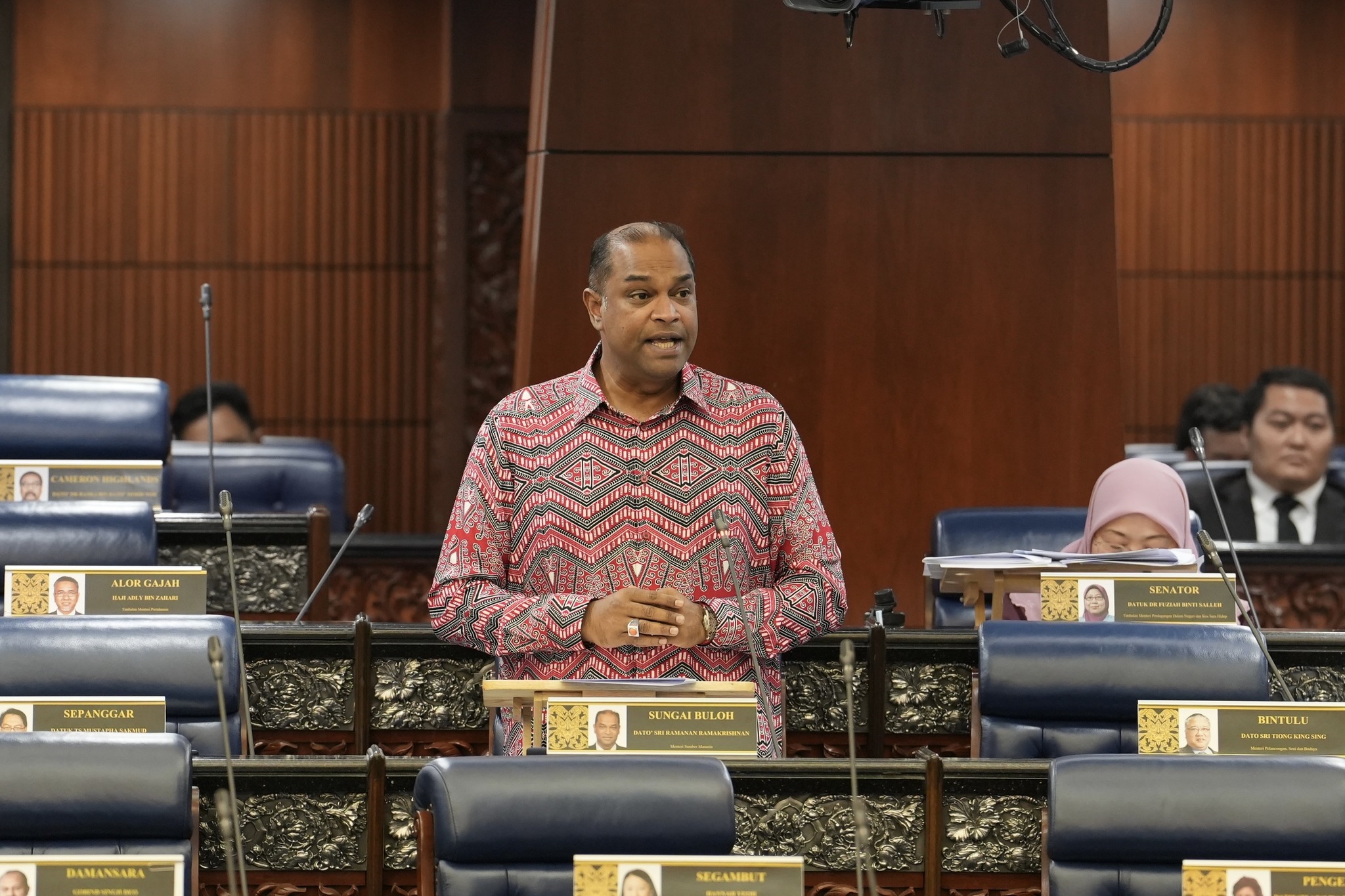

KUALA LUMPUR – The Human Resources Ministry is focused on enhancing English proficiency within Malaysia’s workforce, while safeguarding Bahasa Malaysia as the national language, according to Human Resources Minister Datuk Seri R. Ramanan.
During question time in Parliament today, Ramanan outlined a series of initiatives designed to boost English skills, particularly in sectors aligned with globalisation, including advanced manufacturing, information and communication technology (ICT), automotive, aerospace, and professional services.
“Emphasis is placed on technical terminology, comprehension of work documentation, and workplace communication,” he stated.
Ramanan further explained that 90% of the National Occupational Skills Standards (NOSS) have already been developed in English by industry panels, with the exception of fields such as tahfiz education, which is related to Islamic studies.
The minister also pointed out the efforts of the Skills Development Department in enhancing the Technical and Vocational Education and Training (TVET) curriculum, promoting bilingual reference materials, and incorporating workplace-based learning modules. Presentations and assessments at these institutions are increasingly conducted in English.
In support of the initiative, the Labour Department has made general English modules mandatory for full-time students at all Advanced Technology Training Centres across the country.
Additionally, Ramanan highlighted HRD Corp’s e-Latih online platform, which offers over 2,000 free courses, including those focusing on English, professional communication, and workplace skills.
“Through e-Latih, Malaysians, both in urban and rural areas, including Sabah and Sarawak, can flexibly improve their English proficiency and enhance their employability,” he added.
Ramanan stressed that English proficiency is critical for Malaysia’s future workforce, particularly in a high-tech environment driven by automation and artificial intelligence (AI).
“While Bahasa Malaysia serves as a medium of unity and national identity, English functions as an international lingua franca, providing access to knowledge, technology, trade, and international relations. Mastering English not only enhances employability but also offers an advantage in careers requiring international interaction or the use of modern technology,” he concluded.
The remarks came in response to a question by Datuk Iskandar Dzulkarnain Abdul Khalid (Ind–Kuala Kangsar) on the importance of English mastery in the local workforce. – January 22, 2026