

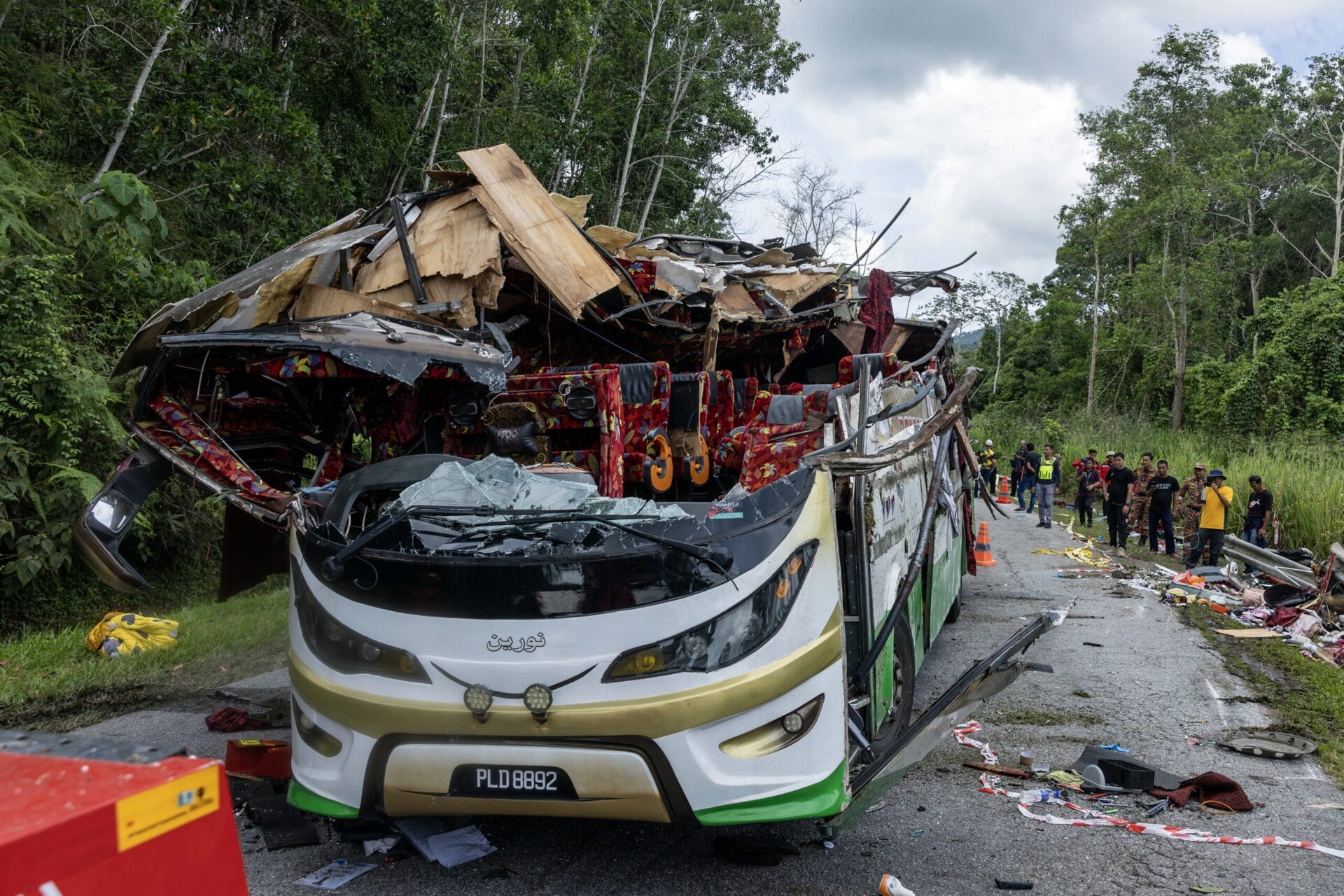

KUALA LUMPUR – The tragic Gerik bus crash that killed 15 Universiti Pendidikan Sultan Idris (UPSI) students in June last year was caused by a combination of brake system failure and unsafe driving practices, a special task force under the Transport Ministry has concluded.
In its report released today, the task force detailed that the bus’s braking system was compromised due to “deformation and wear on the left rear brake drum, grease and oil contamination on the linings, and inconsistencies in the brake lining material,” which significantly reduced braking effectiveness.
“These mechanical deficiencies, coupled with driving at speeds exceeding safe limits along the Gerik-Jeli East-West Highway, led to loss of vehicle stability, skidding, and eventual overturning,” the report said.
The bus struck a W-beam guardrail, which penetrated the cabin, causing multiple fatalities and injuries.
The preliminary investigation, conducted last July, found the bus was traveling at 117.6 km/h – nearly double the 60 km/h speed limit and above the critical rollover threshold of 111.3 to 114.5 km/h.
While the driver reported a sudden brake failure two to three kilometres from the crash site, technical analysis revealed the failure was progressive and linked to brake deterioration.
“Under these conditions, the driver admitted his focus shifted entirely to steering, continuing at high speed until full loss of control,” the task force noted.
“Although he intended to stop the bus in an open area, no early action was taken to reduce risk.”
The report highlighted multiple contributing factors, including road design weaknesses, vehicle deficiencies, poor operator governance, insufficient industry compliance, and regulatory oversight gaps.
The bus, operated by Kenari Utara Travel & Tours Sdn Bhd, had illegally transferred its permit to a third party and lacked basic safety systems such as seat belts, an active speed limiter, and GPS tracking. Both drivers had accumulated more than 30 traffic summonses, many unpaid.
To prevent similar accidents, the task force recommended upgrading barriers on hilly and dangerous routes, improving signage, implementing slow zones, and enforcing speed limits through automated cameras. Operational measures include mandatory seat belts, tighter licence controls, random audits, stricter driver screening, and periodic defensive driving and brake-handling training.
The report also suggested wider adoption of GPS tracking, speed-limiting devices, dashcams, certified spare parts, and pilot programs using AI to detect risky driving patterns and predict failures. It further recommended establishing an independent transport accident investigation body to provide unbiased safety advice.
The task force emphasised that the findings are “not intended to assign blame or determine liability,” but are aimed at “preventing similar incidents, strengthening Malaysia’s road transport safety system, and safeguarding the lives and well-being of road users.” – January 23, 2026