

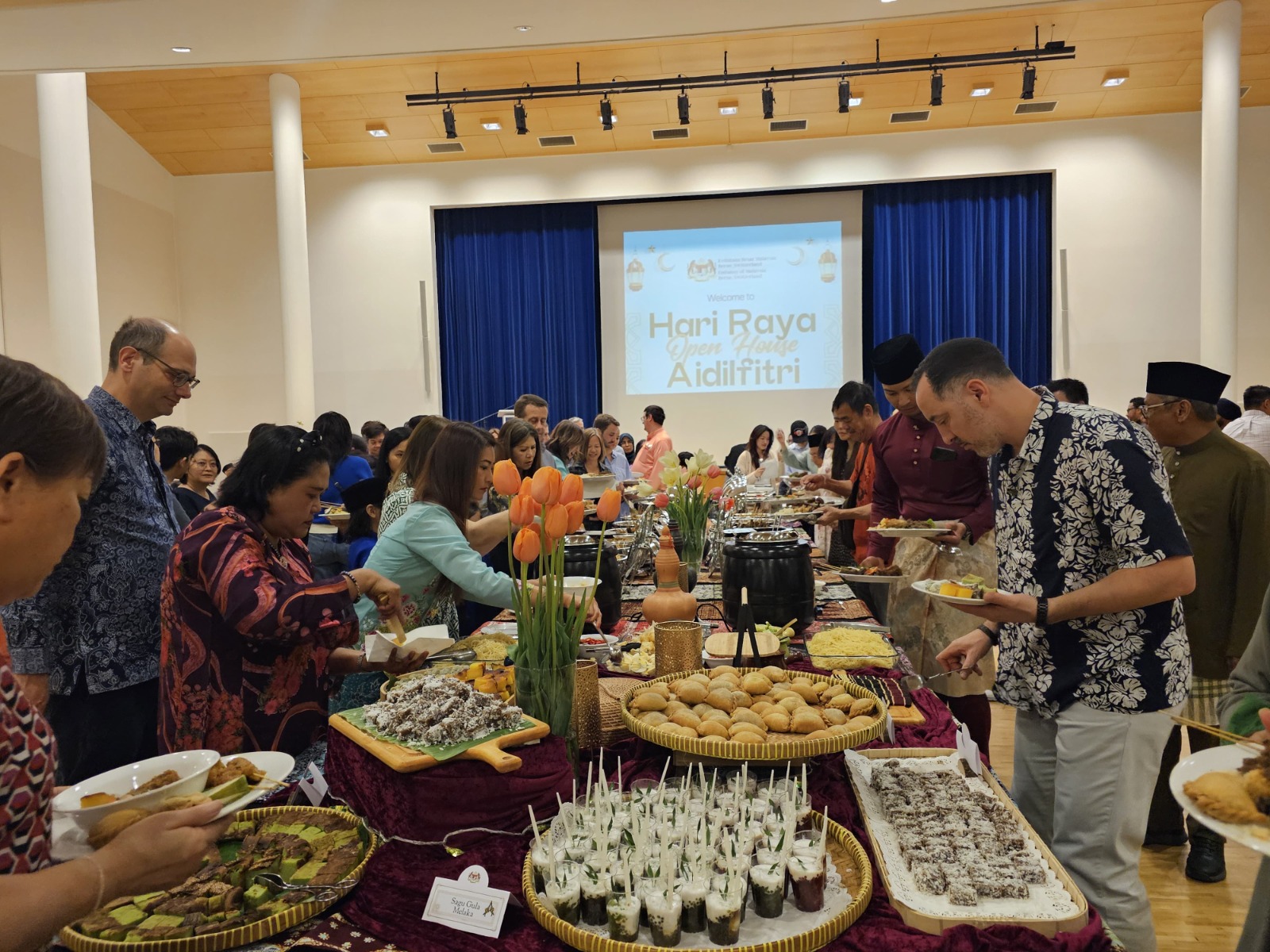
KUALA LUMPUR – The hotel industry has voiced disappointment over the government’s cancellation of official Hari Raya open houses this year, while stressing their understanding of the rationale behind the move.
Datin Christina Toh, President of the Malaysian Association of Hotels (MAH), said the decision was a setback for hotels anticipating the events, though the sector’s response has largely been measured.
“I think, to be frank with you, of course disappointed. However, I guess there’s not to say there’s nothing we can do about it,” she told Scoop.
Christina explained that the impact would depend on existing contractual arrangements between hotels and event organisers.
“If the government or whoever that has already confirmed this open house business agreement with those hotels, again it is up to the respective hotels to renegotiate or react to the situation because it’s all on business contract,” she said, adding that different hotels would manage the situation according to their agreements.
Beyond immediate financial implications, she noted that Raya open houses contribute significantly to the domestic economy.
“This is a circular economy in the sense that we are actually supporting our own Malaysian business,” she said.
She suggested that the celebrations could have been scaled down rather than cancelled entirely.
“Maybe if we cannot do it on a big scale, we could have just reduced it or consolidate it instead of cancelling altogether,” Christina added.
Despite this, she emphasised that the industry respects the government’s decision.
“We definitely understand and have to respect the decision because all decisions are very objective,” she said.

Cultural and economic importance
Christina highlighted the social significance of Raya open houses in Malaysia’s multicultural society.
“We are a multi-racial country and we’ve always had this open house concept. People always look forward to it,” she said, noting that such events also foster networking opportunities for businesses and stakeholders.
“Sometimes in situations like this, private companies may also engage in networking to explore how we can work together in attracting investment and strengthening Malaysia’s economy,” she added.
Tourism and hospitality remain key contributors to the national economy, with Christina estimating them among the top five sectors.
Economic ripple effects
The cancellation is expected to affect employment and related sectors within the hospitality ecosystem. “This is actually for our own fellow Malaysians. The money is not exiting the country,” she said.
While financial losses are hard to quantify, Christina said the decision could impact hotels and supporting services such as catering and banqueting.
“This one will usually affect the hotels that have catering facilities or banqueting facilities,” she explained.
Part-time and seasonal workers are likely to feel minimal impact, though full-time staff could experience more significant effects.
“Does it affect them (part-time workers)? I would say that yes and no, because at some point, if they were to procure this open house in a hotel and things like that, I think it’s the permanent staff that is impacted,” she said.
“If you say will it impact the students and all those, there’s a small minority,” she added.
Despite the setback, Christina stressed that festive events traditionally help stimulate hospitality activity.
“Usually when there’s festive functions and events, it will help tourism because people may eat out or stay in hotels,” she said, noting that while the cancellation may seem minor to some, the industry still feels its effect. – March 15, 2026