

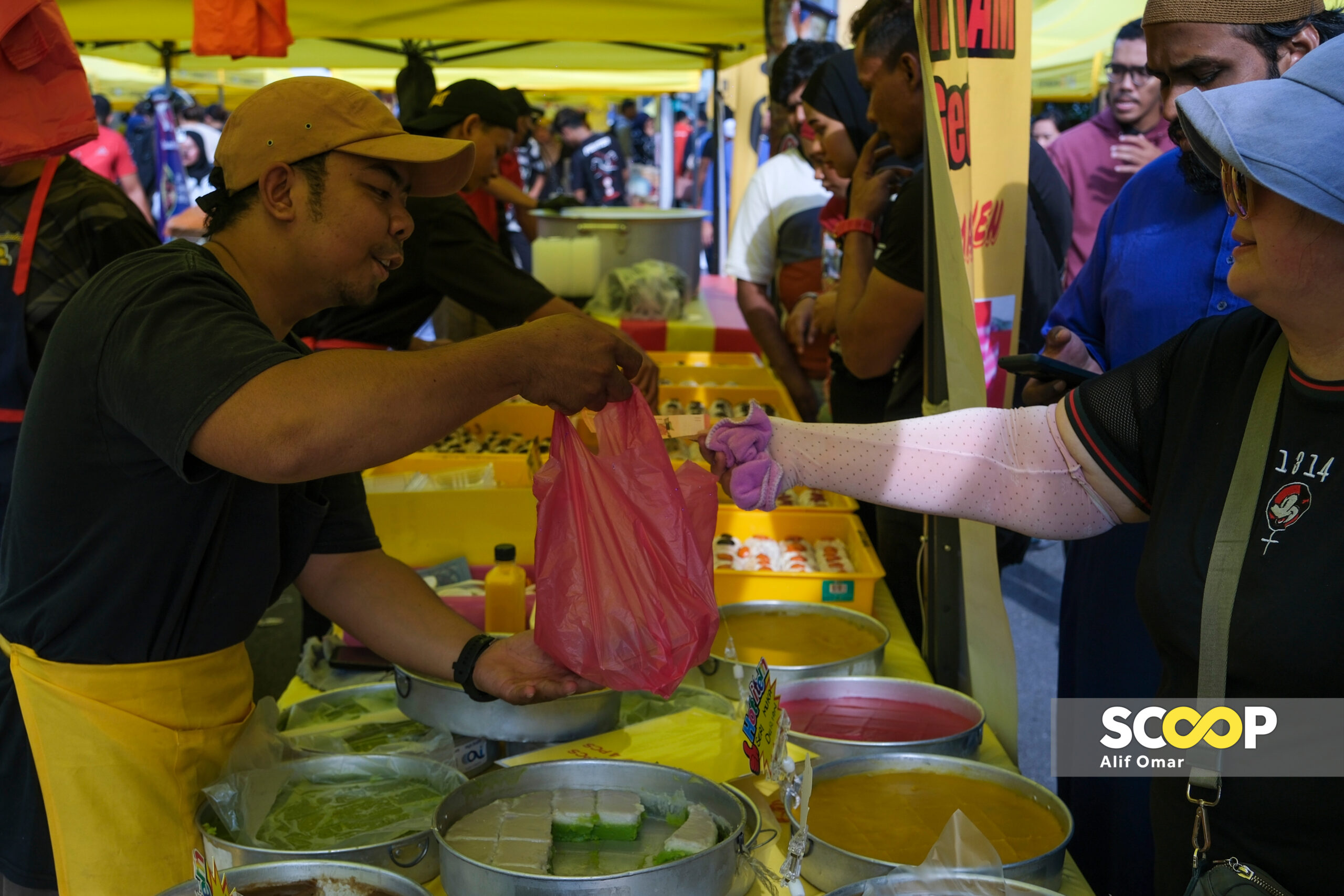
KUALA LUMPUR – The government should urgently reassess support measures to help Malaysians cope with rising living costs, as food prices could climb by as much as 50% following the recent diesel price hike, industry players warn.
Federation of Hawkers and Petty Traders Association (G3PM) president Datuk Seri Rosli Sulaiman said the increase is largely driven by higher transportation and delivery costs for raw materials, with most logistics vehicles dependent on diesel.
“The movement of raw materials relies heavily on diesel-powered transport, so there is a high likelihood that prices of goods will rise,” Rosli told Scoop.
He cautioned that the impact will cascade across the supply chain, forcing traders to raise prices as operating costs erode already thin profit margins.
Beyond financial strain, Rosli highlighted a growing psychological toll on small-scale entrepreneurs, noting that some are nearing breaking point.
“Many are choosing to close rather than continue struggling with rising costs and minimal returns,” he said.

He pointed to the services sector as an early sign of the pressure, citing towing fees from Kuala Lumpur to Malacca that have doubled from RM700 to about RM1,400, with some operators declining jobs altogether due to fuel costs.
While many food stalls and eateries have yet to fully reopen after the Hari Raya break, Rosli expects the full effects of the diesel hike to surface in April as businesses restock at higher prices.
He was also sceptical of stopgap measures such as reducing portion sizes, arguing that stagnant wages remain the core issue.
“Even if portions are smaller, families with fixed incomes still struggle to meet overall living expenses,” he said.
Rosli added that consumer behaviour is already shifting, with customers cutting back on purchases. Items such as murtabak that were once bought in larger quantities are now being purchased in smaller amounts.
“Demand has dropped, and traders are making very little profit. For many, it is no longer sustainable to continue,” he said.
To ease the burden on B40 and M40 groups, Rosli called for targeted subsidies or price support for suppliers and traders reliant on diesel logistics.
He also suggested temporary interventions, including tapping national reserves, to cushion the public amid ongoing global economic uncertainty.
“We are seeing how deeply the public is affected. The government must re-evaluate how it can better ease the financial burden on the rakyat,” he added. – March 29, 2026