

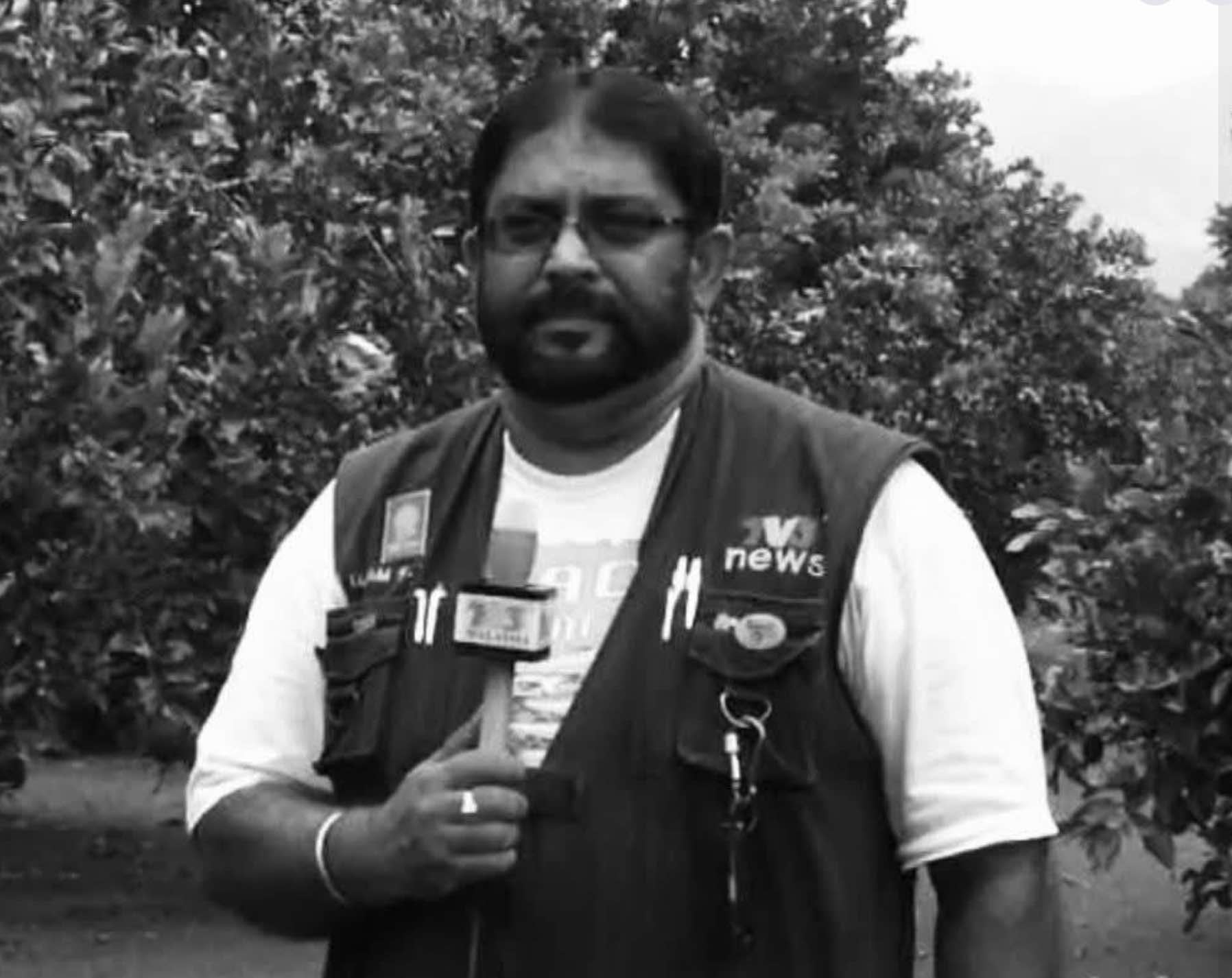
DATUK Karam Singh Walia was more than a journalist; he was Malaysia’s conscience every night at 8pm.
From 1995 to 2014, his reports on TV3’s Buletin Utama turned riverbanks, forests and landfills into living courtrooms where pollution and negligence were tried before the nation. A four-time MPI “Best Environmental Television Journalist” and multiple Anugerah Seri Angkasa winner, he brought environmental journalism from the margins to the mainstream, armed with facts, visuals and an unshakable moral compass.
Born in Teluk Intan in 1959, Karam often said he became an “accidental journalist,” first driven by anger at a dengue outbreak in his own neighbourhood. Long before that, a Malay poetry book he rescued from a dustbin became his lifelong “bible,” sharpening the language that would later cut through the noise on national television. His impeccable Bahasa Malaysia, laced with pantun and peribahasa, meant that even complex stories about effluents, illegal dumps or hillside erosion landed straight in the hearts of ordinary Malaysians. Children mimicked his sign-off lines, adults quoted his verses at the office the next morning. In countless homes, the phrase “alam sekitar” became inseparable from the name Karam Singh Walia.
He went where few dared to go. Viewers remember his exposes on illegal dumping grounds, toxic discharges into rivers and rampant land clearing in fragile highlands, including a harrowing assignment in Cameron Highlands where he had to flee machete-wielding assailants and seek protection at a local police station. I remember my own moment with him at an illegal landfill in Kepong. There were thugs watching the entrance, guarding a business built on hiding waste from enforcement. We entered in my unmarked car because his with the TV3 logo was too well known. It began to rain heavily, the ground turning to mud and leachate, but Karam would not turn back. With just a one‑man camera crew, he captured the trucks, the waste, the stench—the whole truth. That same day, the story aired. And as so often happened with his reporting, action followed.
This was his pattern of work: find the evidence, show it plainly, and force a response. Local councils, land offices, even powerful politicians sometimes bristled at his findings. Yet he kept his footing, protected by the rigour of his reporting and the trust he had earned with the public. TV3, in turn, amplified his courage. Under his lens, the station became one of the most feared storytellers on environmental neglect; if Karam showed up at a polluted site, those responsible knew that the comfortable invisibility of their actions was over.
But Karam’s legacy is not only in the hundreds of exposes that made headlines. It lives in the younger journalists he mentored, especially those he encouraged to see environmental stories not as “soft” features but as hard news that sits at the intersection of public health, economics and justice. Many of today’s TV3 reporters who stand in rivers, landfills and forests with a microphone in hand are walking along a path he cleared, their own scripts still carrying an echo of his cadence and his insistence on getting the science and the language right.
He paid a personal price. Years on the road, relentless fieldwork and constant pressure contributed to serious health challenges, including liver and kidney disease that drew public concern and even the attention of the Prime Minister, who later helped support his medical costs. Yet even in illness, he remained a teacher, sharing lessons about integrity, humility and the duty to speak for the voiceless earth.
Karam Singh Walia’s passing leaves a silence in the airwaves, but not in our memory. For Malaysians who grew up with his voice, a river in flood, a scarred hillside or a smoking dump still triggers an instinctive question: “What would Karam say about this?” To you, brother Karam, thank you, for every night you turned a news bulletin into a classroom, for every risky assignment you took so we could see what others wanted hidden, and for proving that environmental journalism is not a niche, but a national necessity.
You may no longer stand before the camera, but the seeds you sowed, in policies changed, rivers defended, forests spared and journalists inspired, will keep growing long after the credits roll. Adios, Datuk Karam Singh Walia. May the land, water and sky you fought to protect now bear witness for you, and may the angels of the environment you loved so fiercely keep you in gentle company, wherever you are.
Ravindran Raman Kutty is an award-winning PR practitioner