

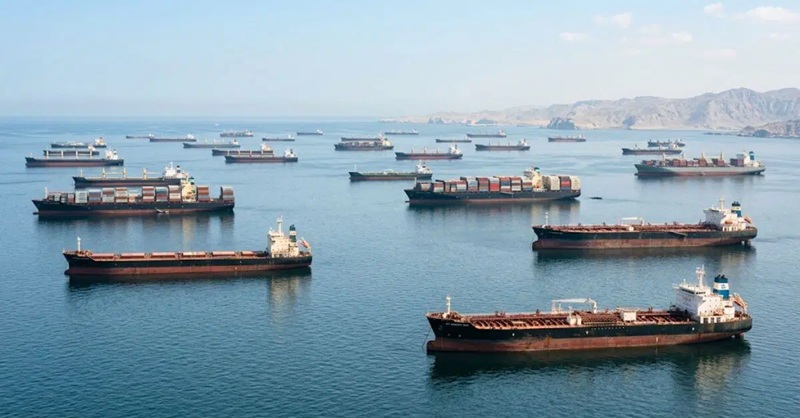
TEHRAN — The International Maritime Organization (IMO) has sounded the alarm on a brewing humanitarian and economic crisis, revealing that nearly 20,000 seafarers and 2,000 vessels are currently trapped in the volatile Strait of Hormuz.
With global supply chains hanging in the balance, the IMO confirmed on Wednesday that it is drafting urgent emergency protocols to extract the stranded crews and their cargo from one of the world’s most dangerous maritime bottlenecks.
IMO Secretary-General Arsenio Dominguez cautioned that the evacuation is not a simple “plug-and-pull” operation. The Strait of Hormuz is a narrow corridor—spanning just 30 kilometers at its tightest point—making any large-scale movement a high-stakes gamble.
“The evacuation cannot happen all at once,” Dominguez stated.
“It requires surgical coordination between neighboring states. Given the narrow geography and the escalating safety risks, precision is our only option.”
The Strait of Hormuz serves as the world’s most critical oil transit chokepoint, handling roughly 20% of global oil consumption daily. The shipping lanes are notoriously constricted, consisting of only two-mile-wide channels for inbound and outbound traffic.
Beyond the billions in stagnant cargo, the 20,000 seafarers on board these vessels face mounting psychological strain and potential supply shortages as they remain immobilized in a high-conflict zone.
The gridlock threatens to send shockwaves through global energy markets. With 2,000 ships at a standstill, analysts warn of a potential spike in oil prices and a surge in insurance premiums for maritime trade.
The IMO is currently working with regional powers to establish “safe passage” corridors, but with tensions high and physical space limited, the timeline for a full extraction remains uncertain. – April 16, 2026