

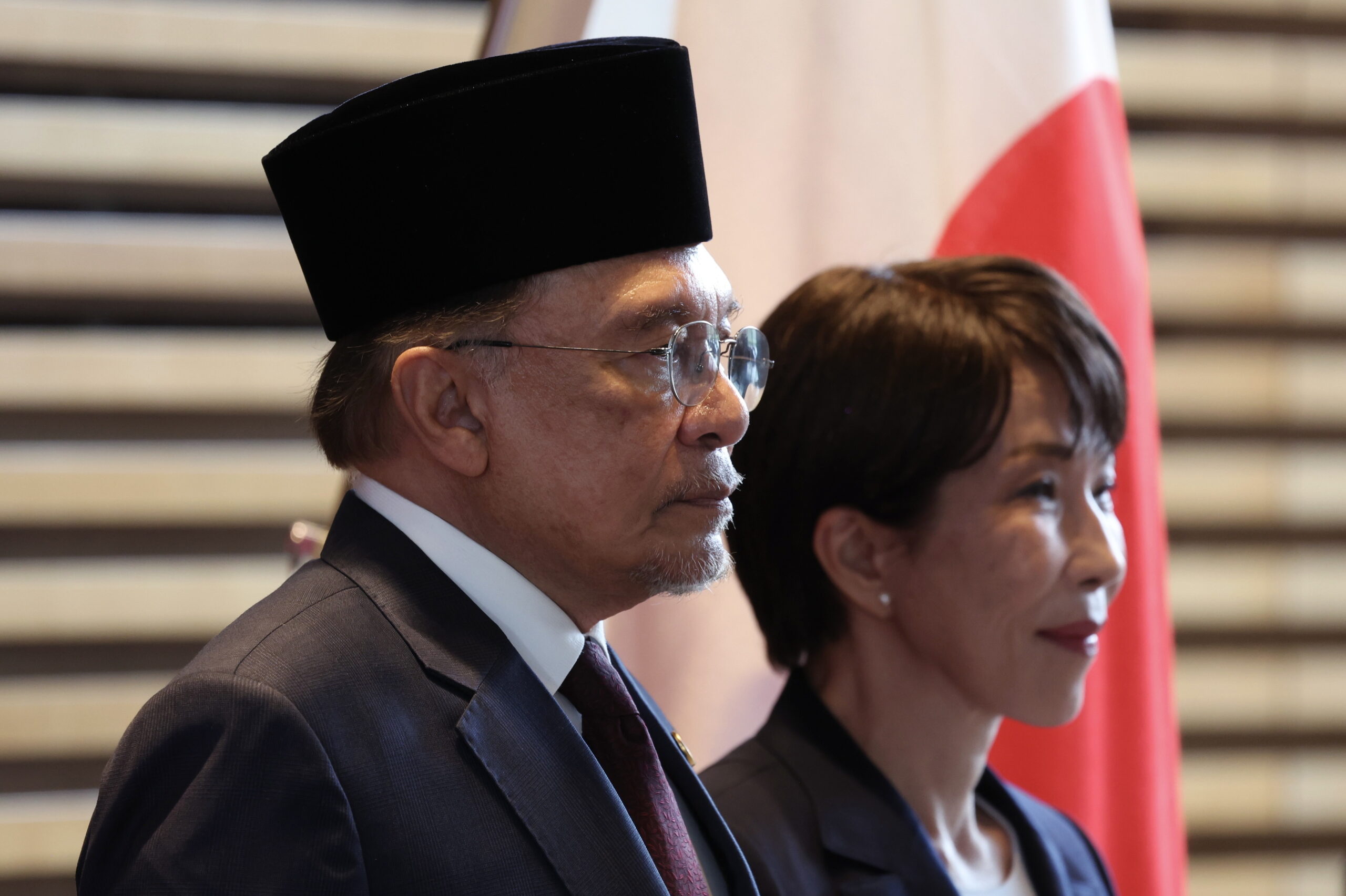
KUALA LUMPUR – Malaysia and Japan are well positioned to strengthen regional technology supply chains, particularly in the semiconductor sector, by leveraging their complementary industrial strengths, Prime Minister Datuk Seri Anwar Ibrahim said today.
Speaking at the Nikkei Forum on “Navigating Strategic Uncertainty”, held in conjunction with the 31st Nikkei Forum under the theme “Working Together for a More Resilient and Prosperous Asia”, Anwar said deeper cooperation between the two countries could help create a more robust and integrated technology ecosystem across the region.
He noted that Malaysia’s expertise in semiconductor assembly, testing and advanced packaging complements Japan’s leadership in materials, equipment and advanced manufacturing.
“This is where Malaysia and Japan can make a meaningful contribution,” he said at the event in Tokyo, as quoted by Bernama.
Beyond technology, Anwar said closer collaboration in the energy sector could support Asia’s transition towards a lower-carbon future while safeguarding economic growth and energy security.
He pointed to initiatives such as the Asia Zero Emission Community as evidence that sustainability and economic development can progress hand in hand.
On the digital economy and artificial intelligence, Anwar stressed the importance of ensuring technological advancement remains inclusive and benefits society as a whole.
“Growth, not stagnation, empowerment, not subjugation,” he stressed.
Reflecting on Malaysia’s industrial development, Anwar recalled how Japanese companies contributed significantly to the transformation of Penang in the 1970s, helping establish the state as one of Asia’s leading electronics and semiconductor hubs.
He said the partnership between the two countries was founded not only on investment, but also on mutual confidence, collaboration and a shared vision for long-term development.
“Today, that spirit remains highly relevant, and must continue to ride on the mantra of proactivity over passivity,” he added.
Earlier in his address, Anwar warned that the international system that had supported decades of global growth and development was facing mounting challenges.
He said the multilateral trading system, once a key driver of economic integration, is increasingly under pressure from fragmentation, unilateral actions and intensifying strategic competition.
“It appears that (US President Donald) Trump’s failed ‘Liberation Day’ tariffs are being given another new lease on life via new proposed impositions invoked under Section 301 of the Trade Act of 1974,” he said.
Anwar also highlighted the growing use of export controls and industrial policies shaped by geopolitical tensions, cautioning that economic interdependence is increasingly being used as a strategic tool.
“Supply chains, technology, critical minerals, finance, and market access are increasingly viewed through the lens of rivalry rather than mutual benefit,” he added. – June 10, 2026