

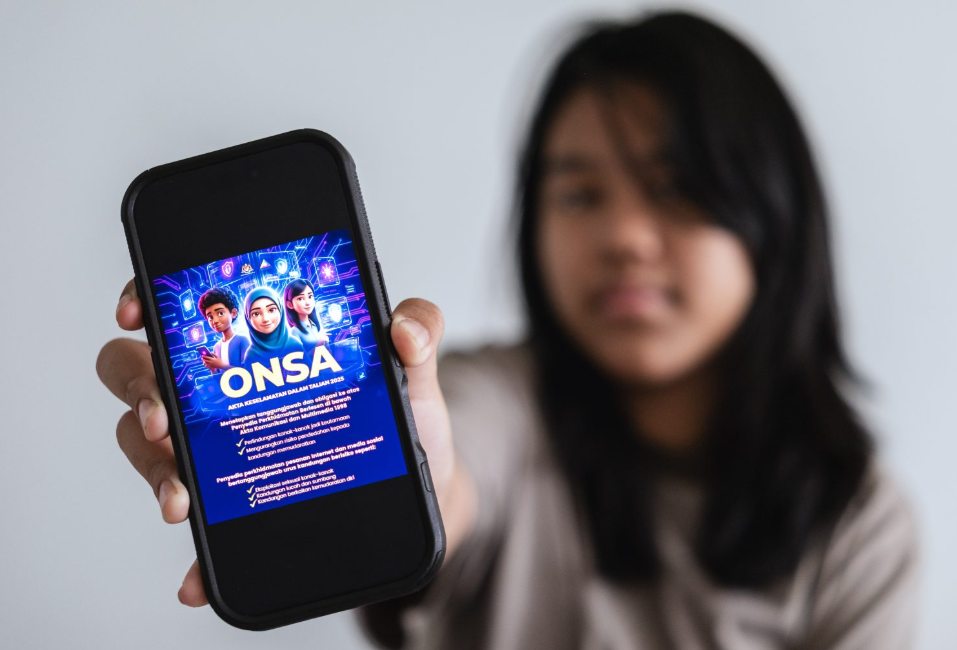
KUALA LUMPUR – Malaysia’s plan to restrict social media account registrations for individuals under the age of 16 has placed age verification and user privacy at the centre of a growing debate over online child protection.
Under the Online Safety Act 2025 (ONSA), which came into force on June 1, the Malaysian Communications and Multimedia Commission (MCMC) is requiring online service providers to strengthen safeguards for children and ensure their platforms are designed to offer safer, age-appropriate digital experiences.
A key component of the framework is age verification, with platforms expected to introduce measures capable of accurately confirming users’ ages.
“The requirement for age verification further strengthens these protections, with platforms expected to implement effective measures to verify users’ age in a manner that is secure, practical, and respectful of user privacy,” MCMC told Scoop in response to query recently.
While the regulator maintains that age verification is necessary to protect children online, questions remain over how global social media platforms will implement such systems at scale without gathering excessive personal information or exposing users to additional privacy risks.
MCMC said the restriction on social media account registration for those under 16 forms part of a broader effort to improve online safety.
“The restriction on social media account registration for individuals under the age of 16 forms part of this broader framework, ensuring that platforms are designed and operated in a safer and more age-appropriate manner,” the commission said.
According to MCMC, children below 16 are more vulnerable online because they are still developing the ability to assess risks, manage interactions and make informed decisions, making them more susceptible to harmful content, unsafe interactions and platform features that may not be suitable for their age.
To facilitate the transition, minors identified as being under 16 have been given a one-month period to download or transfer their data before platforms take any enforcement action.
“Existing users identified as being under the age of 16 will be given one month to download or transfer their data, including photographs and videos, before any restrictions, suspension or other actions are taken by the respective platforms,” MCMC said in a statement issued on June 1.
The commission added that age verification for existing accounts will be introduced gradually, with full implementation expected to take up to six months depending on the readiness of individual social media providers.
The phased rollout means platforms will have time to develop and deploy compliance measures while allowing affected users to secure their content and data.
MCMC stressed that the policy is not intended to prevent children from accessing the internet or digital learning resources.
“This approach is not intended to restrict children’s access to the Internet or digital learning opportunities, but rather to ensure that their engagement with online services is age-appropriate, while maintaining access to beneficial digital resources,” it said.
The regulator also acknowledged that ensuring compliance will require cooperation beyond social media companies alone. It highlighted the role of parents, guardians and the wider community, alongside the use of parental controls, supervision and digital literacy programmes.
MCMC described the framework as outcome-based, giving platforms flexibility in determining how they meet safety obligations while holding them accountable for protecting younger users.
The broader objective, the commission said, is to reduce children’s exposure to harmful content, limit unsafe interactions and strengthen online protections.
However, the effectiveness of the policy will ultimately depend on whether platforms can enforce age restrictions effectively while maintaining user privacy, protecting personal data and preserving access to legitimate digital services. – June 12, 2026