

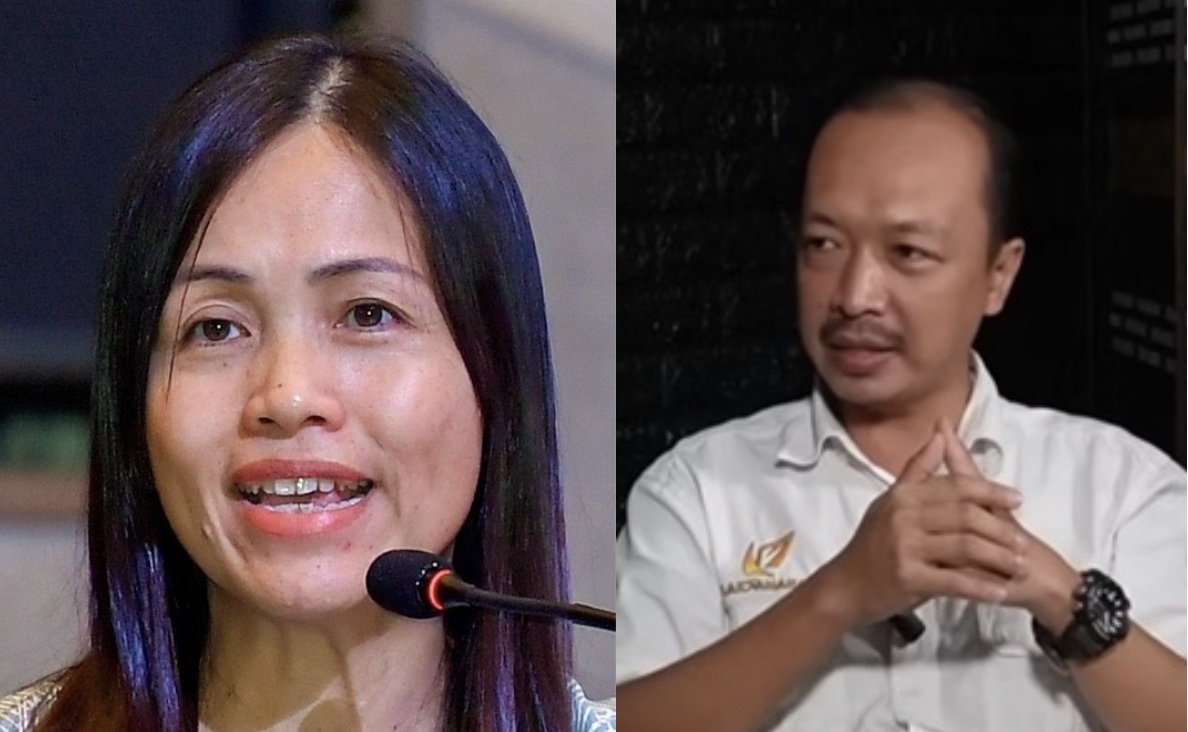
PUTRAJAYA — All parties, especially civil servants, should refrain from using inappropriate or discourteous language when issuing public statements, Deputy Communications Minister Teo Nie Ching said today.
Remarks that also touch on sensitivities involving race, religion and royalty (3R) should also be avoided, she added.
“He has just been appointed, but my advice to everyone is not to use inappropriate language and to avoid 3R issues, not only during election campaigns but at all times,” she told reporters after officiating the ‘Balancing Virality & Responsibility: Journalism Amid Speed, Trust & Impact – An Industry Dialogue’ course here today.
Teo was commenting on criticism directed at Department of Community Communications (J-KOM) director-general Mohd Hisyamuddin Ghazali, who was alleged to have used inappropriate language in public statements since assuming office.
She said she had yet to meet Hisyamuddin to convey the advice personally.
Hisyamuddin was appointed J-KOM director-general on June 9, replacing Datuk Ismail Yusop.
He soon courted criticism for posting on his personal Facebook account the phrase “Cina sesat” (lost Chinese) in reference to Chinese who criticise the government.
Hisyamuddin has since explained that his remark was not aimed at Chinese in general, but specifically at two individuals — Datuk Eric See-To and Albert Tei. See-To is a former communications strategist for Barisan Nasional and now a political commentator and influencer, while Tei is the businessman who blew the whistle on alleged corruption by Sabah politicians in the granting of mining permits. Tei is also facing corruption charges in relation to alleged bribery to secure mining exploration licences.
Teo, meanwhile, said the industry dialogue today on journalists’ duties to balance viral content with responsibility showed that the public needs more media literacy to critically evaluate information and identify misleading content.
She called for closer collaboration among the media industry, universities and the government in talent development and research related to media transformation.
“The major challenge in the attention economy is that algorithms do not necessarily reward the most accurate or beneficial content. In many cases, they prioritise content that triggers strong emotional reactions,” she said.
Despite growing pressure to deliver news rapidly across multiple platforms, Teo said the fundamental principles of journalism must remain unchanged, with facts needing to be checked, information verified and truth prioritised.
She said media organisations had traditionally competed to be the first to break a story, but the race had become far more demanding as news now travels in real time and audiences expect information to be available instantly.
“When an incident occurs, various versions of the story often circulate online before journalists have the opportunity to verify the facts. In such situations, media organisations face a difficult dilemma. If they are too slow, they risk being seen as lagging. If they are too fast, they risk making mistakes that could undermine their credibility,” she said.
Teo added that the future of the media would not be determined by virality alone, but by its ability to earn and sustain public trust.
“Trust is not built in a day. It is built when the media is willing to acknowledge mistakes and correct them openly. It is built when the media places the public interest above the pursuit of sensationalism,” she said. – June 16, 2026