

THE language which encircles much of the vibrant discussion around emerging investable
opportunities in the economy comes in all types of colours and shades. From the blue economy,
which is primarily maritime-related; the green economy, pertaining to renewable and sustainable
energy, and the orange economy, encompassing creative media. The appeal of these colourful
investment opportunities, among other things, is the potential for strong value-creation that can
act as powerful engines of economic growth. For instance, Malaysia’s maneuvers to develop its
blue economy, that is through the increased protection of aquaculture, can help to protect its
long-term maritime interests such as to secure the health of its fisheries.
Supporting the green
economy is crucial for the nation’s aspirations in its ever-evolving energy transition, as outlined
in its National Energy Transition roadmap (NETR), by aiming to secure reliable, more
sustainable sources of power in the coming age of resource scarcity. These investments, when
coupled together, places Malaysia in a better position of economic leverage to present itself as a
hot-spot for foreign direct investment, providing alluring promises of high-returns stacked on
demonstrated industry growth. These economic activities are just the many gears that grind
Malaysia’s economic clockwork.
Governments around the world are incentivized to source out novel areas of investment for
precisely this reason, to help propel the economy forward and more importantly to keep it future-
proofed. The way that investable opportunities are typically viewed as promising are anchored in
a few key considerations. Namely, I argue, if (i) it is supported by global shifts and trends and (ii)
they show to be profitable and (iii) that they are equally able help to address issues closer to
home.
Referencing the ‘coloured’ investment opportunities from earlier, investments in nascent
green technologies and innovation, can be one such way that the government births new and
high-value job prospects which can mitigate the threat of unemployment, especially when
traditional jobs are phasing out of relevance. That being said, in recent years, there has been a
pressing and urgent, as evidenced by trends worldwide, for governments to invest and to help
scale the ‘silver economy.’ Unlocking the potential of the silver economy is needed and will be
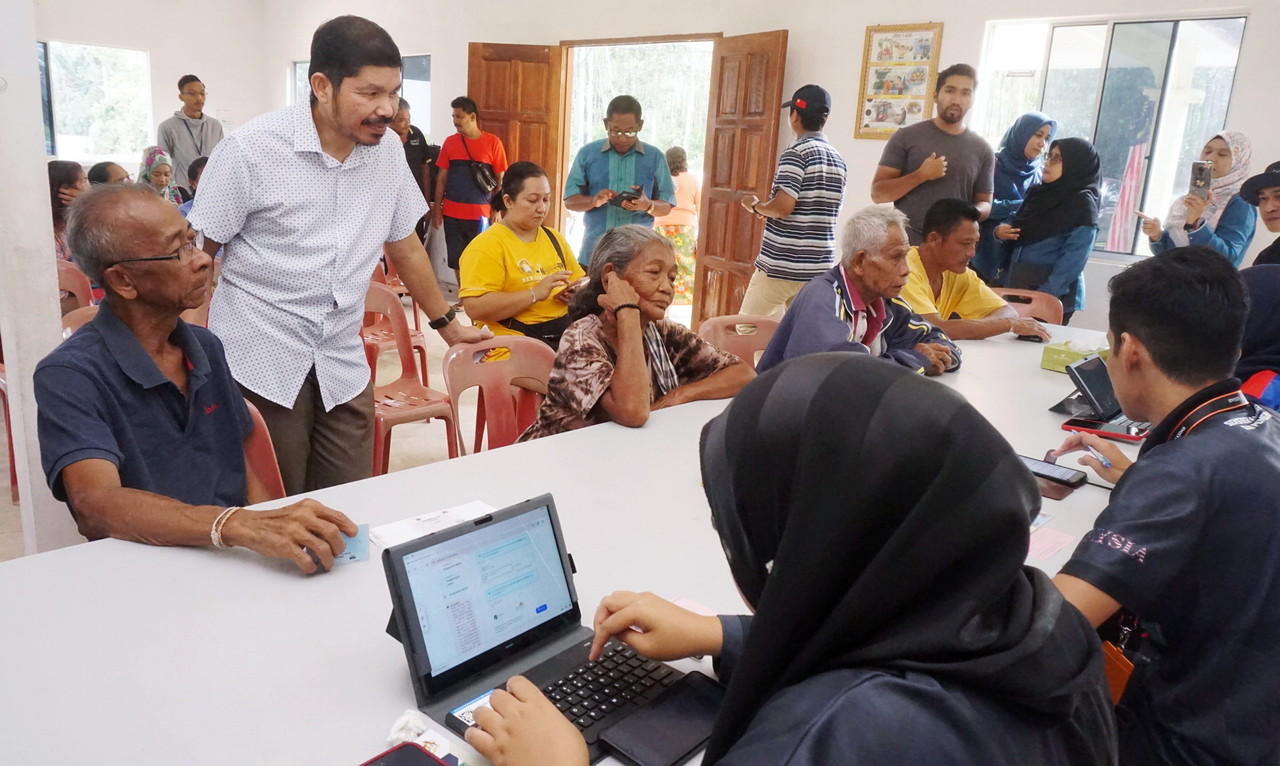
much needed life-support for one of Malaysia’s most vulnerable groups, the elderly. Here,
Malaysia must invest and do so comprehensively.
The silver economy concerns itself with the economic activities and the output of older persons,
such as the elderly, and more acutely the retirees. The reason why the silver economy has gained
prominence over the years is very much to do with the issue of ageing populations. Malaysia, by
no means, has been exempt from this as it was designated as an ageing country given the
increased proportion of its elderly population relative to the national average.
The problem that
this presents to Malaysia is manifold, such as it means there are fewer workers to help support
Malaysia’s long-term growth and stability. This itself is part of a broader trend worldwide as
more and more nations are experiencing dramatic demographic shifts headed towards this
direction. The World Health Organization notes that the number of people who have upwards of
60 years is projected to increase by 1.4 billion in 2030. As for Malaysia, the percentage of the
elderly population rose to 8% in 2025 from 2024’s 7.6%. Notwithstanding the immense costs
that this presents to healthcare, what is more alarming are the implications of a neglected elderly
population, will have spillover effects into the government’s ambitions to sustain an inclusive
economy. One where they too are able to participate in.
If a sizable bulk of the population is effectively amputated from Malaysia’s national services, programs and initiatives it may slow
down national productivity. Consumer markets shrink, businesses see less traffic and this can
then have spillover effects into Malaysia’s labour market. As problematic as this is, out of this,
this provides for a valuable investment opportunity for Malaysia to structurally support its
elderly population and their needs in a way that simultaneously contributes back to the economy.
Where this converges the most is in the area of retiree-led businesses. For many, starting and
maintaining business for the elderly has proved to be incredibly challenging.
Having a steady flow of cash is instrumental to a business and is already by itself is difficult to
manage, the problem compounds further when retirees are unable to access funds to do so either
as a result of decreased savings allocated for the business or the limits placed on them when
wanting to access credit on loans, as they are perceived as high-risk. This can then have adverse
effects on the country’s labour force participation rate (LFPR) in the long-term. Equally as
worrying is the troubling reality that there are many of the elderly who would like to pursue
entrepreneurship post-retirement but have very little means to do so. Tapping into this potential
could do wonders for Malaysia in that, as it focuses on its talent development to drive
innovation, involving the elderly in this can be a recipe for inclusive economic participation.
This can help Malaysia add to its competitiveness where businesses of all strands can continue to
be conceived and created, nurtured into power-houses of future job growth. Achieving this will
almost certainly provide for a profitable investment opportunity.
Among the many such initiatives of Malaysia’s reaching out to the silver economy that are
deserving of praise, the announcement by KWAP (Malaysia’s state retirement fund) in the early
months of 2026 shines bright. KWAP’s launch of its’ ‘Jana MyPesara’ will act as significant
relief for retiree-led businesses. The platform is designed to be a convenient and accessible
microfinancing platform. This makes it a lot easier for the elderly to source out much needed
funds to run their business and generate income sustainably, providing significant relief. This
policy support comes out of a broader backdrop, Malaysia’s 13 th Malaysia Plan, which aims to
‘raise the floor’ by spearheading multiple avenues through which the elderly increase their
quality of life. KWAP’s Chief Executive Officer, Datuk Hajah Nik Amlizan Mohamed, citing the
pain points of the elderly called on Malaysian to recognise the aspirations of much of the elderly,
saying “Our pensioners have contributed years of service to the nation, and many still want to
remain active, independent, and economically engaged. Yet for some, the barrier is not
motivation, but access to the right support and capital.”
Giving pensioners a second chance at life, by giving them a chance to create something of their
own, so that they too can continue to contribute to Malaysia is a truly a silver line made possible
by Malaysia’s silver economy. – June 21, 2026
Pravin Periasamy is the Executive Director of the Malaysian Philosophy Society