

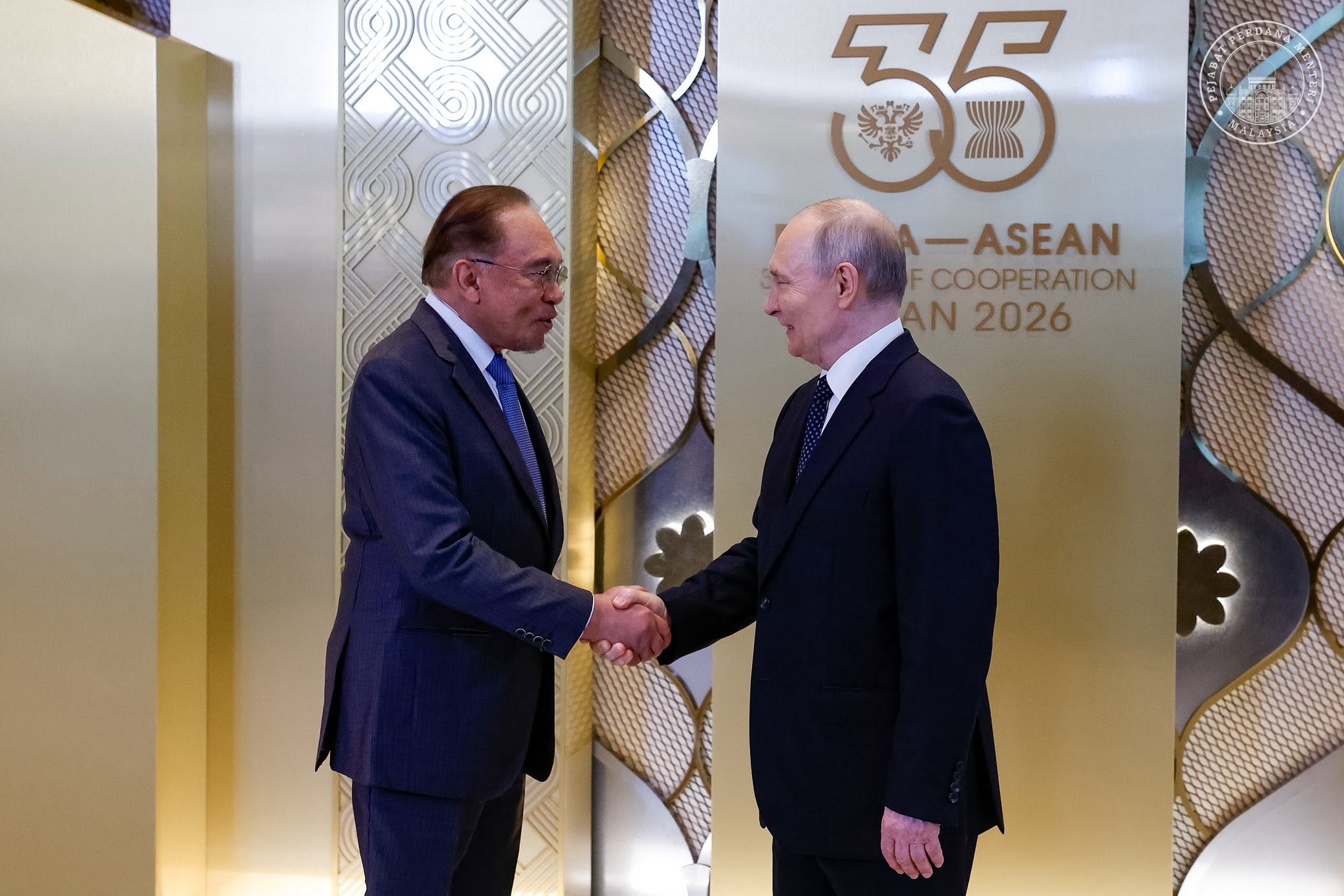
LET’S give credit when credit is due. Without doubt, Prime Minister Datuk Seri Anwar Ibrahim’s visit to Russia and Turkmenistan last week has been a hugely accomplished one.
First, Russian President Vladimir Putin assured Malaysia of a supply of oil, gas and diesel for at least the next 20 years.
Then, Turkmenistan allowed Petronas into one of the world’s largest natural gas fields in the country.
Under the agreement, Petronas will be entrusted with the development of two major gas blocks.
The agreement would help address Malaysia’s concerns over future gas supply requirements while strengthening Petronas’ position as a major exporter to key markets, including Japan, South Korea and China.
The breakthrough in Turkmenistan highlights a defining feature of the Prime Minister’s administration: the use of active economic diplomacy to create opportunities for Malaysian companies abroad.
For decades, Petronas has built a reputation as one of the world’s most respected national energy companies.
Yet in today’s geopolitical environment, commercial capability alone is often insufficient.
Access to strategic resources increasingly depends on strong government-to-government relationships, trust between national leaders, and the ability to position Malaysia as a reliable long-term partner.
Anwar’s engagement with Turkmenistan reflects this reality. His visit and direct discussions with Turkmen President Serdar Berdimuhamedow helped elevate bilateral relations beyond traditional diplomatic exchanges and towards tangible economic outcomes.
By placing energy cooperation at the centre of the discussions, Anwar effectively created a platform for Petronas to explore new investment opportunities that may otherwise have taken years to materialise.
This approach mirrors the Prime Minister’s broader foreign policy strategy. Since taking office, Anwar has consistently emphasised economic diplomacy as a tool for national development, whether through strengthening ties with the Gulf states, attracting investment from China, deepening Asean cooperation, or opening new avenues in emerging markets.
The objective is clear: every diplomatic engagement should ultimately translate into jobs, investments, trade opportunities and economic growth for Malaysians.
The Turkmenistan initiative demonstrates how this strategy can deliver results. While Petronas possesses the technical expertise and financial strength to compete internationally, high-level political support can provide the confidence and assurances necessary for host governments to pursue deeper partnerships.
In energy-rich countries where strategic resources are closely linked to national interests, leadership-to-leadership engagement often plays a decisive role.
Anwar’s involvement is particularly significant given the scale of Turkmenistan’s gas reserves. The country is home to some of the world’s largest natural gas deposits, making it a strategic destination for global energy companies.
Securing opportunities in such a market requires more than commercial negotiations; it requires trust, credibility and sustained diplomatic effort.
The Prime Minister’s role should therefore not be viewed as interference in corporate matters, but as an example of modern economic statecraft.
In an increasingly competitive global economy, governments are expected to champion their national champions and help them access strategic markets. Countries such as China, South Korea, Japan and the Gulf states have long integrated diplomacy with commercial objectives. Malaysia’s success in Turkmenistan suggests that Anwar is adopting a similar approach.
Should Petronas eventually secure participation in a major new gas field, the achievement will belong not only to the company and its management team, but also to a broader national effort in which diplomacy, government policy and corporate excellence worked hand in hand.
The message is clear: when the Malaysian national leadership and diplomacy are aligned with Malaysian business interests, the nation can punch far above its weight on the global stage. – June 24, 2026
Datuk Seri Wong Chun Wai is the chairman of Bernama and a National Journalism Laureate