

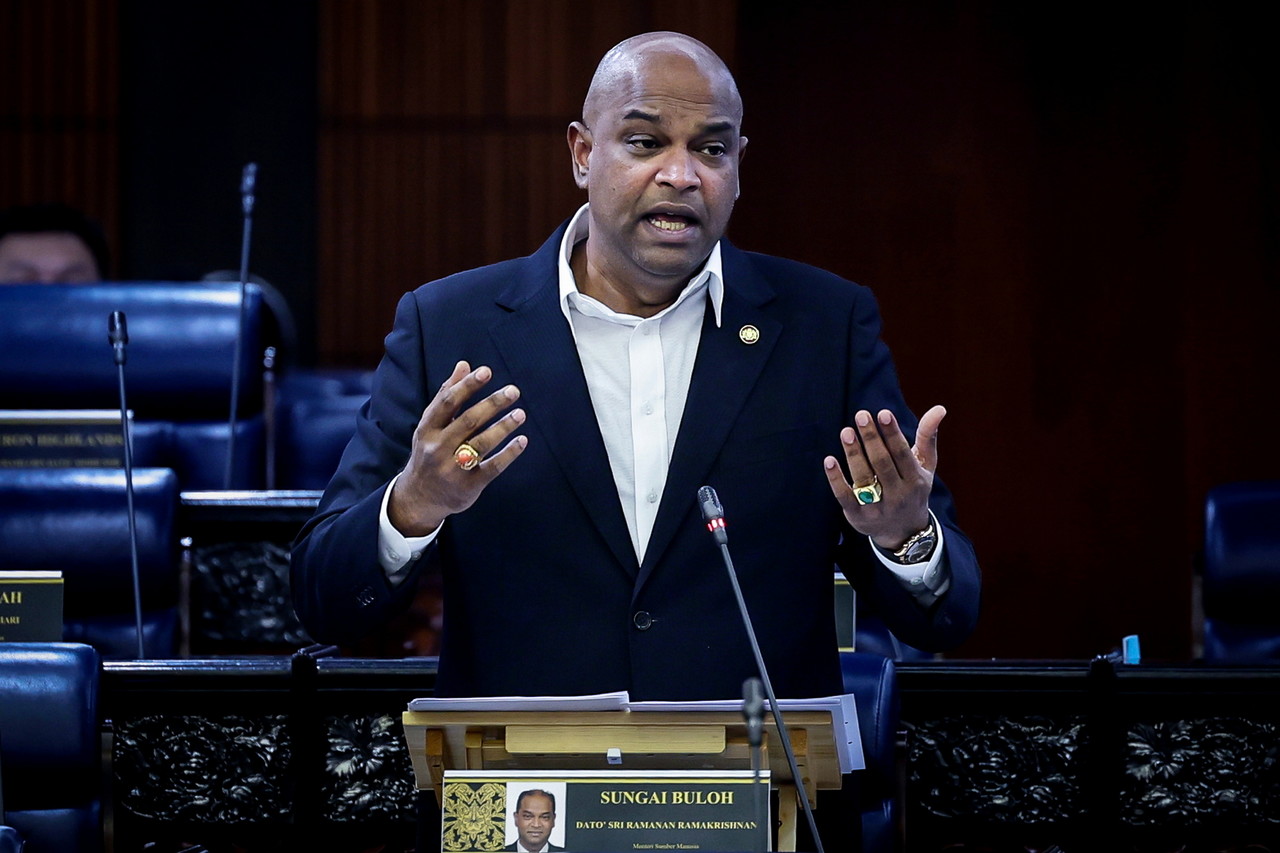
KUALA LUMPUR — A total of 42,807 workers across the country lost their jobs between January and June 12 this year, according to Human Resources Minister Datuk Seri R. Ramanan.
He said data from the Social Security Organisation (SOCSO) showed that business closures and corporate downsizing were the leading causes of retrenchments, accounting for 17,485 workers or 40.85 per cent of the total, Bernama reported.
“Kuala Lumpur recorded the highest number of job losses at 30% or 12,844 people, followed by Selangor with 12,360 people, and Johor, which recorded a job loss rate of 8.1 percent or 3,468 people,” he said during Question Time in the Dewan Rakyat on Tuesday.
He was responding to Datuk Azman Nasrudin (PN–Padang Serai), who asked about the impact of automation and artificial intelligence (AI) on company closures and downsizing in the Klang Valley, which has contributed significantly to job losses since the start of the year.
Ramanan stressed that AI is not currently a threat to employment, adding that workers should instead be equipped with relevant digital and AI skills to remain competitive as technology adoption increases.
Replying to a supplementary question from Datuk Rosol Wahid (PN–Hulu Terengganu), he said the notion that AI is the main driver of job losses is inaccurate, as most retrenchments stem from business closures, voluntary separation schemes, and workforce restructuring.
He added that Malaysia’s labour market continues to show strong demand, with 605,168 job vacancies posted on the MYFutureJobs portal since January, compared with 188,062 job seekers, including those who had been retrenched. MYFutureJobs
Ramanan also cited a TalentCorp study which estimated that around 697,000 jobs could be affected by technological changes and the green economy over the next three to five years if workers do not upgrade their skills. TalentCorp
He said the Human Resources Ministry is rolling out various initiatives to strengthen workforce readiness, including the Scheme for Training and Upskilling for Employability (SLaPB) and the Academy in Industry (ADI) programme.
In addition, platforms such as MyMAHIR.my and the MyMahir SkillsLab programme — which include AI-related modules — are being expanded to help workers adapt to future labour market demands. — June 24, 2026