

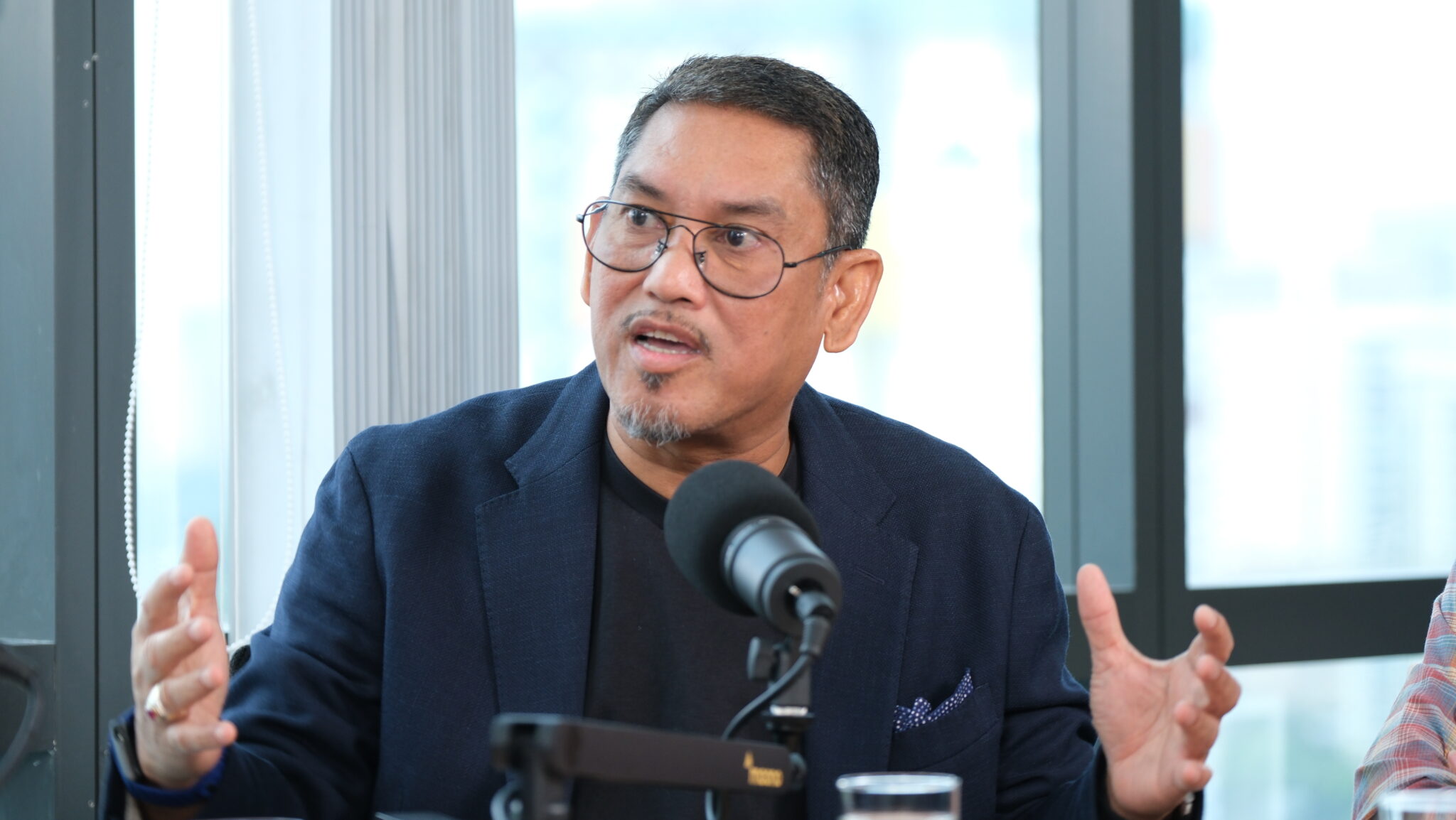
KUALA LUMPUR – Malaysia has made encouraging progress in the electric vehicle (EV) sector, but the pace of development is failing to match the rapid evolution of the global industry and the aggressive strategies adopted by regional competitors, Bersatu vice-president Datuk Seri Ahmad Faizal Azumu said.
Speaking to Scoop, the former Tambun MP said Malaysia’s biggest challenge is no longer whether to embrace EVs, but whether it can move quickly enough to remain competitive against neighbours such as Thailand and Indonesia.
Ahmad Faizal was unequivocal when asked if Malaysia is keeping pace with the region.
“No. And the more pressing concern is not our neighbours alone, but the sheer velocity of the technology itself.”
He pointed to the rapid advances made by global EV manufacturers, arguing that innovation is moving at a pace few governments can comfortably match.
“Consider what has happened in barely 18 months. BYD, which began life making batteries for Motorola and Nokia phones and is now the world’s largest EV maker – sells cars that can recharge to almost full in around nine minutes on a one-megawatt architecture, adding roughly two kilometres of range every second, several times faster than the best chargers in the West.
“Its rival, CATL, has demonstrated a battery that reaches 98 per cent charge in about six-and-a-half minutes. BYD now designs its own four-nanometre chips, allowing its vehicles to become increasingly autonomous.”
Ahmad Faizal said software is also transforming the automotive industry, citing Tesla as an example of how vehicles continue improving long after they leave the factory.
“Tesla pushes new driving software to its cars over the air every few weeks. The vehicle in your driveway is measurably better this month than it was last month without a single bolt being changed. The car has become something that improves while it sleeps.”
Against that backdrop, he said Asean countries are racing to secure investments across the EV supply chain.
He noted that Thailand has leveraged its long-established automotive manufacturing base to attract global EV brands, while Indonesia has capitalised on its vast nickel reserves to position itself as a regional battery production hub.
“Thailand spent decades earning the title ‘Detroit of Asia’ and is now converting that manufacturing base to electric vehicles, attracting investments from BYD, Great Wall Motor and MG.
“Indonesia has played an even shrewder hand. Sitting on the world’s largest nickel reserves, it banned raw ore exports, forcing companies such as CATL, LG and Hyundai to establish battery and EV manufacturing plants there.”
While acknowledging Malaysia’s progress, Ahmad Faizal cautioned that success should be measured against the speed of global developments rather than domestic benchmarks.
To remain competitive, he said Putrajaya must accelerate policy implementation and investment facilitation.
“We need faster approvals, sharper incentives, clearer rules for investors and a far more deliberate infrastructure plan – not next year, but now.”
He also urged the Investment, Trade and Industry Ministry (MITI) to prioritise three key areas – investment, infrastructure and affordability.
“MITI should concentrate on three fronts – investment, infrastructure and affordability – with the same boldness its predecessors showed when courting semiconductor giants in the 1970s.”
He said Malaysia should intensify efforts to attract EV manufacturers and supporting industries, while strengthening coordination between ministries, state governments, utilities and local authorities to expand the national charging network.
At the same time, he stressed that EV ownership must become more affordable for middle-income Malaysians instead of remaining largely a premium option.
Looking ahead, Ahmad Faizal said Malaysia still has the potential to become a regional EV hub, but only if it focuses on developing a complete industrial ecosystem rather than merely importing finished vehicles.
“By deciding to be an ecosystem, not a showroom.”
He said Malaysia already possesses many of the ingredients needed to succeed, including a strong electrical and electronics industry, engineering expertise and a strategic location along one of the world’s busiest trade routes.
“The proof of concept already exists. The task now is to widen the door.”
However, Ahmad Faizal said that Malaysia’s greatest competitor is no longer any single country — it is time itself. – July 4, 2026