

KUALA LUMPUR – The management of the One Stop Centre (OSC) for foreign workers will now come fully under the Human Resources Ministry (Kesuma), following a Cabinet decision made on July 1.
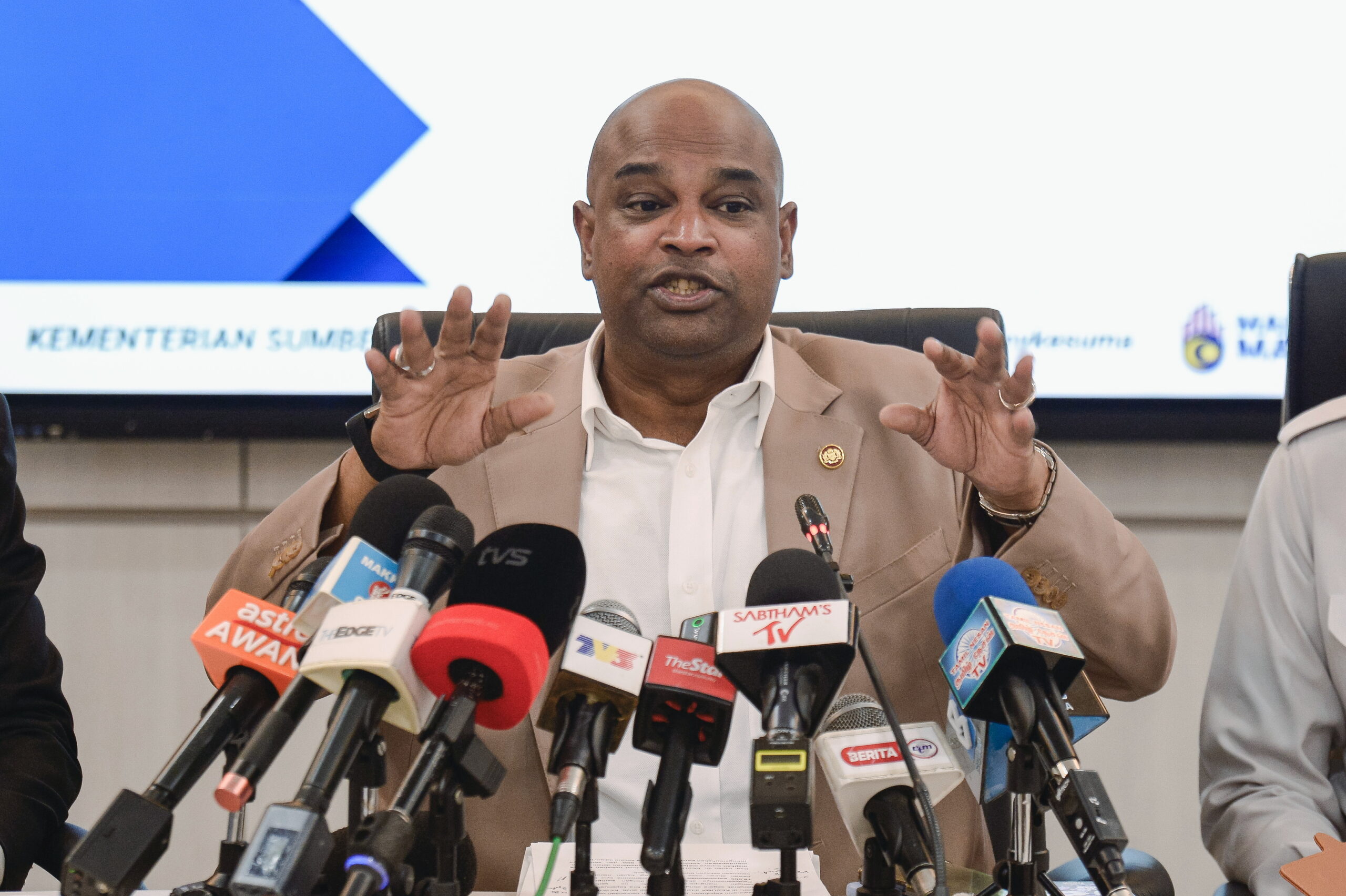
Human Resources Minister Datuk Seri R. Ramanan said the move is part of a strategic government effort to strengthen governance in foreign worker recruitment while ensuring that industries dependent on labour continue to operate without disruption, according to Buletin TV3.
The government has also centralised foreign worker quota management under the ministry, with all applications now required to be submitted through a fully digital system, removing manual processes and case-by-case approvals.
The decision was approved by the Cabinet following a Cabinet Committee on Foreign Workers meeting on June 30, aimed at streamlining approvals while still meeting industry manpower requirements.
Ramanan said Kesuma will soon conduct engagement sessions with all relevant stakeholders, including the Home Ministry, and will also oversee logistical arrangements related to the OSC’s operations.
He added that foreign worker quota applications will now be processed entirely through the e-Kuota module under the Foreign Worker Centralised Management System (FWCMS), which serves as the government’s single digital platform for managing foreign worker recruitment in Malaysia.
“FWCMS is the single digital platform appointed by the government to manage foreign worker applications in Malaysia. So there is no queue and no congestion,” he said at a press conference here today.
Ramanan said Kesuma has full control over the system, including access to the source code and master administrator rights, which are held by the ministry’s secretary-general.
He also said quota applications are open to all approved source countries.
“Out of the 15 listed countries, the 12 active countries are Bangladesh, India, Nepal, Myanmar, Pakistan, Vietnam, Cambodia, Thailand, Indonesia, the Philippines, Sri Lanka and Laos.
“Uzbekistan, Kazakhstan and Turkmenistan are categorised as inactive countries,” he said.
According to him, document screening is now fully conducted online to improve transparency, reduce congestion, speed up processing times, and eliminate the need for queue systems or third-party involvement.
He said the ministry has so far received 22,476 applications involving 548 companies.
Ramanan added that approval is no longer made on a case-by-case discretionary basis.
Instead, each application will go through a standardised process, including checks by regulatory agencies, engagement sessions, and evaluation by the OSC before final decisions are made. – July 6, 2026