

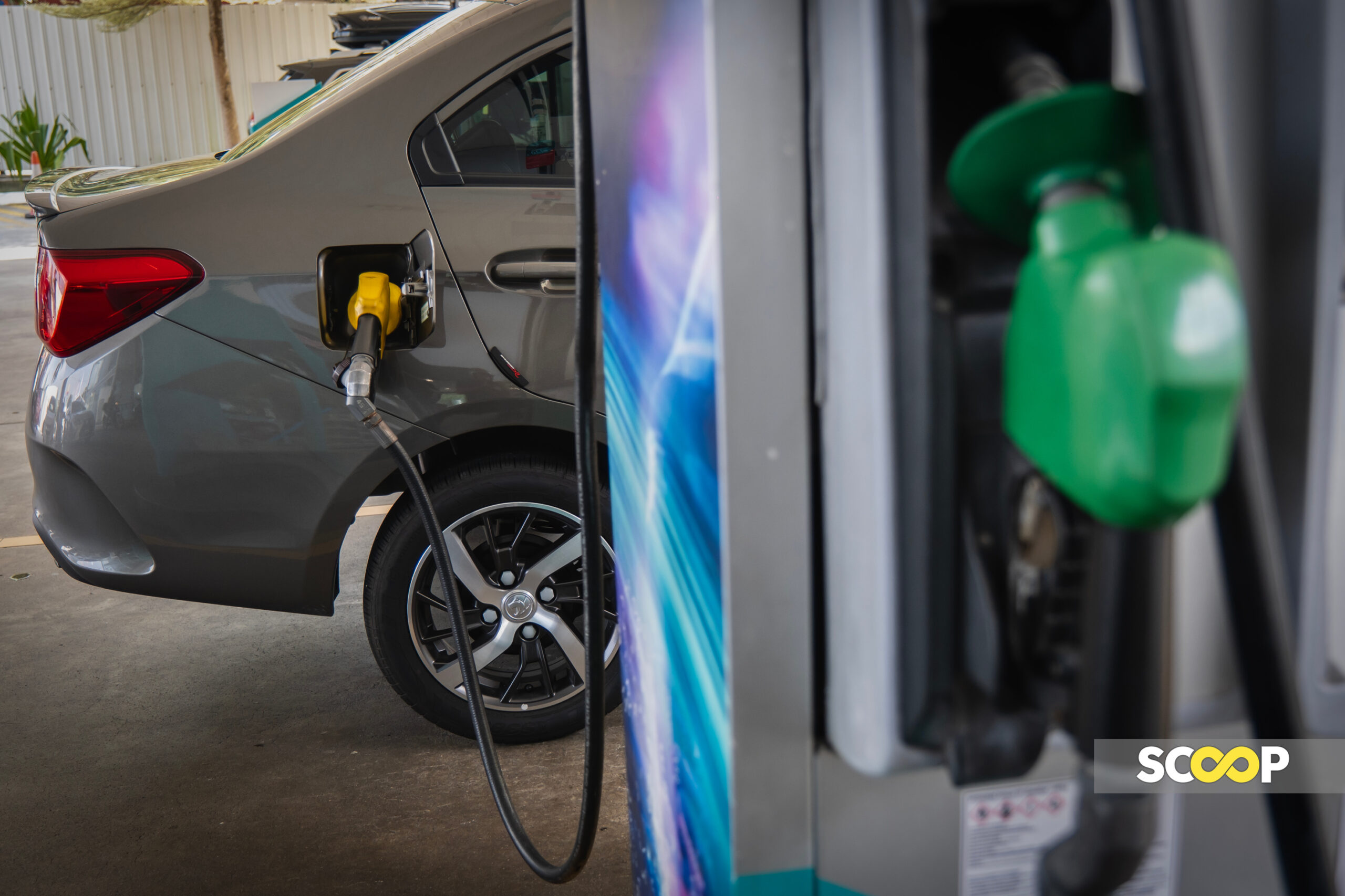
WHENEVER tensions flare in the Middle East, Malaysians naturally begin to worry about petrol prices. It is a reasonable concern. After all, events taking place thousands of kilometres away can influence the cost of transportation, food and everyday goods here at home.
Yet the bigger question is not whether petrol prices will increase next month.
The bigger question is whether Malaysia is prepared for a world where geopolitical crises are becoming a permanent feature of the global economy.
For decades, governments and businesses assumed that globalisation would continue expanding, trade routes would remain open, and supply chains would become increasingly efficient. Today, that assumption no longer holds true.
The COVID-19 pandemic disrupted global production networks. The Russia–Ukraine conflict affected energy and food markets. More recently, renewed tensions in the Middle East and uncertainty surrounding US–Iran relations have once again exposed vulnerabilities within the global economy.
Taken together, these developments point to a larger reality: we are entering an age of uncertainty.
The real lesson is not about one conflict, one region or one crisis. The lesson is that geopolitical disruptions are likely to occur more frequently, and countries that fail to prepare will become increasingly vulnerable.
Many people hear the term “supply chain” but may not fully appreciate what it means. A supply chain is simply the journey a product takes before reaching consumers. Whether it is a smartphone, a packet of rice, a motor vehicle or pharmaceutical products, goods often pass through multiple countries, ports, factories and shipping routes before arriving on store shelves.
When disruptions occur anywhere along that journey, costs increase and delays become more likely.
Most Malaysians may never see an oil tanker passing through the Strait of Hormuz or a container vessel crossing the Indian Ocean. Yet decisions made in Washington, Tehran, Beijing or Brussels can ultimately affect the prices consumers pay at supermarkets, restaurants and petrol stations.
Many people assume that tensions in the Middle East automatically lead to oil shortages. In reality, modern economies are often affected first by rising shipping costs, maritime insurance premiums, freight charges and logistical uncertainty rather than by an actual shortage of oil.
This is why the true challenge extends far beyond fuel prices.
The global economy increasingly resembles a highway filled with unexpected roadblocks. Countries cannot control where the next roadblock will appear, but they can decide whether they have alternative routes available. Resilient economies are those that prepare alternative routes before a crisis occurs.
The encouraging news is that uncertainty does not create only risks. It also creates opportunities.
Throughout history, major geopolitical disruptions have often reshaped global investment patterns. When businesses become concerned about instability, they search for safer and more predictable locations for manufacturing, logistics, warehousing and regional distribution activities.
Surprisingly, Malaysia may be among the countries that stand to benefit from a more uncertain world.
First, Malaysia occupies one of the most strategically important locations in global trade. The Strait of Malacca remains one of the busiest maritime corridors in the world, connecting East Asia, South Asia, the Middle East and Europe. While global attention often focuses on the Strait of Hormuz, the importance of the Strait of Malacca may increase further as governments and corporations seek greater supply chain resilience.
Second, Malaysia possesses a relatively mature manufacturing ecosystem, established logistics infrastructure and strong connectivity to regional markets. These strengths position the country favourably to attract businesses seeking reliable alternatives in an increasingly unpredictable environment.
Third, and perhaps most importantly, Malaysia possesses something that many countries are struggling to maintain: diplomatic flexibility.
Today, many nations face increasing pressure to align themselves with competing geopolitical camps. Malaysia, however, has historically maintained constructive relationships with a broad range of partners, including the United States, China, ASEAN member states, Gulf countries, Japan, South Korea and many others.
In an era of growing geopolitical fragmentation, this flexibility is becoming an economic advantage.
Countries that are perceived as stable, predictable and open for business are likely to attract a growing share of global investment and supply chain relocation. Strategic neutrality, once viewed primarily as a foreign policy principle, is increasingly becoming a source of economic resilience.
This is why Malaysia should not approach current global developments solely as a crisis-management exercise. Instead, policymakers should view them as a catalyst for strengthening national competitiveness and long-term resilience.
This means continuing efforts to diversify energy sources, strengthen strategic reserves, improve logistics infrastructure and support industries that are particularly vulnerable to external shocks. Businesses must also move beyond short-term thinking and incorporate geopolitical risk assessments into their long-term planning.
However, Malaysia cannot succeed alone.
Just as neighbours help one another during floods and natural disasters, countries increasingly need regional partners during economic shocks. ASEAN’s strength lies in the fact that no single member possesses everything it needs, but together the region has substantial manufacturing capacity, growing energy resources, expanding consumer markets and increasingly sophisticated logistics networks.
The future of supply chain resilience may therefore depend less on individual countries and more on the strength of regional ecosystems.
ASEAN has the potential to emerge as one of the world’s most important platforms for supply chain resilience if member states deepen cooperation in logistics, energy security, food security, digital connectivity and industrial development.
Malaysia is well positioned to contribute to this agenda. As an active ASEAN member and regional middle power, it can play a constructive role in promoting cooperation on economic security, strategic connectivity and regional resilience.
The broader lesson is clear. Economic security can no longer be separated from national security. A country’s ability to secure energy supplies, maintain reliable transportation networks, diversify critical imports and adapt to geopolitical change will increasingly determine its long-term prosperity.
This is particularly important for younger Malaysians. The jobs they will hold, the industries they will work in and the opportunities available to them will increasingly depend on how successfully Malaysia adapts to a rapidly changing global economy. Preparing for uncertainty is therefore not only an economic necessity but also an investment in the country’s future generations.
Malaysia cannot decide what happens in Washington, Tehran or the Strait of Hormuz.
What Malaysia can decide is whether it remains vulnerable to global shocks or emerges stronger because it prepared for them.
The future will belong not to countries that avoid uncertainty, but to those that learn how to navigate it confidently.
In a world increasingly shaped by geopolitical competition and economic fragmentation, the real challenge is not merely surviving uncertainty. It is learning how to turn uncertainty into opportunity.
For Malaysia, that opportunity may already be within reach. – July 15, 2026
Dr Muhammad Danial Azman is the Deputy Executive Director (Academic and Student Affairs) of the Institute of Public Policy and Management (INPUMA), University of Malaya