

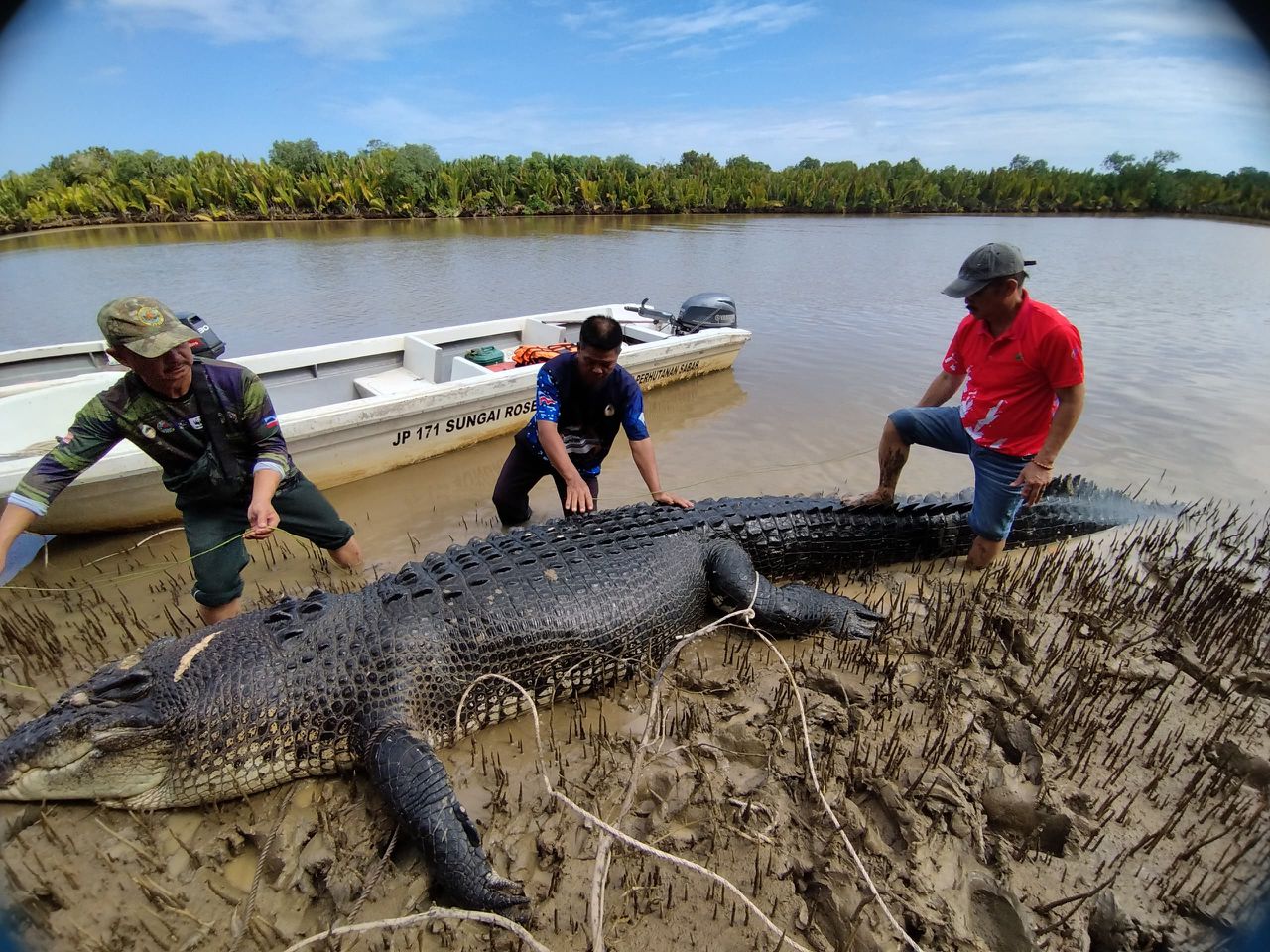

KUALA LUMPUR – Malaysia’s growing crocodile conflict is as much a human-made crisis as it is a wildlife issue, with expanding development, habitat disturbance and increasing human activity along rivers and estuaries driving more dangerous encounters than crocodile population growth alone.
Speaking to Scoop, Universiti Teknologi Malaysia environmental specialist Mohd Fadhil Mohd Din said the conflict is primarily the result of an expanding overlap between people and crocodiles, fuelled by three interconnected factors – recovering crocodile populations, rapid development along rivers and estuaries, and greater human use of these waterways.
“I believe the principal cause is an expanding zone of overlap between people and crocodiles, produced by three interacting factors: crocodile population recovery, development around rivers and estuaries, and greater human use of these waterways,” he said.
Fadhil cautioned against portraying the rise in crocodile sightings and attacks as evidence of a nationwide population boom, stressing that available data does not support such a conclusion.
The Wildlife and National Parks Department (Perhilitan) captured 334 crocodiles across Peninsular Malaysia between January 2024 and May 2026 – 130 in 2024, 169 in 2025 and 35 during the first five months of this year.

However, Fadhil said the figures reflected public complaints and enforcement activity rather than actual population growth.
“Captures are influenced by complaints and enforcement effort; they are not population estimates. Malaysia should therefore describe this as an increase in reported sightings, captures and localised attacks, rather than a proven nationwide population explosion,” he said.
He said habitat loss and rapid development have become major drivers of the conflict, with mangrove clearance, riverbank modification, plantations, housing developments, roads and drainage networks shrinking natural habitats while bringing more people into crocodile movement corridors.
“Development brings people, fishing platforms, settlements and recreational activities much closer to crocodile movement corridors, increasing the likelihood of encounters,” he said.
Fadhil said the issue should not be viewed simply as crocodiles being forced out of their habitats but as a broader socio-ecological problem shaped by environmental change and human behaviour.
“A regional study found that attacks were associated with water-rich landscapes having lower forest biomass, but also with human activity and reporting coverage. Conflict is therefore a socio-ecological outcome, not simply animal displacement,” he said.
He added that while Sarawak’s crocodile population has recovered significantly after decades of legal protection, increased sightings in urban drains, beaches and developed riverbanks should not automatically be interpreted as evidence of rapid population growth.
“Sightings in these areas may instead reflect habitat disturbance, dispersal of younger crocodiles into new waterways, more intensive river use and improved reporting through smartphones and social media,” he said.
Under the Wildlife Conservation Act, Perhilitan’s jurisdiction covers Peninsular Malaysia, where crocodiles have been sighted in the Rembau-Linggi and Johor rivers, as well as off the coasts of Penang and Perak. Sabah and Sarawak manage crocodiles under their own wildlife enactments.
Sarawak is estimated to have about 25,000 crocodiles across 4,500km of river systems, according to the Sarawak Forestry Corporation. Meanwhile, a Universiti Putra Malaysia study recorded 205 crocodile attacks in Sabah and Sarawak between 2001 and 2020, with Sarawak accounting for almost twice as many incidents as Sabah.
The issue has once again come under the spotlight following viral social media videos showing a crocodile devouring what appeared to be a dog on a beach in Port Dickson, as well as the recent capture of a five-metre crocodile in Sungai Tatau, Sarawak. – July 28, 2026