

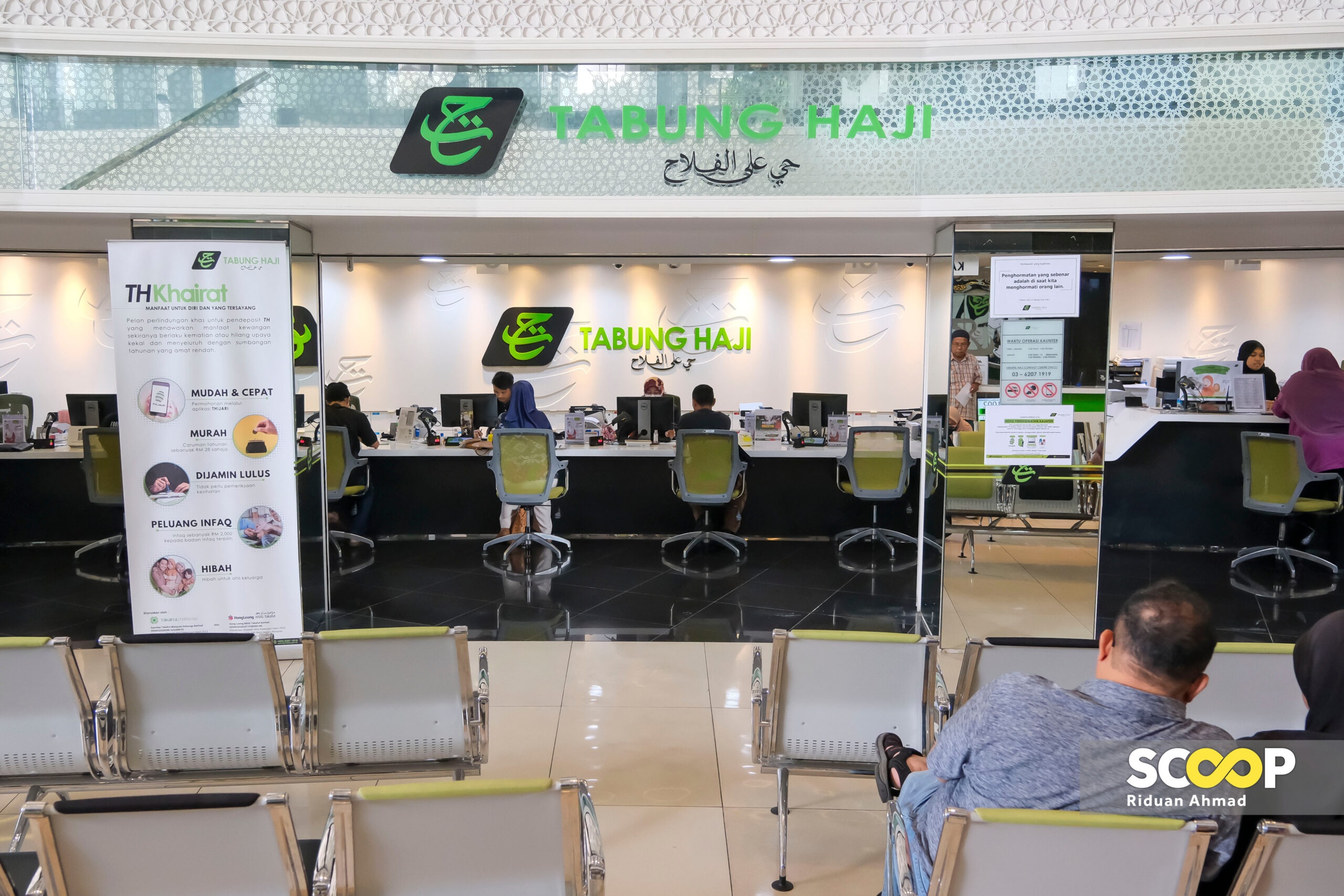

KUALA LUMPUR – The Royal Commission of Inquiry (RCI) into Lembaga Tabung Haji (TH) has recommended the recovery of bonus payments after finding that excessive payouts were made to staff despite the pilgrim fund facing financial weaknesses.
The RCI report found that TH paid high bonuses to its executive and non-executive employees between 2010 and 2017, with payments ranging from two to 13 months of salary, including annual and special bonuses.
The commission said the bonus payments became a governance concern as they were made during a period when TH’s financial position was under pressure, with its liabilities exceeding its assets.
“The Commission found that the bonus rates given to TH staff were very high between 2010 and 2017. The bonus rates given were between two and 13 months, including annual bonuses and special bonuses,” the report stated.
According to the report, TH’s management justified the payments based on the institution’s reported profits and returns during the period.
However, the RCI found that TH’s financial position did not support the scale of the bonuses approved.
The commission noted that between 2014 and 2017, TH’s assets were lower than its liabilities, based on its audited financial statements and findings by the National Audit Department.
“The Commission found that the high bonus payments made by TH were not reasonable,” the report said.
The RCI highlighted that in 2014, TH approved bonus payments of up to 13 months’ salary, comprising 11 months of annual bonus and two months of special bonus.
The payment involved an allocation of RM74 million and was approved through TH’s governance process involving the board of directors, the minister responsible for Islamic affairs and the Ministry of Finance.
The report said the approval of high bonuses raised questions over whether adequate consideration had been given to TH’s actual financial position at the time.
The commission also examined bonus payments involving TH subsidiaries, including TH Properties Sdn Bhd and THP Australia Capital Sdn Bhd.
It found that special bonuses amounting to RM1.148 million were paid to selected recipients at TH Properties in 2017, while another RM1.045 million was paid in 2018.
The recipients included directors, former directors and employees of the subsidiaries.
The RCI said the bonuses were approved based on the performance of the companies, including profits generated from property projects, but recommended that payments deemed inappropriate be recovered.
The findings form part of the wider RCI investigation into TH’s management and operations from 2014 to 2020, following concerns over the institution’s financial position and an estimated RM11 billion gap between assets and liabilities.
The inquiry found weaknesses in governance, including political influence in certain TH decisions, and highlighted shortcomings in the Tabung Haji Act 1995 (Act 535), which it said granted broad powers to the minister over haj operations, funds and investments.
The government established the RCI in 2021 to examine issues arising from reviews conducted by PricewaterhouseCoopers (PwC), Ernst & Young (EY) and Roland Berger.
The Cabinet on Wednesday agreed to declassify and release the RCI report, which contains 25 recommendations to improve TH’s governance and operations.
Prime Minister Datuk Seri Anwar Ibrahim earlier said individuals found responsible for losses involving TH based on the RCI findings would face legal action.
He said any elements of misconduct, fraud or abuse of power identified would be investigated by relevant authorities, including the Royal Malaysia Police (PDRM), Malaysian Anti-Corruption Commission (MACC) and Bank Negara Malaysia.
The government previously undertook a major restructuring exercise to stabilise TH’s finances, including the transfer of impaired assets to Urusharta Jamaah Sdn Bhd, which involved RM19.6 billion in sukuk and RM300 million in cash injection. – July 30, 2026