

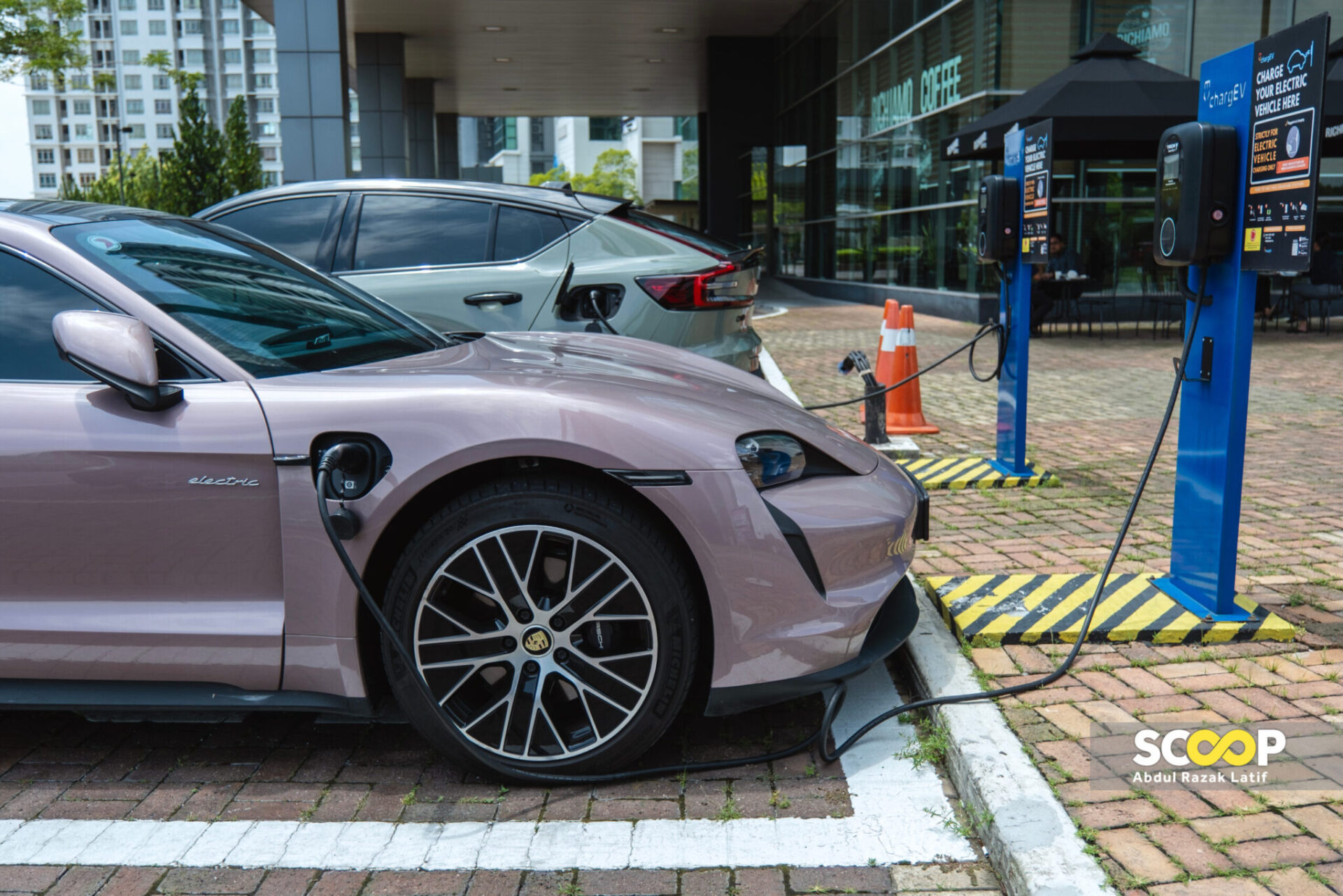

KUALA LUMPUR – The government is weighing a new levy on every electric vehicle (EV) sold in Malaysia to create a dedicated fund for expanding the country’s public charging network, in a move aimed at addressing one of the biggest obstacles to wider EV adoption.
Investment, Trade and Industry Minister Datuk Seri Johari Abdul Ghani said the proposal was under consideration as Putrajaya could not afford to finance a nationwide charging infrastructure rollout on the scale undertaken by China.
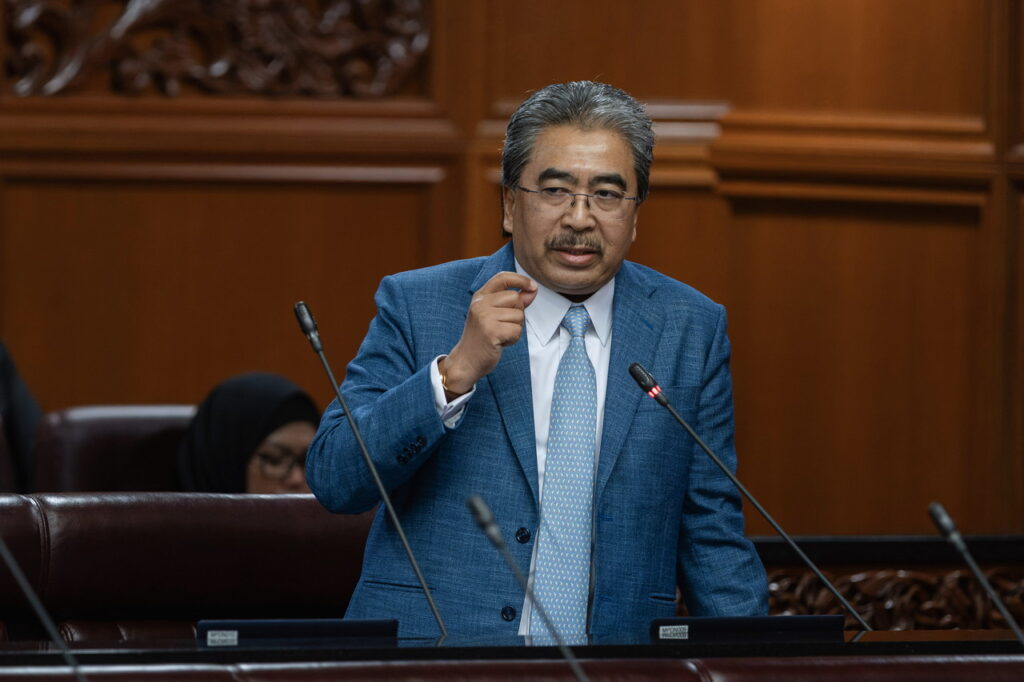
Speaking during question time in the Dewan Negara today, Johari said proceeds from the proposed levy would be channeled into a special fund to accelerate the construction of public EV charging stations across the country.
“We may impose a levy on every EV sold and channel the proceeds into a dedicated fund to build public charging stations because we cannot rely solely on vehicle manufacturers or distributors to undertake such investments,” he said in response to a supplementary question from senator Datuk Leong Ngah Ngah on the government’s preparedness for the increasing adoption of EVs.
Johari said the government had previously introduced generous tax incentives, including exemptions on import duty, excise duty and sales tax for completely built-up (CBU) EVs over a four-year period, to stimulate demand and attract investment into the sector.
However, he revealed that while the incentives resulted in RM3.3 billion in forgone tax revenue, the expected investment in public charging infrastructure from industry players failed to materialise.
“After four years, when we looked for public charging stations, the investment from EV industry players was simply not there,” he said.
As a result, Johari said the government had decided not to extend the tax exemptions for imported EVs, although incentives for completely knocked down (CKD) EVs would remain in place until Dec 31, 2027, to encourage local manufacturing and strengthen the domestic EV ecosystem.
Responding to another supplementary question from Senator Tan Sri Low Kian Chuan, Johari stressed that future government incentives would only be awarded to companies that made meaningful contributions to Malaysia’s automotive supply chain.
He said manufacturers seeking incentives must incorporate local vendors into their operations, increase the use of domestically produced components and facilitate technology transfer to Malaysian companies.
“If companies bring in all their components from overseas, assemble and sell vehicles here, and expect incentives, we cannot allow that because it would undermine the automotive ecosystem we have built over the past 30 to 40 years,” he said.
Johari noted that national carmakers Proton and Perodua have collectively developed a network of about 733 Tier 1, Tier 2 and Tier 3 vendors, representing between 72 and 82 per cent of Malaysia’s automotive component manufacturing industry.
He reiterated that Malaysia remained open to attracting EV investments, provided they generated long-term economic benefits through local vendor development, technology transfer and the creation of high-skilled employment opportunities.
Johari also acknowledged that inadequate public charging infrastructure continued to be the single biggest barrier to mass EV adoption, particularly for Malaysians living in apartments and People’s Housing Programme (PPR) projects, where installing home chargers is often impractical.
Although EVs represent the future of mobility, he said, the transition would only succeed if motorists had access to a comprehensive and reliable nationwide charging network.
Johari’s remarks echo concerns previously raised by Bersatu vice-president Datuk Seri Ahmad Faizal Azumu, who told Scoop that Malaysia must urgently accelerate investment, infrastructure development and policy reforms or risk falling behind regional competitors such as Thailand and Indonesia in the EV race.
Ahmad Faizal warned that inadequate charging infrastructure and the high cost of EV ownership remained the two biggest hurdles preventing wider adoption, urging the government to fast-track the rollout of charging facilities, particularly in rural areas, along highways, and in Sabah and Sarawak, while making EVs more affordable for ordinary Malaysians through targeted incentives. – August 4, 2026