

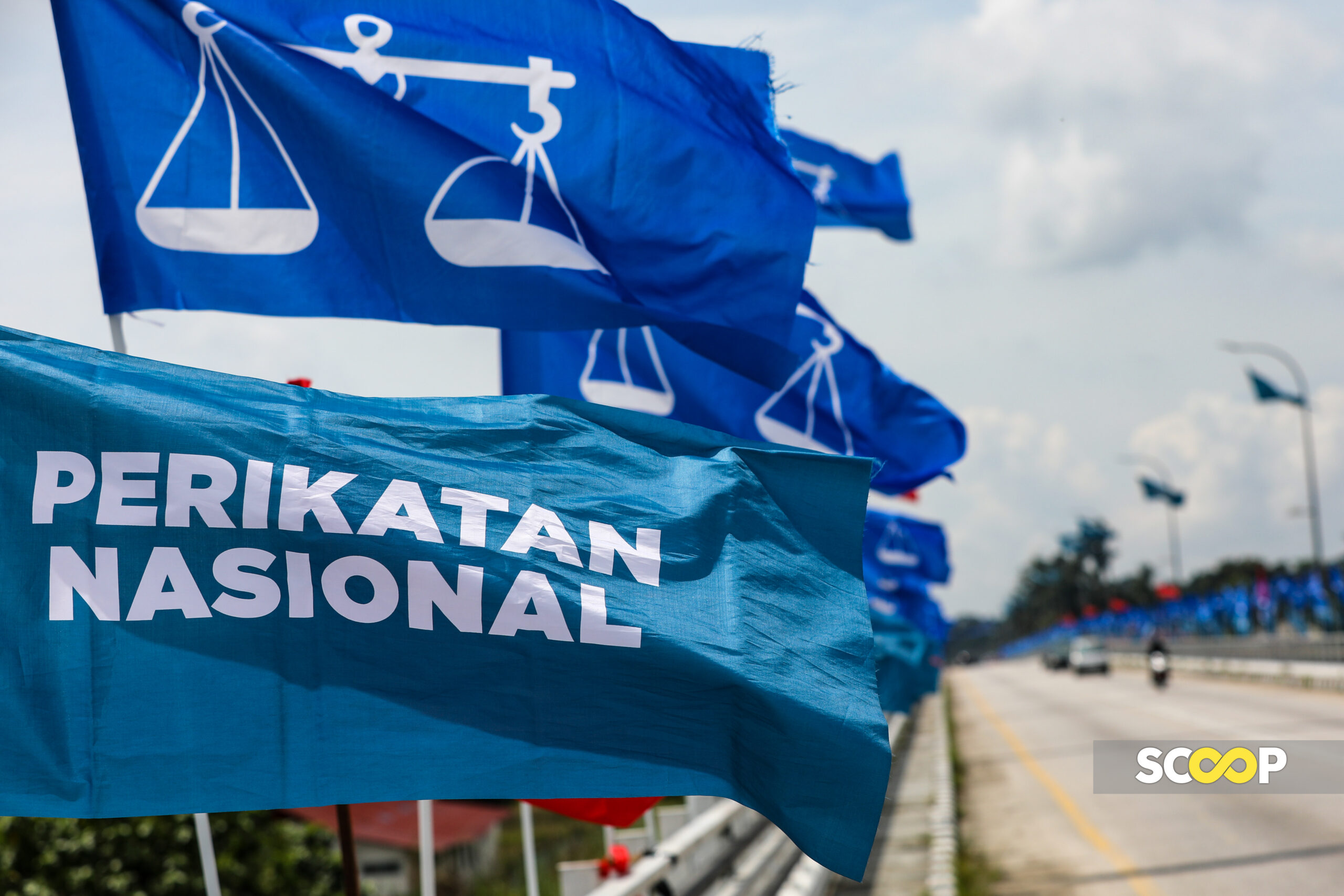
KUALA LUMPUR – The upcoming Melaka state election is shaping up to be the next major test of the Barisan Nasional (BN) -Perikatan Nasional (PN) alliance, with political analysts saying the coalition is well-positioned to retain its dominance if both parties successfully resolve seat negotiations and capitalise on the Malay-Islam narrative.
The assessment follows BN’s announcement that it intends to defend all 21 state seats it currently holds in Melaka.
Political analyst Dr G. Manimaran said BN enters the election from a position of strength, arguing that its grassroots machinery has been preparing for the polls for the past two years.
“I think they can maintain their current seats. If you take the formula used in Johor and Negeri Sembilan, together with their cooperation with Perikatan Nasional, I think they have effectively formed the government even before nomination day,” he told Scoop.

He said BN’s sustained groundwork in Melaka has given the coalition a solid electoral base, regardless of when the election is called.
“They have been working towards this election for the last two years. Campaign preparations started long ago, especially in Johor and Melaka,” he added.
According to Manimaran, a continued understanding between BN and PN would likely see BN defending its 21 seats while PN contests the remaining constituencies.
Universiti Teknologi Malaysia (UTM) associate professor Dr Mazlan Ali also believes the BN-PN formula favours the coalition but said its success ultimately depends on successful seat negotiations.
“The BN-PN collaboration has the potential to win because of the Malay narrative. However, it depends on how well the seat distribution between BN and PN can be resolved,” he said.

Mazlan said the political dynamics that contributed to the coalition’s success in Negeri Sembilan are also present in Melaka.
However, he cautioned that negotiations may be more complicated, suggesting PN could push for a larger share of seats.
“Based on the PAS president’s recent statement, perhaps PN’s approach in Melaka will differ from Negeri Sembilan. PN may want to contest more seats, which could lead to clashes with BN and Pakatan Harapan (PH),” he said.
Despite Melaka’s more diverse demographic composition, Manimaran said BN’s strength remains firmly rooted in its rural and semi-urban strongholds.
“UMNO focuses on rural and semi-urban constituencies. That’s where the 21 seats come from,” he said, adding that PH would face an uphill battle in those areas.
Mazlan likewise expects BN to remain dominant in Malay-majority rural seats, while PH is likely to retain support in Chinese-majority constituencies. However, he noted that PN also commands significant backing in both Malay-majority and mixed seats.
He added that three-cornered contests could benefit PN in several constituencies.
“If there is a three-way fight involving BN, PN and PH, I think PN can win some Malay-majority and mixed seats. PH can still hold on to Chinese-majority constituencies but may lose mixed seats contested by Amanah and PKR,” he said.
Both analysts agreed that identity politics will continue to play a defining role in the Melaka election.
Manimaran said governance, economic performance and the cost of living have become secondary considerations for many voters in Malay-majority constituencies.
“When you’re talking about governance, for them it’s not the issue. The cost of living is not the issue. Good performance is not the issue,” he said.
He argued that PH must rethink its campaign strategy if it hopes to remain competitive.
“PH needs a new narrative and a new approach in facing elections. Otherwise, it will be very tough for PH,” he said.
Mazlan said voter priorities are likely to differ between rural and urban constituencies, with identity politics expected to remain the dominant factor in Malay-majority areas.
He said the Malay-Islam narrative continues to resonate strongly in rural communities, villages and Felda settlements, where voters are more influenced by sentiment and communal identity.
“However, in mixed and urban areas, where the population is more open-minded, issues such as the cost of living, governance and transparency are more important in influencing political decisions,” he said.
Looking ahead, Mazlan said the Melaka election, together with the outcome in Negeri Sembilan, could provide an indication of Malaysia’s evolving political landscape, although he stressed that a general election would present different dynamics.
“The results in Negeri Sembilan and Melaka can serve as a guide to the country’s future political direction, where the Malay-Islam narrative may continue to dominate among Malay voters. However, a general election is different from a state election.
“Perhaps factors such as development, the cost of living and governance could eventually outweigh the Malay-Islam narrative,” he said.
Nevertheless, Mazlan expects BN to successfully defend its 21 seats but cautioned against underestimating PN.
BN chairman Datuk Seri Dr Ahmad Zahid Hamidi recently said the coalition is committed to defending all 21 state seats currently under its control in Melaka.
He said the commitment was conveyed by Melaka Chief Minister and state BN chairman Datuk Seri Ab Rauf Yusoh, who expressed confidence in retaining the coalition’s stronghold.
However, Ahmad Zahid said BN remains open to discussions with other parties on possible political cooperation, stressing that any decision would ultimately be determined through negotiations with the coalition’s central leadership. – August 7, 2026