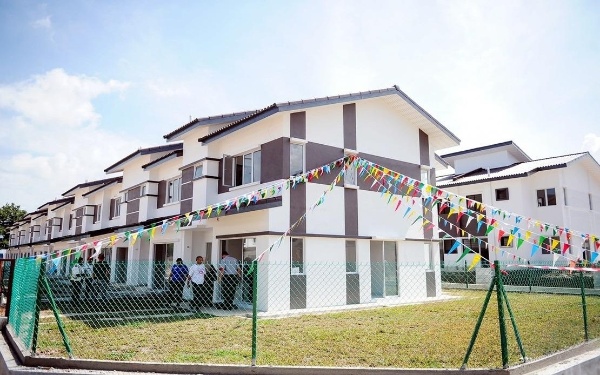
The launch of Malaysia’s National Housing Policy (NHP) 2026–2036 has once again generated optimism among aspiring homeowners, industry players and policymakers.
Housing and Local Government Minister Nga Kor Ming has announced an ambitious vision—to make housing more affordable while resolving one of the country’s most enduring problems: delayed and abandoned housing projects.
The centre-piece of the announcement is a bold pledge that Malaysia will achieve zero abandoned housing projects by 2030.
To support this aspiration, the Ministry has unveiled several initiatives under the MADANI Housing agenda, including the Housing Integrated Management System, the Transforming and Empowering Data Usage in Housing (TEDUH) portal, the Electronic Sale and Purchase Agreement (eSPA), and scheduled audits to improve project monitoring and regulatory oversight.
Every Malaysian hopes the Minister succeeds. Thousands of innocent purchasers have suffered tremendous financial hardship over the past four decades because of abandoned housing projects.
Many continue servicing housing loans for homes that remain unfinished, while simultaneously paying rent for alternative accommodation. For these families, home ownership has become a prolonged nightmare rather than the fulfilment of the Malaysian dream.
The Minister’s commitment is therefore both welcome and commendable. However, noble intentions alone cannot overcome structural weaknesses.
The question Malaysians should ask is not whether the objectives of the National Housing Policy are desirable. The more important question is:
Can the Government realistically guarantee zero abandoned housing projects by 2030 without fundamentally changing the housing delivery system from Sell-Then-Build (STB) to Build-Then-Sell (BTS)?
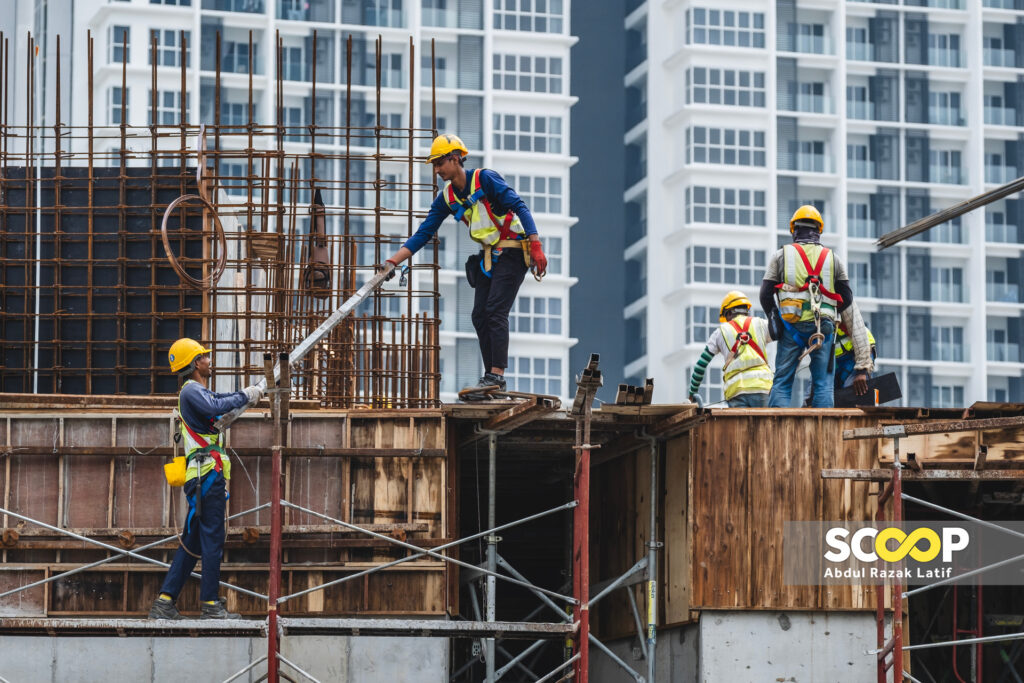
A blueprint without implementation remains only a blueprint
On 28.4.2023, I wrote an article titled “National Housing Policy – A Great Blueprint Awaiting Implementation.
“My principal concern then was not the quality of the policy itself but whether the Government possessed the determination to implement its own recommendations.
Three years later, that concern remains
Malaysia has never lacked housing policies. Every administration has introduced comprehensive plans, transformation programmes and strategic blueprints promising greater affordability, better governance and stronger consumer protection. Yet abandoned projects continue to occur. This demonstrates an uncomfortable truth.
Malaysia’s housing problem is not a shortage of policies. It is a shortage of implementation.
The National Housing Policy 2026–2036 should therefore be judged not by the number of digital platforms introduced or announcements made, but by whether it finally addresses the structural causes of housing abandonment.
Technology is an enabler; not the cure
There is no doubt that the Ministry’s digital initiatives represent meaningful progress.
● The Housing Integrated Management System should facilitate better coordination between regulators.
● TEDUH improves access to housing information.
● The electronic Sale and Purchase Agreement (eSPA) modernises documentation.
● Scheduled audits strengthen regulatory supervision.
These initiatives deserve recognition. Nevertheless, technology cannot compensate for weaknesses in public policy. Digital systems can monitor projects.
They cannot rescue developers suffering from inadequate financing. They cannot replace prudent financial management. Nor can they eliminate the risks inherent in a delivery system that depends heavily on purchasers’ money to finance construction.

Technology should therefore be viewed as an important administrative tool rather than the primary solution.
The root cause remains the Sell-Then-Build model
Malaysia continues to rely predominantly on the Sell-Then-Build (STB) model.
● Developers market residential properties before construction is completed.
● Purchasers sign Sale and Purchase Agreements.
● Banks progressively release housing loans according to construction progress.
In effect, purchasers finance construction long before receiving completed homes. If developers encounter financial difficulties, purchasers bear the consequences.
● Construction slows.
● Projects become sick. Some eventually become abandoned.
● House buyers continue servicing loans for houses that exist only on paper.
This is neither equitable nor sustainable. No amount of digital monitoring changes this fundamental allocation of risk.
Prevention is superior to intervention. Public policy should always prioritise prevention.
Medical practitioners prefer preventing disease rather than treating illness after complications arise. Housing policy should embrace the same philosophy.
Government resources should focus on preventing project abandonment instead of managing abandoned projects after purchasers have already suffered. The most effective preventive mechanism remains the Build-Then-Sell model.
As the saying goes: Prevention through Build-Then-Sell is far more effective than attempting to manage the consequences of Sell-Then-Build.

Build-Then-Sell places responsibility where it belongs Under Build-Then-Sell, developers must first demonstrate their financial capability by substantially completing construction before receiving the purchase price.
● Purchasers buy completed homes instead of promises.
● Development risks remain with those best positioned to manage them: the developers. This encourages stronger financial discipline, discourages speculative developments and enhances public confidence.
Malaysia has long discussed the BTS 10:90 model and even the absolute BTS 0:100 model. Successive governments have acknowledged their advantages. Yet implementation has remained elusive. This raises an unavoidable question.
If previous governments accepted BTS in principle but never implemented it, why should Malaysians believe that the latest National Housing Policy will finally deliver a different outcome while continuing to rely on the same STB framework?
The courts have consistently recognised the need to protect house buyers
This discussion is not merely about economics. It is also about justice. Our Apex Courts have repeatedly recognised that the Housing Development (Control and Licensing) Act 1966 is a piece of social legislation enacted primarily to protect house buyers, who are generally the weaker contracting party.
The Federal Court has consistently held that the Act must receive a purposive and liberal interpretation to advance Parliament’s objective of safeguarding purchasers rather than protecting commercial interests. That judicial philosophy should guide future housing reforms.
If Parliament enacted the Housing Development Act principally to protect house buyers, then every new housing policy should likewise place consumer protection at its centre. Maintaining a delivery model that transfers substantial financial risks to purchasers appears inconsistent with that legislative purpose.
Enforcement has always been the missing ingredient
The Housing Development (Control and Licensing) Act already provides extensive enforcement powers.
The challenge has seldom been inadequate legislation. Rather, it has been inconsistent enforcement.
For many years, consumer groups have questioned why prosecutions against errant developers appear relatively infrequent despite numerous statutory offences under the Act. Laws that are rarely enforced gradually lose their deterrent value.
Developers who knowingly breach statutory obligations should expect meaningful legal consequences.
The Ministry should publish annual statistics detailing investigations, prosecutions, convictions and penalties imposed. Public accountability strengthens public confidence.
Learning from international experience
Many developed jurisdictions have progressively moved towards systems that minimise purchaser risk.
Singapore requires developers to satisfy stringent licensing requirements, maintain robust financial safeguards and comply with rigorous regulatory supervision.
Australia generally places greater emphasis on project financing and purchaser protection before developments proceed.
Several European jurisdictions similarly require substantially completed products before full payment is demanded.
Although no country possesses a perfect housing system, the common principle is unmistakable. The financial risks of development should primarily remain with developers, not ordinary purchasers.
Malaysia should not hesitate to adopt international best practices where they provide better consumer protection.
Responsible developers have nothing to fear
Some within the industry argue that mandatory BTS increases financing costs.
There may indeed be higher initial capital requirements. However, financially sound developers capable of completing quality projects should welcome reforms that distinguish them from speculative operators.
BTS rewards responsible developers.
● It enhances market confidence.
● It improves industry credibility.
● Most importantly, it restores public trust.
An industry respected for delivering completed homes will ultimately enjoy stronger and more sustainable long-term demand.
What must the Government do?
If the Government sincerely intends to eliminate abandoned housing projects by 2030, several practical reforms deserve urgent consideration.
Firstly, establish a clear timetable for progressively implementing mandatory BTS beginning with financially capable developers before extending it industry-wide.
Secondly, tighten licensing requirements to ensure only developers possessing adequate financial strength and technical competence receive development licences.
Thirdly, strengthen enforcement by prosecuting developers and company directors who repeatedly disregard statutory obligations.
Fourthly, establish an Independent Housing Project Review and Monitoring Commission comprising representatives from the Ministry, financial institutions, professional bodies, consumer associations and the Attorney General’s Chambers to identify troubled projects before they become abandoned.
Fifthly, publish annual report cards measuring the National Housing Policy’s performance using transparent indicators such as project completion rates, abandoned projects, enforcement actions and purchaser satisfaction.
Finally, engage continuously with consumer organisations. They possess decades of practical experience assisting victims of abandoned housing projects and can provide valuable policy feedback.
Malaysians deserve more than promises
Every Housing Minister understandably wishes to leave behind a meaningful legacy. The aspiration of achieving zero abandoned housing projects by 2030 is certainly a worthy one.
But history reminds us that ambitious announcements, however sincere, do not by themselves transform the housing sector.
Malaysia has produced many excellent housing blueprints. What has too often been missing is the political will to implement difficult but necessary reforms.
The National Housing Policy 2026–2036 offers the Government another opportunity to demonstrate that this time is different.
If the Government truly believes that every Malaysian deserves a safe and secure home, then it must also ensure that every Malaysian is protected from financing risks beyond his or her control.
That protection cannot be achieved solely through digitalisation, improved monitoring or scheduled audits. It requires the courage to reform the housing delivery model itself.
The transition from Sell-Then-Build to Build-Then-Sell is not merely an administrative adjustment. It is a fundamental shift in philosophy; from asking house buyers to finance developers, to requiring developers to earn purchasers’ trust by delivering completed homes.
Only then will Malaysia genuinely honour the spirit of the Housing Development (Control and Licensing) Act as social legislation. Only then will house buyers receive the protection Parliament intended. And only then can the Government confidently assure Malaysians that the era of abandoned housing projects has finally come to an end.
Until that day arrives, the promise of “zero abandoned housing projects by 2030” will remain an aspiration rather than a guarantee.
The success of the National Housing Policy 2026–2036 will therefore not be measured by the number of portals created, digital systems launched or policy papers published. It will be measured by whether future generations of Malaysians can purchase their first homes without fear that those homes will one day become another abandoned project.
That is the true test of meaningful housing reform. – August 11, 2026
Datuk Chang Kim Loong is the founder and secretary general of the National Housebuyers Association