

HISTORY is not just stories about the past. It is an effort to understand people, societies, civilisations and the changes that shape our lives today. In this endeavour, there will be different views, interpretations and debate. This is natural, and should even be celebrated. A healthy study of the past does not close space for questions, but is ready to be re-evaluated through evidence, methods and scientific research.
Recent public discussion about several historical and archaeological claims has attracted the attention of many. Some see it as an effort to elevate the dignity of local history, especially the greatness of Malay civilisation and the Malay World. Others dispute the basis of evidence, research methods and conclusions presented. Both of these reactions should be understood maturely.
On the one hand, we should not easily belittle efforts to open up new research spaces. Many aspects of local history have yet to be fully explored. Archaeological sites, manuscripts, oral traditions, trade records and material evidence in this region still hold many unanswered questions. It is possible that old interpretations will need to be refined or re-evaluated when new evidence is discovered. The courage to ask new questions is important.
However, the courage to present ideas must be accompanied by the responsibility to prove them. A big claim requires big and clear evidence. Claims about the relationship between civilisations, the transfer of technology, the origin of an innovation, or the influence of one society on another, cannot be based on selected passages, general assumptions, or coincidental similarities. They must be built on a network of evidence that can be examined by other researchers.
In history, we must always ask: What is the primary source used? Where did the source come from? When was it produced? Who wrote it and under what circumstances was it written? Are there other sources that support or contradict it? More importantly, does the interpretation take into account the linguistic, cultural, political, and temporal context of the source?
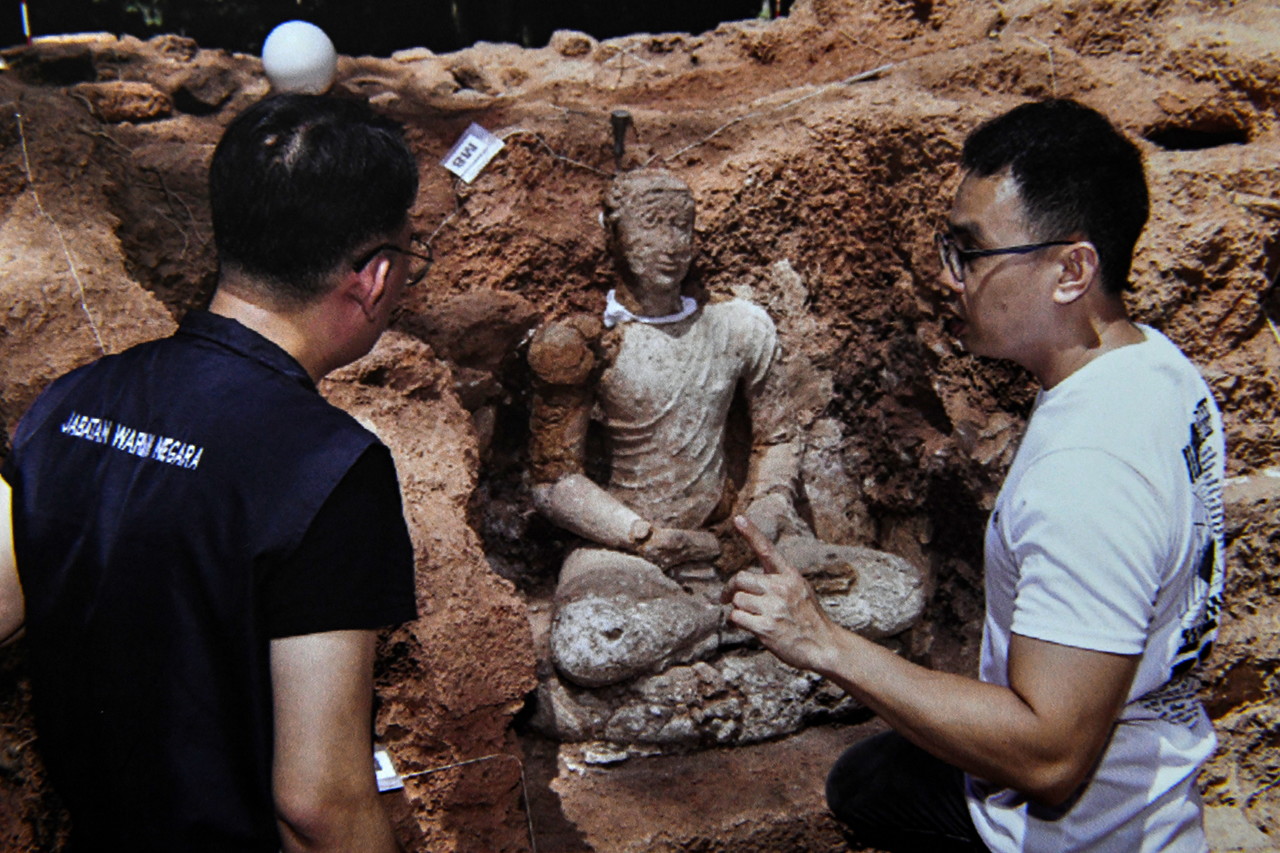
In archaeology, a find cannot be separated from its context. An artefact, a ceramic fragment, the remains of an iron smelter, or a building structure, do not carry meaning on its own. Its position in the soil, its relationship to other materials, excavation records, laboratory analyses, dating, and comparison with other sites, all determine the extent to which a conclusion can be drawn. Without a complete context, an interpretation may seem interesting but is not necessarily sound.
There is also a difference between hypotheses, theories and facts. Hypotheses are preliminary proposals that need to be tested. They can be the gateway to important research. But hypotheses should not be presented to the public as definitive facts before going through a verification process. A theory is an explanation built from evidence and tested repeatedly. Facts are things that can be proven through clear sources or observations. Distinguishing these three things is very important, especially in the era of social media.
Scholarly publication is one of the important channels to ensure that a claim can be tested publicly. Studies should be submitted to refereed journals, presented at academic conferences or published in a form that explains the sources, methods and limitations of the study. The peer review process is not intended to shut down new ideas. On the contrary, it allows them to be improved, challenged and strengthened before they can be more widely accepted.
Academic criticism should also not turn into personal attacks. In the world of science, what stands for judgement are the arguments, evidence and methods, not the background or intentions of a person. We can disagree with an allegation without insulting the individual who made it. At the same time, someone who brings an allegation to the public sphere must be prepared to accept questions and criticism in a professional manner. That is the etiquette of knowledge.
The public’s interest in history should be seen positively. The polemics that arise show that people care about the heritage, identity and historical position of this region. This interest needs to be further nurtured through museums, heritage sites, documentaries, quality popular publications and public education programmes. Academics, on the other hand, need to play a role in explaining complex issues in simple language, without sacrificing accuracy.
We do not have to choose between pride in our heritage and academic rigour. The two can go hand in hand. In fact, pride in our heritage that is based on evidence is stronger, more dignified and resilient against testing. The history of the Malay World is indeed rich in trade networks, navigation, iron production, cultural exchanges and the formation of early kingdoms. All of these are important enough to be studied and promoted without having to rely on unverified claims.
Finally, history must continue to be an open field of discussion. We can present new interpretations, challenge old views and seek out undiscovered evidence. However, freedom of thought must move with the disciplines of knowledge. Respecting history means respecting facts, sources, methods, evidence and a willingness to correct views when new knowledge emerges. – August 25, 2026
Dr Shaiful Shahidan is Head of the History Programme at Universiti Kebangsaan Malaysia and and Secretary General of ICOMOS Malaysia (2026-2028). ICOMOS Malaysia is the national committee of the International Council on Monuments and Sites which is an advisory body to UNESCO on cultural heritage. The above is a translation from his original article written in Bahasa Malaysia.