

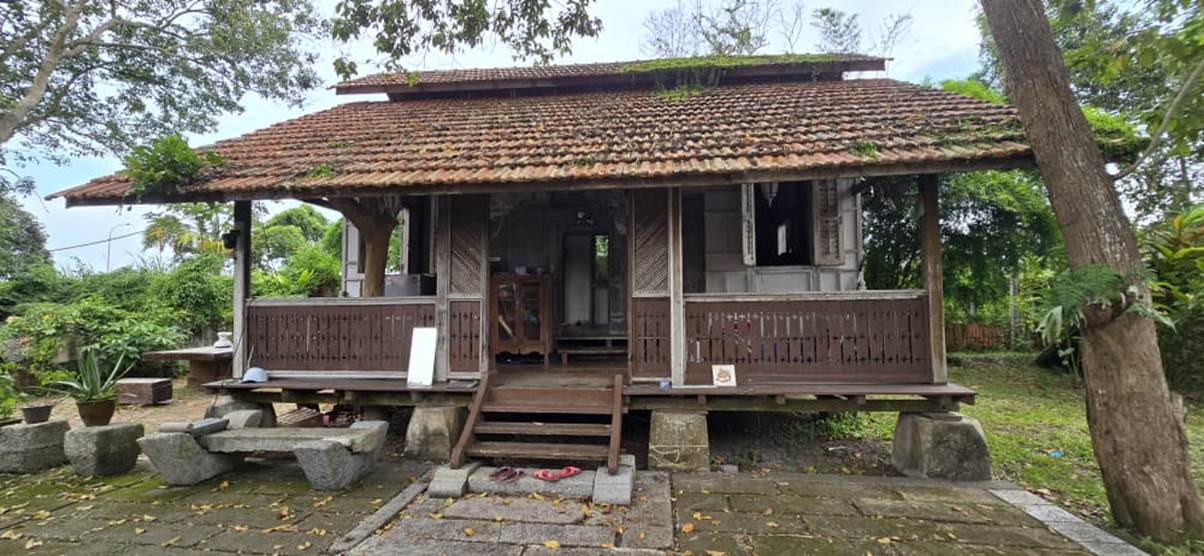
WHILE a historic timber building can be structurally preserved, Malaysia faces a deeper challenge: what happens when the intergenerational knowledge required to maintain these wooden marvels fades away?
That question sits at the heart of a growing conversation about heritage conservation in Malaysia, one that looks beyond buildings and monuments to the knowledge, skills and traditions that allow them to survive.
This was the focus at the recent Living Timber Heritage Workshop, a joint initiative by International Council on Monuments and Sites (ICOMOS) Malaysia, Akademi Binaan Malaysia, Forest Research Institute of Malaysia and the Malaysia Timber Industry Board. This is the first of a series of workshops on traditional materials of heritage buildings – with workshops on masonry, lime and metal works to follow – leading up to the ICOMOS General Assembly (GA2026) in Kuching, Sarawak.
Unlike stone, timber lives with the climate. It expands and contracts. It weathers. It can be affected by termites, beetles, fungi and moisture. Components may need to be repaired, replaced or renewed. For traditional Malay houses, mosques, palaces and other timber structures, this has always been an ongoing process.
Conservation of traditional timber structures does not mean keeping every original piece of material in place. It also takes into account how the building was made, how timber was selected, how joints were formed, how structures responded to heat, rain and humidity, and how traditional builders worked with local materials.
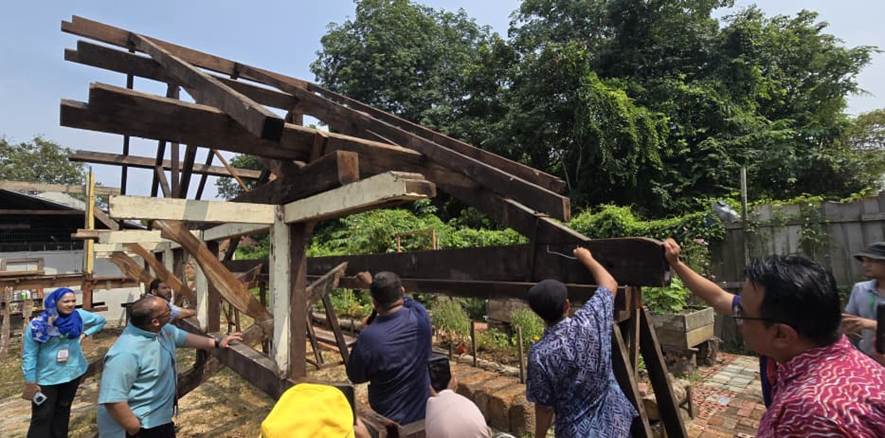
On the second day of the 2-day workshop held at the Pohon Beringin Conservation Training Centre in Melaka, participants explored traditional building techniques alongside practitioners with years of experience.
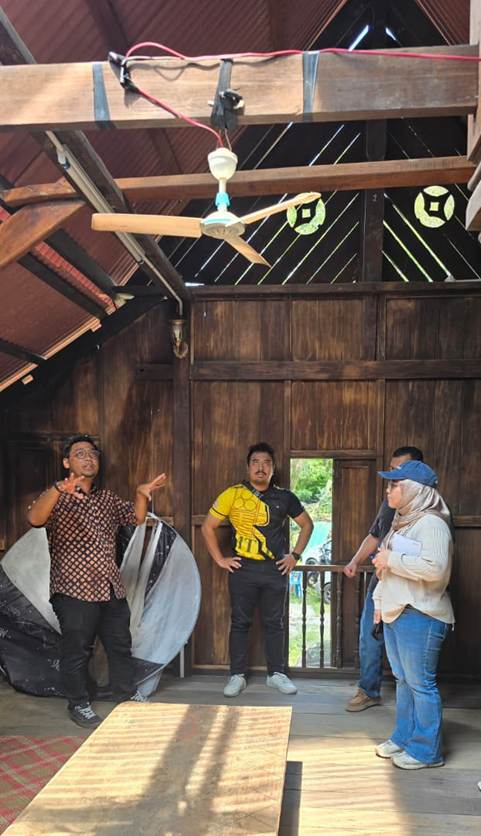
Among them was craftsman Mohd Shah Idin, whose work includes the restoration of Istana Lama Seri Menanti and other British-era buildings. Mohd Shah introduced participants to specialised techniques, including the crafting of the distinctive curved Minangkabau roof – a skill usually passed down through lineage.
Without this intergenerational transfer of skills, conserving heritage buildings becomes an impossible task, even if the physical structures manage to survive. Mohd Shah highlighted this gap, noting that “modern architects and contractors regularly seek the traditional knowledge” passed down to him by his father, as it remains entirely essential to properly restore and build traditional Minangkabau structures today.
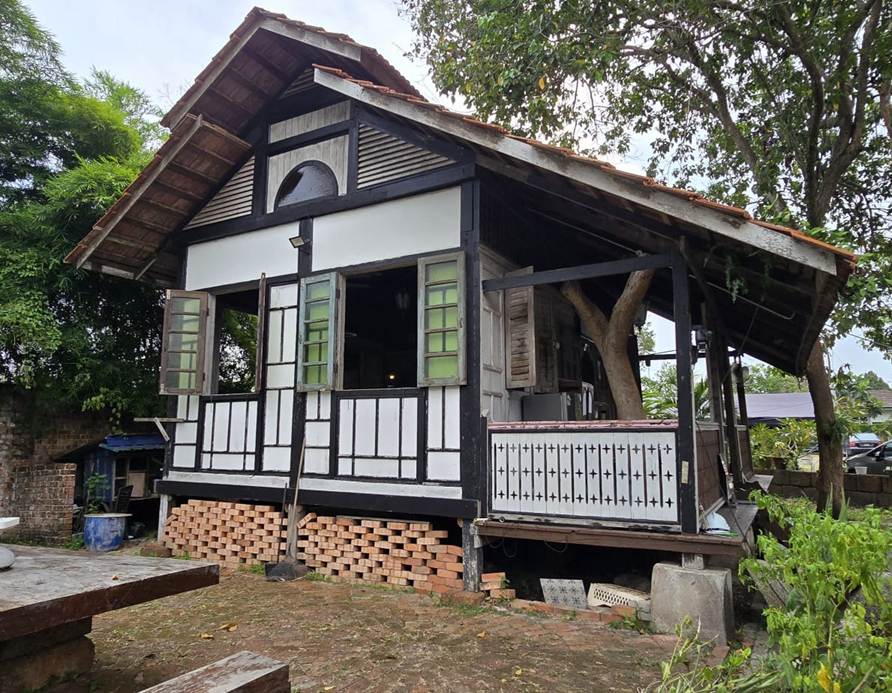
The workshop also explored ideas embedded within traditional architecture. Take Awan Larat, the flowing Malay decorative motif inspired by forms found in nature.
Its significance goes beyond ornament and reflects the individuality and preference of the owner of the property, and even the different states in the country, said one of the presenters at the workshop Asst. Prof Dr Aida Kesuma Azmin, a senior lecturer at the International Islamic University of Kuala Lumpur and member of the ICOMOS Malaysia National Scientific Committee on Wood. Traditional architecture carries observations of the natural environment, climate and materials, alongside cultural and spiritual values, she said adding that intangible heritage is very much important in timber heritage buildings like traditional Malay houses.
ICOMOS Malaysia Deputy President Ar. IDr Mohd Zulhelmee An highlighted the concern that younger generations are increasingly disconnected from traditional building knowledge, even as Malaysia works to conserve its historic houses, palaces and mosques. This is why the workshop matters. It puts traditional skills back into the conversation, not as nostalgic crafts from a bygone era, but as knowledge that may be essential to keeping heritage alive, he said.
Perhaps the most profound takeaway from the timber workshop is the awareness that a heritage building’s value lies not in physical remnants of the past, but in the living knowledge required to sustain it into the future. – September 5, 2026
Maria J. Dass is a journalist, and travel blogger covering communities, culture and heritage issues.