

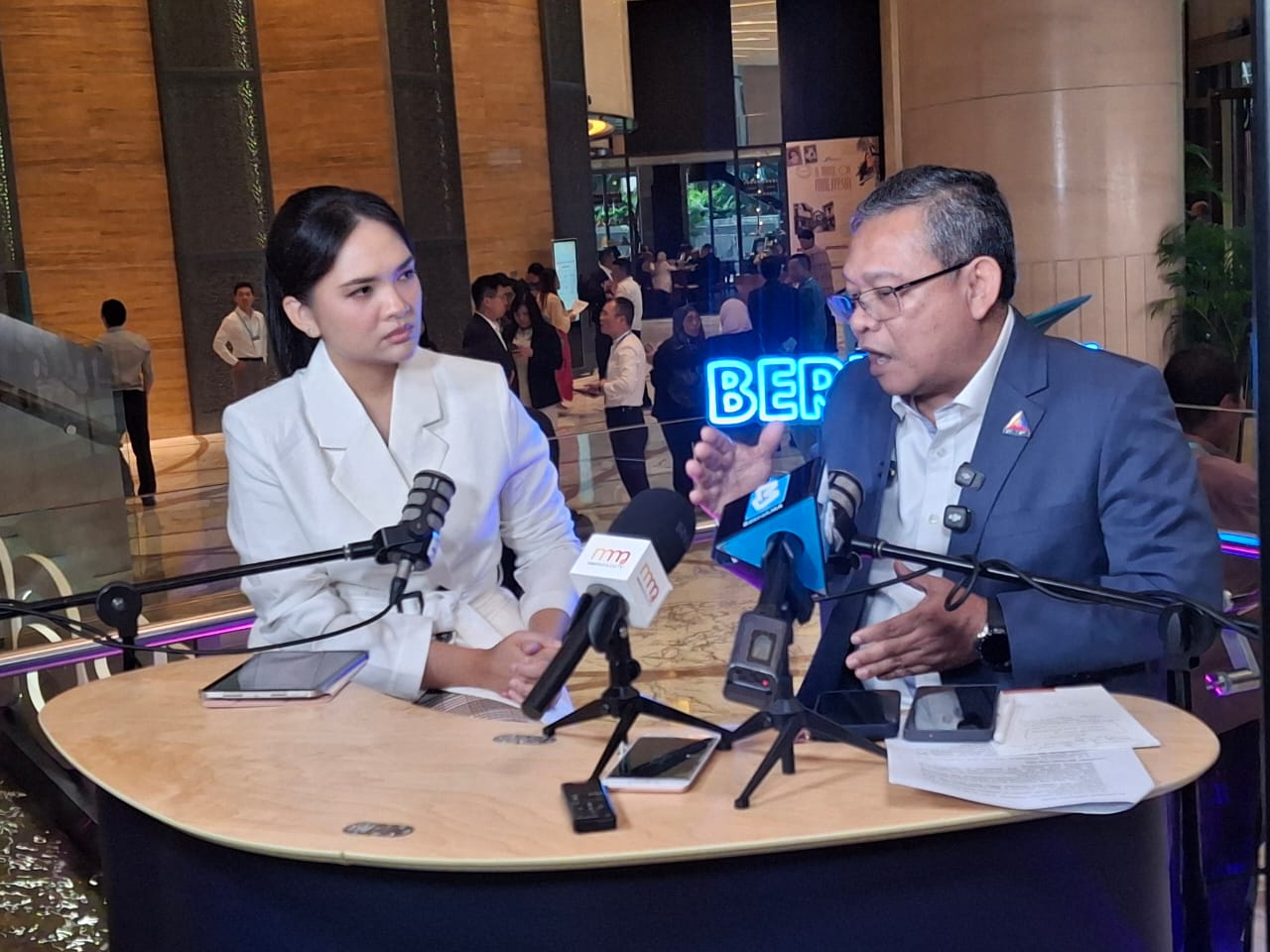
KUALA LUMPUR – Digital platforms and social media companies must shoulder greater responsibility in addressing online harms, as regulators can only go so far through legislation and enforcement, the Malaysian Communications and Multimedia Commission (MCMC) said.
MCMC Operations Senior Adviser Datuk Zulkarnain Mohamad Yassin said platforms had the greatest influence over the removal of harmful content and the protection of users, particularly as wider internet access continued to draw more Malaysians into the digital ecosystem.
“But when we bring that values, there is also a presence of online harm,” he told reporters on the sidelines of the M360 ASEAN event in Kuala Lumpur recently.
Zulkarnain said regulators could provide the necessary policy and regulatory framework, but platforms remained responsible for taking down harmful material and ensuring user safety.
“In terms of switching off or taking down harmful content, that is the responsibility or that part of influence is at the platform level or marketplace level,” he said.
He cited MCMC’s efforts to curb illicit drug-related content online, with the commission having submitted 7,133 removal requests to platforms.
However, compliance rates differed across platforms, with Facebook recording a 92% removal rate, followed by TikTok at 99% and Telegram at 100%.
“It is not, as I said, the influence is at their end. We just made the request,” he added.
Zulkarnain said MCMC was seeking a more consistent approach across platforms, including the implementation of similar service-level agreements (SLAs) to ensure greater accountability.
“They have to be accountable to make sure that these people are protected,” he said, adding that platforms should move beyond merely responding to complaints or removal requests.
“They need to proactively use the system or make available safety by design so that people are protected,” he said.
He said the issue was ultimately linked to public trust, warning that users could abandon platforms if they no longer felt secure.
“Because in the end, if there is so much scamming on the platform, people will just withdraw from the platform,” he added.
Zulkarnain said regulators faced the challenge of balancing the need to encourage technological innovation while ensuring digital platforms provided a safe and trusted environment.
He said Malaysia’s approach towards online regulation had evolved alongside technological advancements and the emergence of new forms of digital harm.
He noted that when the Communications and Multimedia Act was introduced in 1998, application services were exempted from licensing requirements to encourage participation, inclusiveness and innovation.
However, rapid technological developments had created new challenges that required stronger regulatory measures.
“We are seeing more and more harm that are taking place online. So there is a need for us to intervene,” he said.
Zulkarnain said the government’s Online Safety Act (ONSA) was another step towards strengthening platform accountability in addressing online risks.
“This puts another, a bigger role and responsibilities for the platform to be responsible in terms of addressing the online harm,” he added.
He stressed that stronger regulation should not be seen as an attempt to restrict innovation, but rather as a way to ensure platforms, regulators and other stakeholders shared responsibility in creating a safer digital environment.
“We are looking at creating a trusted environment without stifling the innovations that technology brings,” he said. – September 15, 2026