

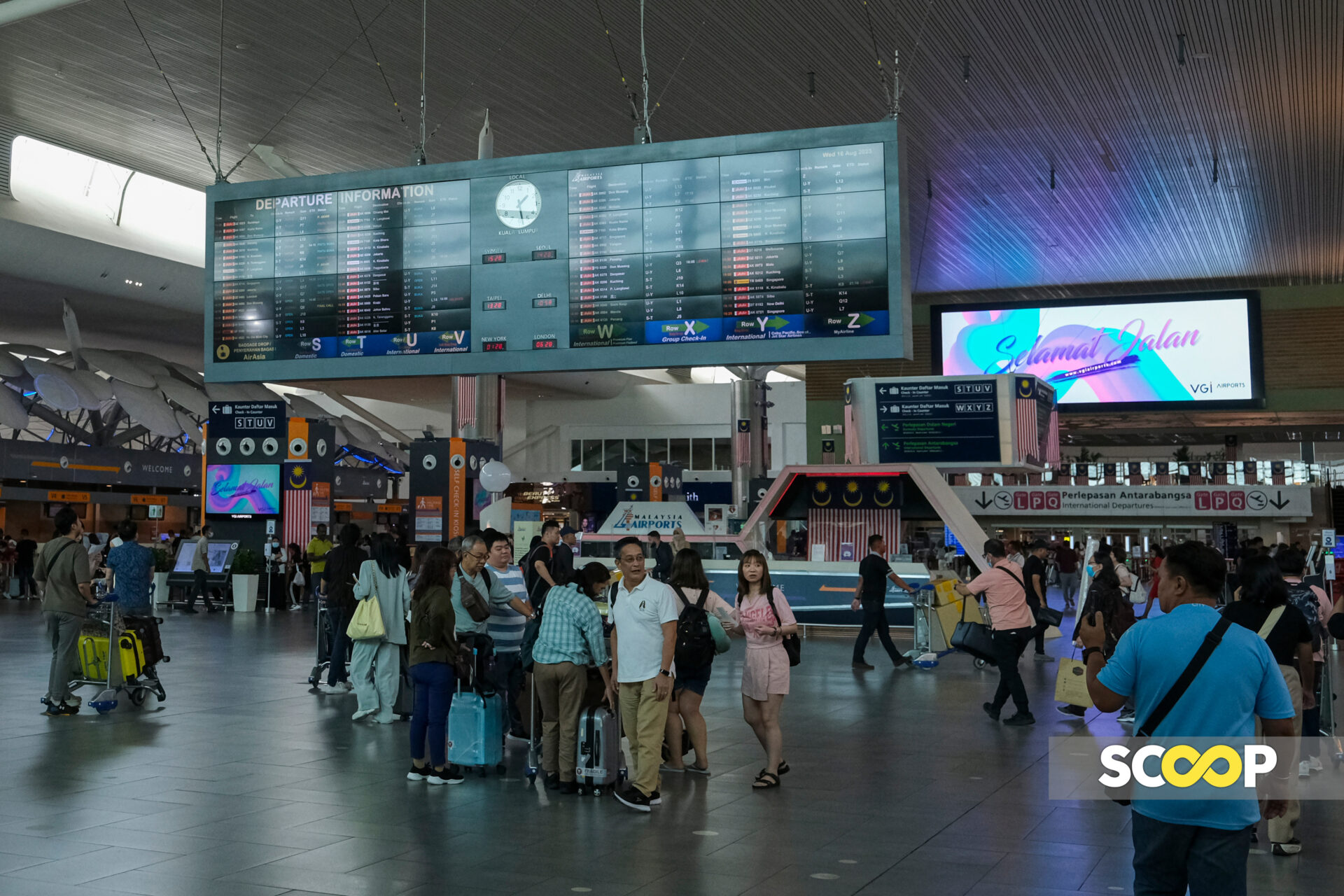
KUALA LUMPUR — Malaysia’s growing tourist arrivals have yet to translate into stronger financial recovery for hotels, with the Malaysian Association of Hotels (MAH) calling for Budget 2027 to focus on reinvestment, productivity and measures to reduce structural operating costs.
MAH president Datin Christina Toh said hotels continued to face rising electricity, manpower, food, maintenance, insurance and compliance costs despite the recovery in tourism and the strong focus on Visit Malaysia 2026.
“The hotel industry is encouraged by the continued recovery of tourism and the strong focus on Visit Malaysia 2026. However, higher tourist arrivals do not automatically mean that hotels are experiencing the same level of financial recovery,” she told Scoop.
Toh said the Government should move beyond short-term assistance and address the industry’s longer-term operating and investment needs.
“For Budget 2027, MAH would therefore like to see greater emphasis on industry reinvestment and productivity, rather than assistance being viewed purely as short-term subsidies,” she said.

Among MAH’s proposals are reinvestment or accelerated capital allowances for hotel refurbishment, tax incentives for energy-saving and sustainability initiatives, matching grants for digitalisation, automation and artificial intelligence adoption, and greater access to soft loans for refurbishment and upgrading.
Toh also called for stronger support for staff training and productivity improvements, as well as targeted assistance for businesses significantly affected by rising utility costs.
She said Malaysia should also move beyond using tourist arrival numbers as the main measure of tourism performance, as arrivals alone do not provide a complete picture of the sector’s economic contribution.
“For hotels and the wider tourism economy, the more important measurements are length of stay, expenditure per visitor, hotel occupancy, room yield and the geographical distribution of tourism spending,” she said.
Tourism Malaysia recorded 21.2 million visitor arrivals in the first half of 2026. However, Toh said the next challenge was to increase the economic value generated by each visitor.
She proposed stronger multi-destination itineraries, more events and experience-driven tourism, and closer collaboration among Tourism Malaysia, airlines, hotels, tour operators and attractions to create bookable travel packages.
Malaysia should also place greater emphasis on higher-value segments such as MICE, medical and wellness tourism, luxury travel, long-haul visitors, family travel and extended stays, she said.
At the same time, Toh said rising operating costs remained one of the biggest challenges facing the hotel industry.
“Hotels are highly operational businesses. We operate 24 hours a day, seven days a week, and electricity, manpower and maintenance are not expenses that can simply be switched off when occupancy is lower,” she said.
She noted that the statutory minimum wage had risen to RM1,700, while hotels continued to face manpower pressures and significant electricity costs due to their extensive use of air-conditioning, hot water, laundry, kitchen and building services.
“Hotels cannot continuously transfer every increase in operating costs to consumers because Malaysia competes directly with destinations across Asean,” she said.
Toh said Budget 2027 could help hotels reduce structural costs through grants or enhanced tax allowances for energy-efficient equipment, solar installations, smart energy-management systems and water-saving technology.
She also called for greater support for automation and digitalisation, alongside training and skills development to help the industry build a higher-productivity workforce.
On tourism taxes, Toh said MAH believed the Government should conduct a holistic review of taxes and charges affecting hotel accommodation.
“Each charge may appear relatively small when considered individually, but what matters to the consumer is the total final price of the hotel stay,” she said.
She said this was particularly significant for economy and midscale hotels, where the RM10 Tourism Tax represented a larger proportion of a lower-priced room.
MAH is therefore seeking a review of the cumulative impact of the Service Tax, Tourism Tax and other tourism-related charges, while calling for greater transparency on how tourism-related revenue is channelled back into destination promotion, infrastructure and visitor facilities.
Toh said Budget 2027 should ultimately help Malaysia move beyond simply increasing tourist arrivals towards building a higher-value and more sustainable tourism economy.
“For MAH, Budget 2027 should therefore be viewed as a tourism consolidation and transformation budget — one that moves us from simply increasing arrival numbers towards building a higher-value and more sustainable tourism economy,” she said. – September 24, 2026