

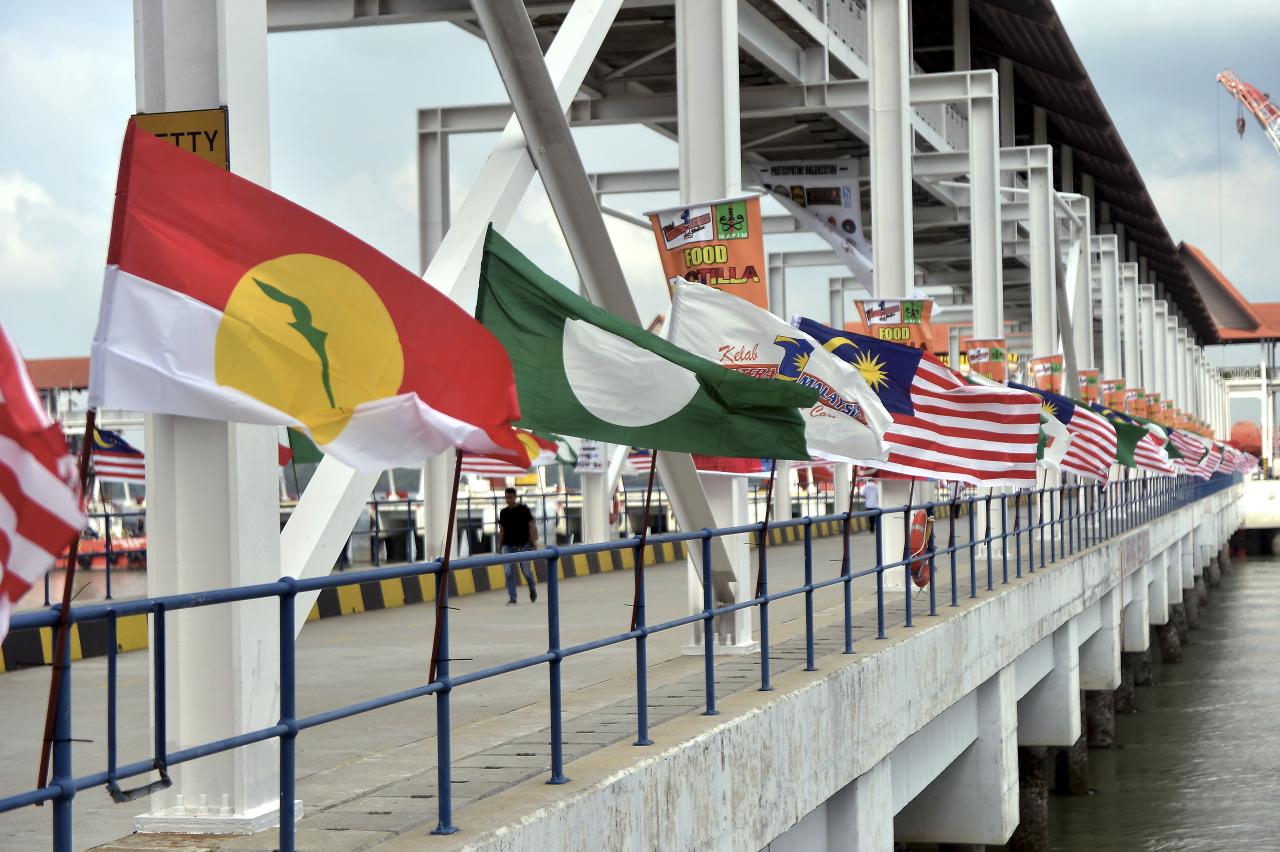

KUALA LUMPUR — Umno and PAS may be moving towards another political marriage, but lingering distrust, past political baggage and the thorny issue of seat allocations could test their latest attempt at cooperation, analysts say.
International Islamic University Malaysia political analyst Professor Syaza Shukri said the proposed cooperation currently appeared more like a political marriage, although ideological similarities between the two parties could provide a stronger foundation than some of their previous alliances.
“For now, it looks more like a political marriage, but to their credit, their cooperation makes more sense than BN-PH in terms of ideology,” she told Scoop.

Syaza said both parties broadly shared conservative and Malay-Muslim interests, but ideological similarities alone would not guarantee a lasting partnership, particularly if the main objective was to maximise their respective number of seats.
“If they are cooperating merely to win the most seats between them, I think it is not impossible for this cooperation to eventually end in a split, especially when the distrust exists between the top leaders,” she said.
She said Umno president Datuk Seri Ahmad Zahid Hamidi’s past criticism of PAS was unlikely to be the main obstacle, despite previous accusations by Umno that PAS could not be trusted and had repeatedly changed its political position.
“I don’t think what Zahid has said will be the main obstacle. I think the real obstacle is whether PAS is willing to become the ‘junior’ partner, even if it has more seats,” she said.
Syaza said PAS had previously chosen to work with Bersatu partly because it could negotiate from a more equal position, raising questions over whether the Islamist party would accept an arrangement in which Umno assumed the role of “big brother”.
“If Umno is prepared to cooperate with PAS as equals, I don’t think there would be a problem. But it appears that Umno still sees itself as the big brother. In this situation, why would PAS follow Umno if it can survive on its own?” she said.
She added that seat allocation would be the first major test of the proposed cooperation, while grassroots acceptance could pose another challenge given the history of rivalry between the two parties.
Syaza was commenting after Zahid revived his proposal for a “Grand Collaboration” through Tafahum Siyasi, which he said was not a merger but an understanding aimed at avoiding political clashes while allowing the parties to retain their respective identities.
Meanwhile, socio-political analyst at Universiti Malaya’s Academy of Malay Studies, Datuk Professor Dr Awang Azman Awang Pawi said the biggest challenge would be rebuilding trust following the collapse of Muafakat Nasional, the Umno-PAS electoral pact formed in 2019.
He said shared concerns over Malay-Muslim interests could bring the parties together, but would not be enough to sustain cooperation without clear mechanisms covering seat allocation, decision-making, leadership and relations with other political parties.
Awang Azman said Zahid’s previous strong statements against PAS remained political baggage that would have to be managed, particularly as the Umno president had stressed that sincerity, respect for agreements and avoiding betrayal were essential to any new understanding.
He said political circumstances could change, meaning Umno could not simply rely on assurances that PAS would never alter its political direction.
As such, clear terms and a mechanism for resolving disputes would be crucial to the proposed cooperation, he said.
Awang Azman said the proposed partnership therefore had two dimensions — common ground on Malay-Muslim issues and the strategic electoral interests of both parties, with the latter likely to put their relationship under greater pressure.
He said the proposed “Grand Collaboration” would also need an agenda extending beyond elections, covering issues such as the economy, cost of living, education, rural development, governance and national stability.
Grassroots acceptance, he added, could not be taken for granted.
“The biggest ticking time bomb is seat allocation and leadership. When it comes to seat negotiations, the questions of who will contest, who will step aside and who will lead the cooperation will become the real test,” he said.
There is precedent for such difficulties.
During Muafakat Nasional, negotiations over seat distribution proved challenging, with both parties discussing formulas for GE15 while PAS was also aligned with Bersatu in Perikatan Nasional.
In 2021, Umno said about 70% of seat distribution had been settled, but the pact ultimately did not contest GE15 as a united electoral force.
Geostrategist Professor Dr Azmi Hassan, meanwhile, said the latest cooperation was being driven less by ideological compatibility and more by the political survival of both parties.
He said the first Muafakat Nasional arrangement emerged when Pakatan Harapan was in government, while the current political landscape had given Umno and PAS further reason to explore cooperation, particularly following their experiences in recent state elections.
Azmi said the relationship was now more tangible despite the unresolved issue of seat distribution, adding that Zahid’s longstanding doubts over PAS stemmed partly from the party’s previous decision to work with Bersatu after discussions on Malay-Muslim cooperation with Umno.
He said PAS now had fewer political alternatives, which had contributed to its renewed engagement with Umno.
“At this point, PAS cannot go anywhere else,” he said, adding that current political alignments made a return to Bersatu or cooperation with Pakatan Harapan difficult.
Azmi said the prospect of both parties strengthening their position at the federal level could also make the latest cooperation more durable than Muafakat Nasional, although disputes over seat allocation would still have to be addressed.
“The cooperation now is based not on compatibility in terms of political agendas or policies, which are not very different at all, but on the survival of both parties,” he said.
He added that although Umno and PAS leaders had made strong criticisms of one another in the past, the political landscape had changed and both sides appeared more prepared to move beyond those disputes as they explored a new working relationship. — September 26, 2026