

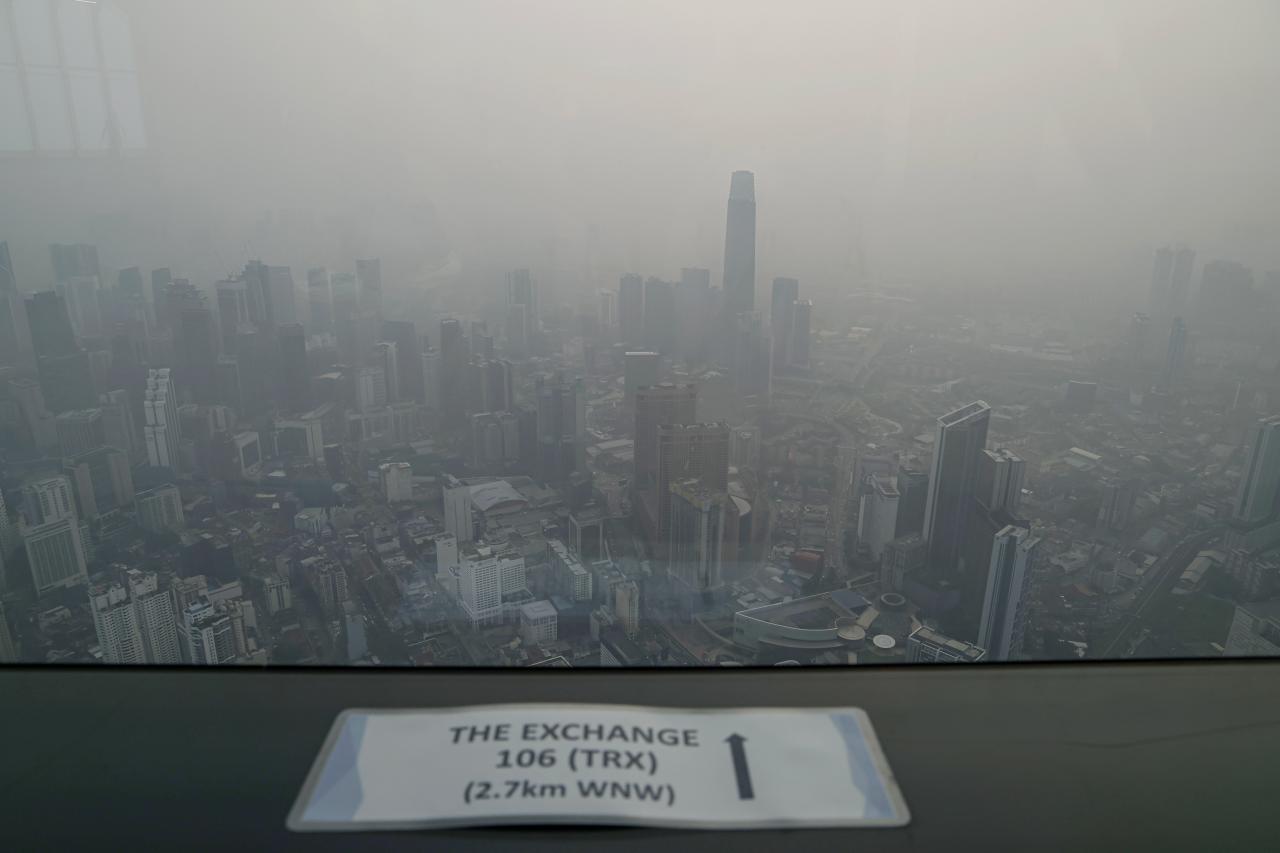
KUALA LUMPUR – Asean must move beyond discussions and act on existing regional agreements to tackle the recurring haze crisis, which continues to affect Malaysia and Singapore despite a regional pact signed 24 years ago.
The call was made during the inaugural podcast episode on the newly launched AseanX platform today, where panellists questioned why the bloc had yet to fully activate its existing mechanisms to respond to the worsening haze situation.
Former executive director of the APEC Secretariat Tan Sri Dr Rebecca Fatima Sta Maria questioned why Asean had not invoked its emergency response mechanisms, despite the haze situation already unfolding.
“You know, the haze, you have the Asean Emergency Response Agreement. Disaster, Asean Emergency Disaster Response Agreement. Why are we not calling on it now?” she asked during the episode.
“To say we’re gonna have a discussion in November blows my mind. It’s happening today.”

Dr Rebecca said Asean needed to review its structures and procedures to ensure that existing mechanisms were used effectively rather than remaining on paper.
She said the bloc had already established the necessary frameworks but was being held back by weaknesses in implementation and coordination among member states.
Former Asean secretary-general Ambassador Ong Keng Yong echoed the call, saying the region needed to focus on carrying out what had already been agreed upon instead of introducing more initiatives.
“It’s now just having the political decision to implement what has been agreed upon,” he said.
Ong said Asean had already discussed various measures to address regional challenges, including the haze, but implementation remained a persistent problem.
“We have already done all that,” he said, referring to the bloc’s existing arrangements.
He added that Asean should focus on delivering results from its existing commitments rather than prolonging discussions over new proposals.
The discussion also highlighted concerns over Asean’s ability to respond quickly to regional crises, with panellists calling for greater political will and a more effective decision-making process.
Dr Rebecca said the bloc needed a candid review of its structures and procedures, with relevant stakeholders involved in the process.
She said the private sector should also have a stronger role in Asean’s decision-making, particularly at the working level, to ensure that proposals could be translated into action.
The forum’s discussion came as the haze continued to affect parts of the region, renewing questions over the effectiveness of Asean’s regional cooperation in tackling transboundary pollution.
The Asean Agreement on Transboundary Haze Pollution was signed in 2002 to address haze pollution affecting the region. However, the latest situation has again highlighted the challenge of ensuring that regional commitments lead to timely and coordinated action.
Haze continues to affect Kuala Lumpur, with unhealthy air quality recorded in parts of the capital amid transboundary haze from Indonesia.
Several schools faced temporary closures as air quality varied across the city.
The Yang di-Pertuan Agong Sultan Ibrahim urged authorities to prioritise students’ health, while Prime Minister Datuk Seri Anwar Ibrahim raised the issue with Indonesian President Prabowo Subianto, who agreed to take measures to address the haze. – October 16, 2026