

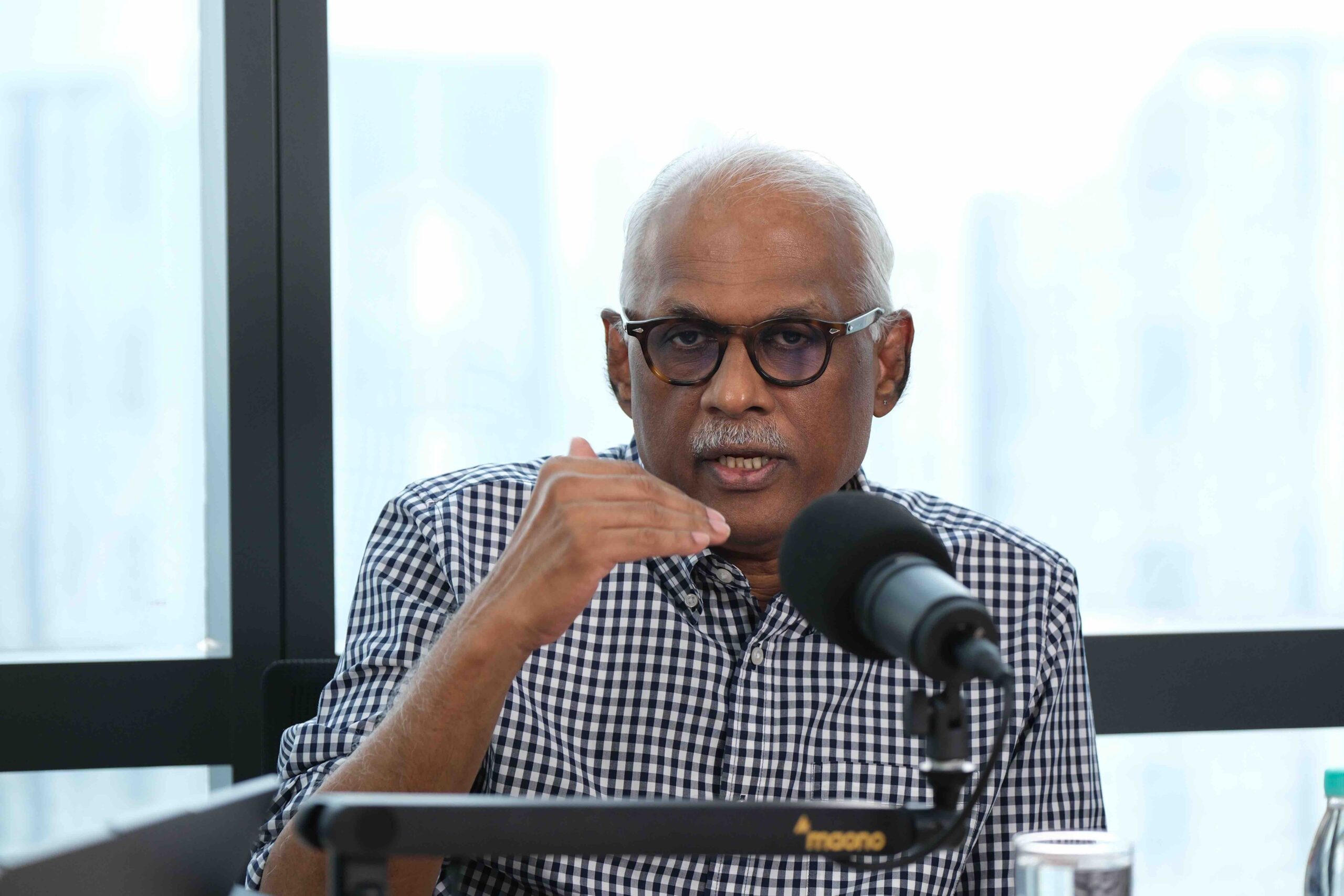

KUALA LUMPUR — A wealth tax on Malaysia’s super-rich could raise RM10 billion for social programmes at the cost of little more than a Lamborghini, said former Klang MP Charles Santiago, urging the government to tax accumulated wealth instead of relying on short-term relief measures.
He said the revenue could fund sustainable social assistance and help restructure the country’s struggling healthcare system amid rising living costs.
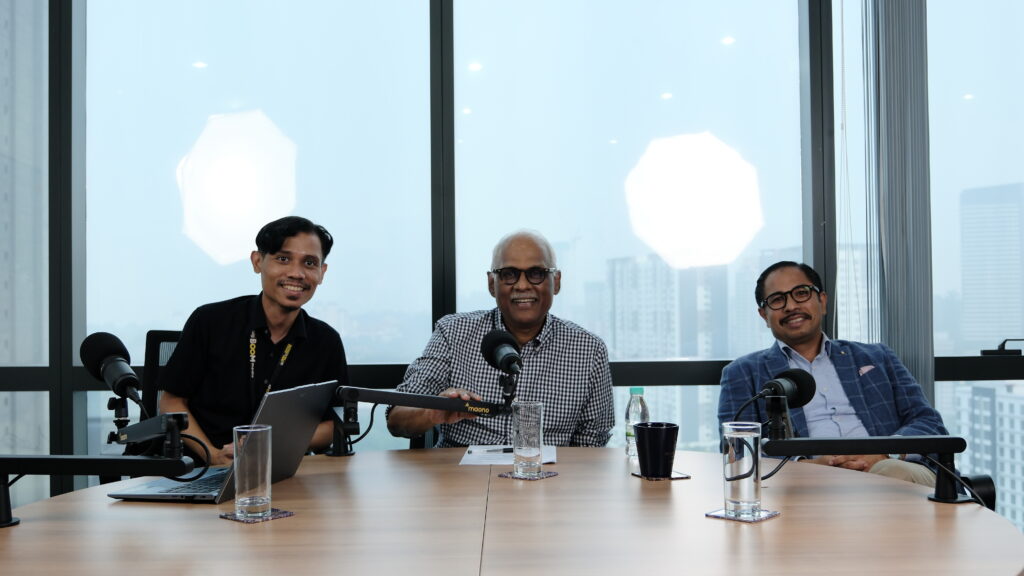
“I am more attracted to the idea of a wealth tax,” he said during a discussion on Budget 2027 with Scoop Insight host and News Editor Azim Idris, alongside Ariff R Abdullah, a seasoned banker and adviser with more than 20 years of experience in corporate and investment banking, including work involving Khazanah, Citibank and the Tony Blair Institute.
Santiago said he had examined the potential revenue from Malaysia’s highest income groups and believed they had the means to contribute RM10 billion towards social programmes.
“Some time ago, Prime Minister Datuk Seri Anwar Ibrahim said that Malaysia’s support for social welfare activities amounted to around RM10 billion.
“I did a quick study, and I believe that RM10 billion could come from the top T1 and T2 income groups.
“They have the means to contribute that amount. So, tax the wealth they hold. This would be a small change for them. Believe me, it would be very, very small change. They would hardly feel it,” he said.
Illustrating the scale of the proposed contribution, Santiago compared it to the cost of an expensive luxury car.
“It would be like getting rid of a Lamborghini or something like that. It would not make much difference to them.
“But the government could raise RM10 billion, which could fund all the social programmes it wants to implement. It could perhaps even be used to restructure our entire healthcare system,” he said.
His proposal follows the tabling of Budget 2027 earlier this month which offers tax relief to middle-income earners, including an increase in the individual income tax relief limit to RM12,000 from RM9,000 and lower tax rates for selected middle-income brackets.
The measures could provide about five million taxpayers with up to RM1,600 in additional disposable income annually, a development Santiago welcomed but said needed to be viewed against the cost of essential services.
“It acknowledges that there are issues that need to be resolved and that people need more disposable income. In that sense, it is a good move, and there will be a multiplier effect. I think there is also some relief for the middle classes,” he said.
However, he cautioned that the additional money could quickly be consumed by healthcare expenses, particularly for families dealing with illness.
“Consider a middle-class family that needs to go to hospital. When you go to the hospital, RM1,600 is nothing. It gets used up very quickly. Can’t do much,” he said.
“That is because our healthcare system is also collapsing. It is facing serious difficulties, and we need to put more money into healthcare. That is something the government has to work on.”
Santiago acknowledged that the additional disposable income could still help families meet everyday needs, whether by saving, buying books or putting better food on the table. However, he stressed that the wider economic impact should not obscure the difficulties faced by individual households.
“At the same time, it is good to have an extra RM1,600 in your pocket, whether you want to save it, spend it, buy books or put better food on the table, whatever the case may be,” he said.
He also pointed to high household debt, warning that additional disposable income might not translate into greater spending power if families had to use it to service existing loans.
“Malaysian households are highly indebted. They are very highly indebted. Banyak pinjaman. Household pinjaman terlalu tinggi,” he said, referring to the prevalence of borrowing and high household debt.
Beyond taxation, Santiago called for a more sustainable approach to reducing the cost of living, arguing that direct cash assistance should be complemented by measures that make essential goods cheaper.
“Alongside that, we have SARA, which is very important. People receive RM100 twice a year.
“However, the government spends around RM16 billion on these types of measures to reduce the cost of living,” he said.
He proposed that the government consider establishing grocery shops nationwide that could sell goods at lower prices, allowing assistance to translate into more substantial savings on everyday purchases.
“Now, consider this: if the government opened grocery shops across the country and reduced prices at those shops by 30 per cent, that would be worth more than the RM100 people receive.
“So, why do we not do that?” he said.
Santiago said such an approach could help ordinary Malaysians feel the impact of government assistance more directly while putting pressure on major retailers to lower their prices.
“For ordinary men and women on the street, they would feel that their government was subsidising their groceries by 30 per cent. It would create a very personal relationship between the people and the government.
“It would also force the big players to reduce their costs and prices,” he said, pointing to cooperative retail models in Singapore and proposals for similar initiatives in New York City as examples worth examining.
He added that the government could work with existing cooperatives across Malaysia to make essential goods more affordable, rather than relying exclusively on cash transfers.
“I think this kind of out-of-the-box approach needs to be considered.
“Yes, RM100 helps, but it does not go very far. It is like putting a plaster on a cut. You cover the wound with a plaster, but you need something more sustainable.
“That means having a long-term plan. This could be part of that long-term plan,” he said.
Santiago has previously called for a wealth tax on Malaysia’s richest individuals. In July 2024, he proposed a 2.5 per cent levy on the country’s 50 wealthiest people, estimating that it could raise RM10 billion for social initiatives. He renewed the call in May this year, proposing a two per cent tax on the same group. – October 20, 2026